What Temperature Does Chocolate Melt?: Everything You Need To Know
Chocolate generally begins softening before it melts. Its exact melting temperature depends on its ingredients, cocoa butter structure, temper, and surrounding conditions. This guide explains how dark, milk, and white chocolate respond to heat and how to protect chocolate during storage and transport.

Key Takeaways
- Most chocolate begins noticeably melting between 86°F and 93°F, or 30°C and 34°C.
- Chocolate can soften and lose its shape before becoming completely liquid.
- Milk and white chocolate usually soften more readily than dark chocolate.
- A room warmer than 75°F can gradually damage or soften chocolate.
- Chocolate left inside a parked car may melt even when the outdoor temperature feels moderate.
What Temperature Does Chocolate Melt?
Most chocolates begin melting at approximately 86°F to 93°F (30°C to 34°C). The exact temperature depends on whether it is dark, milk, or white chocolate, along with its cocoa butter content, added fats, ingredients, and tempering condition. If you're wondering whether chocolate is safe at certain temperatures, remember that softening is not the same as complete melting. A bar may become flexible, sticky, or dull before it turns into a flowing liquid. Exposure time also matters. A short period at 80°F may only soften a bar, while several hours cause it to slump.
| Chocolate type. | Approximate melting range |
|---|---|
| Dark chocolate | 86°F to 92°F, or 30°C to 34°C. |
| Milk chocolate | 84°F to 90°F or 29°C to 32°C. |
| White chocolate. | 82°F to 88°F or 28°C to 31°C |
These are practical ranges rather than fixed points. Cocoa butter itself can melt across 86°F to 99°F (30°C to 37°C) because it contains different fats and crystal structures. Finished chocolate also contains sugar, cocoa solids, milk ingredients, flavorings, and sometimes added fats.
At What Temperature Does Chocolate Start To Melt?
If you're asking, "At what temperature does chocolate start to melt?" the answer is that properly tempered chocolate may begin losing firmness around 75°F to 80°F (24°C to 27°C). Noticeable melting commonly begins closer to 82°F to 90°F (28°C to 32°C). Complete melting generally requires a somewhat higher chocolate temperature. This distinction explains why chocolate bars are still soft without becoming liquid. The least stable cocoa butter crystals can soften at lower temperatures. Stable crystals, like tempered chocolate, are shiny and snap, and melt closer to body temperature.
People often ask, "What temperature does chocolate start to melt?" when deciding whether a counter, bar, or outdoor location is safe. The air temperature and chocolate temperature are not always identical. Sunlight can heat a wrapper above the surrounding air temperature. Insulated packaging can slow warming, while a warm hand transfers heat directly into a bar. There is no single answer to what temperature will melt chocolate. Chocolate manufacturers use ranges because cocoa butter, fat bloom, tempering, and product thickness influence the result.
Does Chocolate Melt Between 70 And 75 Degrees?
At 70°F, or 21°C, well-tempered chocolate normally remains firm. At 75°F, or 24°C, it may still hold its shape, but it can begin softening during long exposure. Hershey states that temperatures above 75°F can cause chocolate to melt, although the speed and extent vary by product and conditions.
- Indoor storage: At 70°F, chocolate should generally remain firm in a dry place. At 75°F, move it away from warm appliances and windows.
- Outdoor exposure: Chocolate may warm faster than the reported air temperature when there is little airflow or heat radiates from pavement.
- Direct sunlight: A wrapped bar can become soft or misshapen even when the air remains between 70°F and 75°F.
- Carrying chocolate in a bag: Body heat and trapped warm air can soften it. Use an insulated pouch for extended transport.
Keep chocolate shaded and limit the time spent in warm conditions. For longer trips, place it in an insulated bag with a wrapped cooling pack. Keep the chocolate dry and prevent direct contact with ice.
Will Chocolate Melt At 78 To 85 Degrees?
Chocolate becomes increasingly vulnerable as the surrounding temperature rises from 78°F to 85°F. It may not become completely liquid immediately, but it can soften, bend, stick to its wrapper, or lose its original shape.
| Surrounding temperature | Likely result |
|---|---|
| 78°F | Usually holds its shape but may begin softening |
| 80°F | Softness becomes more noticeable during extended exposure |
| 84°F | Milk and white chocolate may become very soft |
| 85°F | Many chocolate products may begin visibly melting |
These outcomes depend heavily on chocolate type and exposure time, as dark bars resist heat longer than thin coatings. Direct sunlight and dark packaging also raise surface temperatures. Therefore, when asking at what temperature chocolate melts outdoors, never rely solely on forecasts because shade, airflow, and delivery vehicles matter.
At What Temperature Does Chocolate Melt In A Car?
Chocolate easily melts inside a parked car, even when outside conditions seem comfortable. Direct sunlight penetrating through windows rapidly heats interior surfaces, such as seats and dashboards, creating an environment far hotter than the surrounding air. Dashboards present extreme risks because they receive constant, direct sun exposure. Enclosed areas like glove compartments or travel bags offer little protection, as they trap heat and quickly elevate internal temperatures. As a result, leaving chocolate unattended in a vehicle on even a mild day quickly leads to softening, warping, or complete melting.
To protect chocolate during transit, store it inside an insulated cooler placed on the passenger floorboard away from direct light. Wrap cold packs in cloth to prevent moisture from touching the packaging. While running vehicle air conditioning helps during travel, it does not protect once the car is parked, so prompt removal remains essential.
Make a strong impression with custom chocolates
Work with us to create high-quality custom chocolates with your unique branding to raise awareness and ensure professional-looking promotional products that your customers or clients will love.
What Temperature Does Dark Chocolate Melt?
Dark chocolate generally melts between 86°F and 93°F (30°C to 34°C), often remaining firm until reaching the higher end of that range. Its exact response to heat depends heavily on cocoa butter content, overall cacao percentage, sugar ratio, added fats, tempering quality, and manufacturing formulation. A higher cacao percentage does not yield a single predictable melting point because cocoa butter levels and nonfat cocoa solids vary significantly across different recipes, influencing structural firmness and viscosity.
Professional chocolatiers carefully distinguish between initial melting temperatures and operational working temperatures during processing. When evaluating chocolate melts at what temperature, a flexible range provides the most accurate guidance, as individual formulations exhibit distinct behaviors under heat.
Will 90% Dark Chocolate Melt?
Yes, a 90 percent dark chocolate bar will melt. High cacao content does not make it immune to heat because it still contains cocoa butter. Cocoa butter forms the continuous fat phase that allows chocolate to soften and flow when warmed. The balance of cocoa butter and nonfat cocoa solids depends on the specific recipe used by the manufacturer.
Very dark chocolate often feels firm at normal room temperature, especially when properly tempered. However, it requires careful storage in a cool, dry place. Avoid keeping it inside warm bags, sunny rooms, or parked vehicles. At temperatures near the standard melting range for cocoa butter, even dark bars gradually soften and melt completely.
Need custom chocolates for your next promotional giveaway or other project?
We can bring your designs to life on custom chocolates for personal expression, branding, or other promotional purposes, offering diverse customization options to make a connection.
Explore options for custom chocolate hereWhat Temperature Does Milk Chocolate Melt?
Milk chocolate commonly melts between 84°F and 90°F, or 29°C and 32°C. It contains cocoa butter, cocoa solids, sugar, milk solids, and milk fat. These rich ingredients give it a softer texture and often cause it to respond to warmth sooner than dark chocolate.
As milk chocolate warms, it first loses its clean snap. A bar becomes flexible and leaves residue inside the wrapper. Coated sweets grow sticky, while delicate decorations lose sharp edges. With additional heat or exposure time, the piece gradually slumps and flows.
Formulations vary across candy bars, baking chips, couverture chocolate, and compound coatings. Some products include added fats or emulsifiers that alter softness and flow. Because recipes differ, what temp will chocolate melt cannot be answered with one exact figure for every product.
At What Temperature Does A Hershey Bar Melt?
A standard Hershey milk chocolate bar follows the same general cocoa butter melting behavior as other milk chocolate products. It often begins softening as surrounding conditions rise above 75°F and melts noticeably as it approaches 84°F to 90°F. Hershey lists sugar, milk, chocolate, cocoa butter, skim milk, milk fat, lactose, lecithin, PGPR, and vanillin among its primary ingredients. This precise formulation affects how easily the bar softens, bends, and flows under heat.
A soft bar may bend through its wrapper while holding its shape, but continued heat causes it to stick and become fluid. Keep Hershey bars away from direct sunlight, body heat, and warm vehicles. Hershey notes that temperatures over 75°F can cause melting and lead to cocoa butter bloom.
What Temperature Does White Chocolate Melt?
White chocolate generally melts between 82°F and 88°F (28°C to 31°C). Containing cocoa butter, milk solids, and sugar without nonfat cocoa solids, its unique composition makes it particularly sensitive to heat. Gentle handling and low temperatures are required during cooking to avoid seizing or ruining its delicate texture.
When heated carefully, normal melting produces a smooth mixture. Thick, grainy, or scorched results indicate overheating or moisture exposure rather than a different melting point. Stirring continuously with a dry utensil helps ensure even heat distribution. For reliable results, consult a white chocolate melting or tempering guide for detailed control techniques.
Customize chocolates with bespoke or branded designs and make an impression
We supply high-quality custom chocolates with your unique designs and an array of customization options to deliver for your aesthetic and functional needs.
Why Does Chocolate Melt At Different Temperatures?
Conflicting answers about what temperature chocolate melts at are common because chocolate is a formulated food rather than one pure substance. The following factors explain why two products can behave differently in identical conditions.
- Chocolate type: Dark, milk, and white chocolate contain different proportions of cocoa ingredients, milk ingredients, sugar, and fat.
- Cocoa butter percentage: Cocoa butter creates the fat structure that softens and melts as temperature rises.
- Milk fat: Milk fat can soften the fat structure and change the melting profile of milk and white chocolate.
- Added fats: Vegetable fats, nut oils, fillings, and other fats may lower or broaden the melting range.
- Tempering: Proper tempering encourages stable cocoa butter crystals that give chocolate firmness, gloss, and a clean snap.
- Other ingredients: Sugar, cocoa solids, emulsifiers, flavorings, and inclusions affect texture and heat transfer.
- Manufacturing formulation: Particle size, refining, conching, cooling, and storage history influence the finished structure.
- Product dimensions: Thin coatings and small pieces warm faster than thick bars or solid blocks.
Ranges are therefore more reliable than a universal number. When determining at what temperature chocolate will melt, consider the product, environment, and duration of exposure together.
How Do Cocoa Butter Crystals Affect Chocolate Melting Points?
Cocoa butter forms several crystal structures with distinct stability levels and melting characteristics. Proper tempering encourages stable Form V crystals, helping finished chocolate retain a glossy sheen, break with a clean snap, and remain solid under normal room conditions. Scientific studies indicate that Form V crystals melt between 31.3°C and 34°C, whereas less stable forms soften at lower temperatures. Form VI crystals possess higher melting points, though their growth during extended storage often correlates with textural changes and unwanted fat bloom.
This structural behavior explains why tempered chocolate holds its shape briefly when handled yet melts smoothly on the tongue. Body temperature easily dissolves this cocoa butter framework. High-quality couverture and untempered homemade coatings might share ingredients, but their underlying crystal arrangements, processing, and thermal histories ultimately determine their firmness, gloss, and melting behavior.
Looking for an affordable solution for custom chocolates?
With our online service, you have a fast, reliable way to customize chocolates with high-quality craftsmanship at affordable prices. We offer a range of benefits and hassle-free solutions.
Get started with custom chocolate hereHow Hot Is Too Hot For Melting Chocolate?
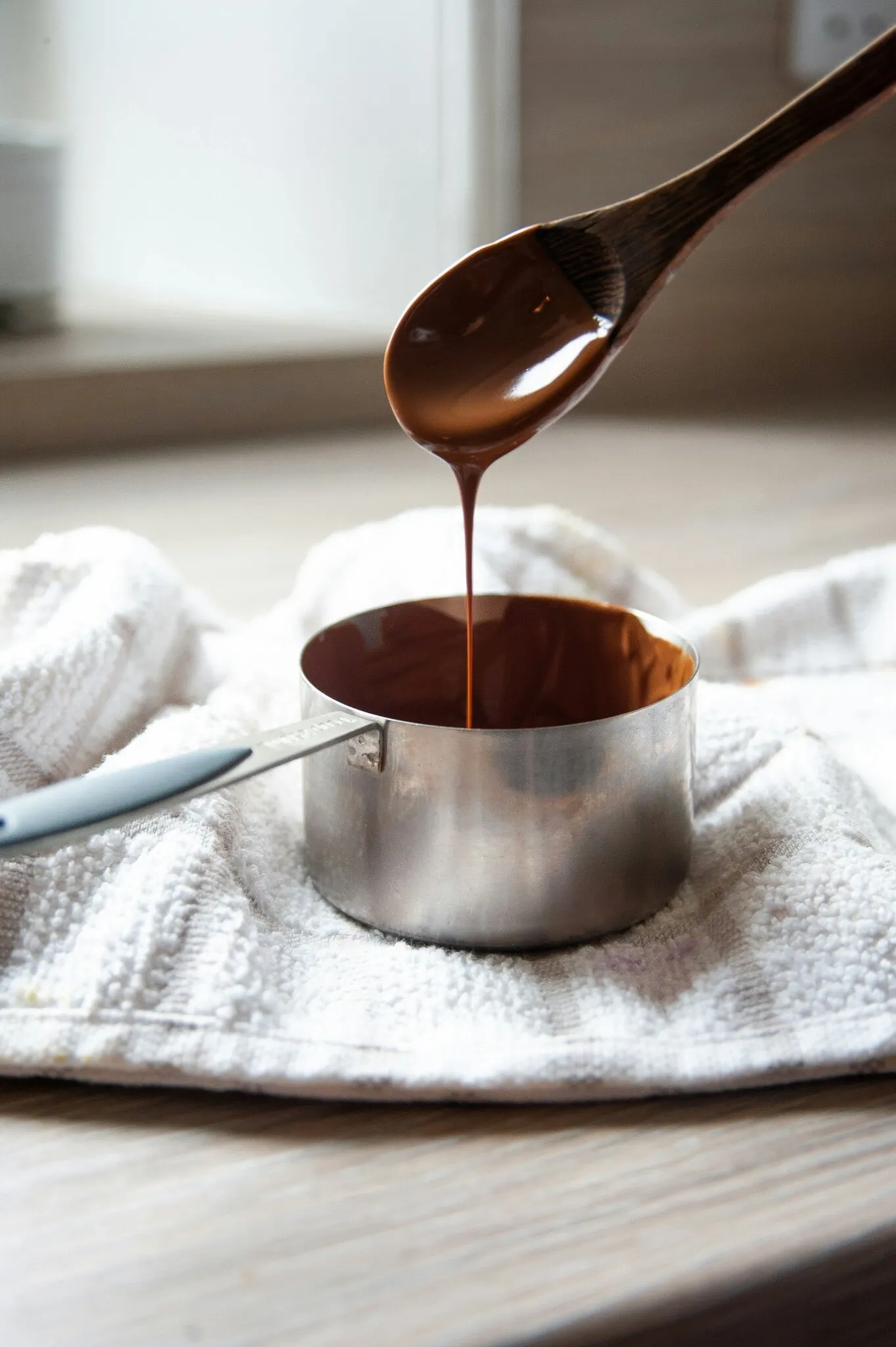
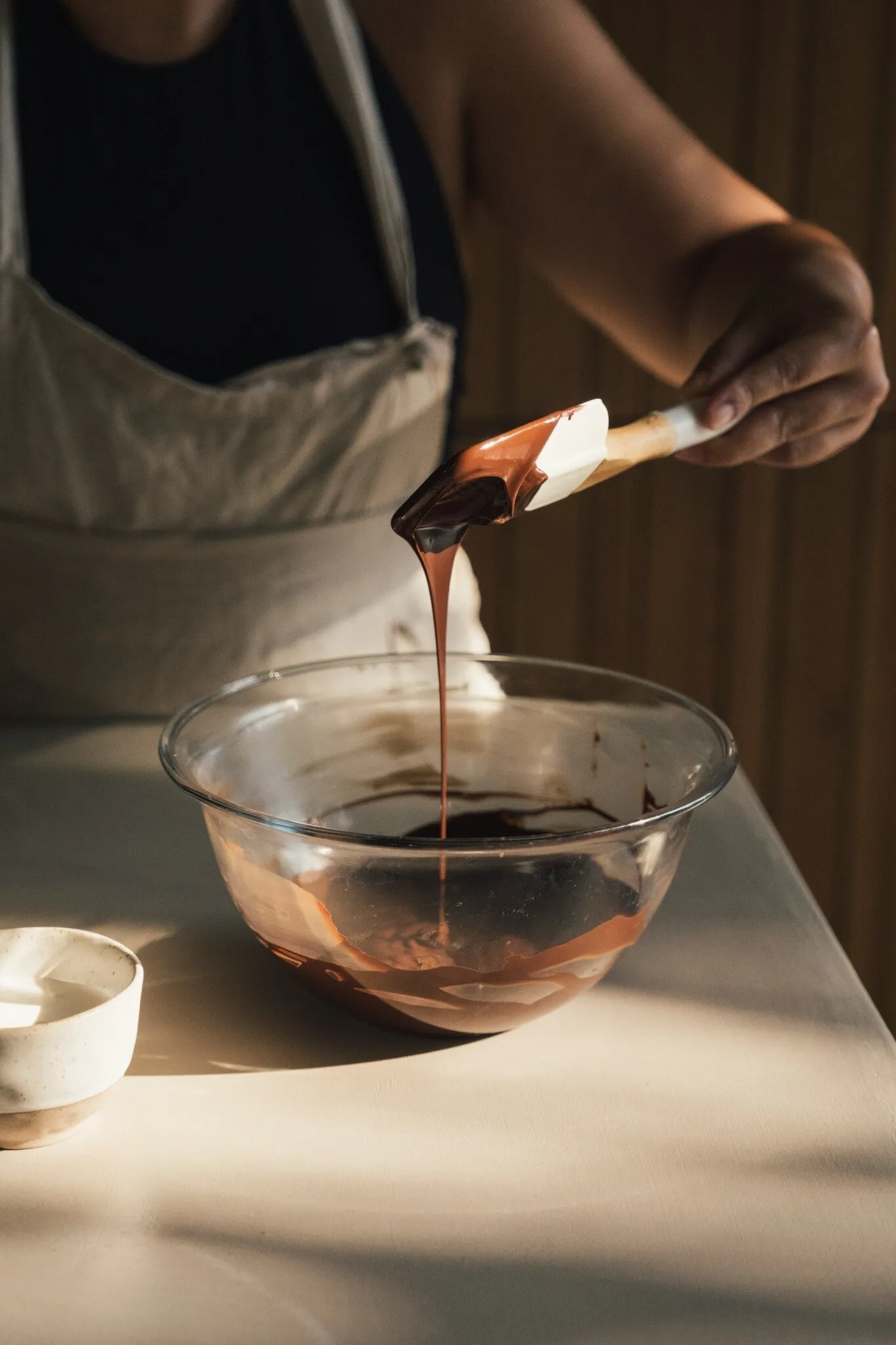
Chocolate needs enough heat to melt its cocoa butter crystals, but excessive heat can damage its texture and working quality. Overheated chocolate may become thick, dull, grainy, scorched, or difficult to temper.
- Microwave method: Use a clean, dry bowl. Heat in short intervals at reduced power. Stir thoroughly after each interval because retained heat can continue melting the chocolate.
- Double boiler method: Keep the bowl above gently steaming water. Do not allow the bowl to touch the water. Prevent steam and condensation from entering the chocolate.
- Direct heat method: Avoid placing chocolate directly in a hot pan. Local hot spots can scorch it before the entire batch melts.
Dark chocolate is commonly heated to 113°F to 122°F (45°C to 50°C) during initial tempering. Milk and white chocolate are heated more gently, around 104°F to 113°F (40°C to 45°C). These are processing targets, not melting points. Stop heating when a few small pieces remain and stir until smooth. Burnt smells, separation, or sudden thickening indicate overheating. Consult manufacturer tempering charts when precise working temperatures are required.
Frequently Asked Questions About What Temperature Does Chocolate Melt
At What Temperature Does Chocolate Start To Soften?
Chocolate may start softening around 75°F to 80°F (24°C to 27°C), especially during extended exposure. Milk and white chocolate often soften sooner than dark chocolate due to their higher fat content. Sunlight, body heat, warm packaging, and poor airflow accelerate this process. When considering what temperature chocolate melts, distinguish early softness from full melting, as factors like formulation, thickness, temper, and duration determine how quickly it turns liquid.
What Room Temperature Is Too Warm For Chocolate?
A room temperature above 75°F, or 24°C, is generally too warm for dependable chocolate storage. While bars may remain intact briefly, prolonged exposure causes softening, loss of gloss, bloom, or texture changes. For optimal quality, keep chocolate in a cool, dry, dark space with stable temperatures, away from sunlight, humidity, and warm appliances. If room temperatures frequently exceed 75°F, rely on temperature-controlled storage or carefully packaged refrigeration.