How To Knit Socks For Beginners And Make Your First Pair With Confidence
It's easier when you want a simple structure. Start with basic supplies, a plain pattern, and patient steps. Your first pair may not be perfect, but it can teach every skill you need for better socks later. In this guide, we will be talking about how beginners can start knitting socks and be ready to deliver their first knitted pair of socks.

Key Takeaways
- Knitting socks is beginner-friendly when you use a plain pattern.
- A vanilla sock pattern is the best first choice.
- Sock fit depends on yarn, gauge, needle size, and foot measurements.
- The heel feels hardest at first, but it becomes manageable in small steps.
- Neat finishing makes handmade socks more comfortable and durable.
Table of contents
-
How To Knit Socks Step By Step For Beginners
-
What Materials Do You Need To Knit A Sock?
-
How Do You Choose An Easy Sock Knitting Pattern For Beginners?
-
How Do You Knit The Cuff And Leg Of Your First Sock?
-
How Do You Knit A Sock Heel Without Getting Confused?
-
How Do You Knit The Foot Of A Sock So It Fits Comfortably?
-
How Do You Finish A Knitted Sock Neatly?
How To Knit Socks Step By Step For Beginners
To learn how to knit socks as a beginner, you need to start by treating the sock as separate parts. A basic sock has a curve, leg, heel, foot, toe, and finishing stage
Each part has one main job, and each part builds on the last. Here is the simple process:
- Choose a beginner-friendly sock knit pattern.
- Pick sock yarn that is soft, strong, and washable.
- Choose needles that match the pattern.
- Measure your foot circumference and foot length.
- Cast on the recommended number of stitches.
- Work the curve in ribbing.
- Knit the leg in the round.
- Shape the heel with the pattern's instructions.
- Pick up or work gusset stitches if the pattern requires it.
- Knit the foot until it reaches the right length.
- Shape the toe. With decreases, close the toe and weave in the ends.
- Make the second sock the same way.
Sock knitting is time-consuming because the stitches are small and the shape changes several times. Still, a first sock is very possible if you follow each step slowly. Do not expect the first pair to look like a shop-bought pair. The goal is to learn the structure and make a wearable sock. The first project is usually plain, an easy sock knitting pattern. This gives you a few details to manage. It helps you understand shape before you add colors, cables, lace, or texture.
Can A Beginner Really Knit A Pair Of Socks?
Any beginner can successfully make a pair of socks. All you need are basic skills like casting on, knitting, purling, and decreasing. Many knitters already use these skills in other projects.
The heel often feels confusing at first because it changes shape. Break the work into rows, read each instruction carefully, and avoid rushing. A plain beginner sock knitting pattern is always better than a complex lace, cable, or colorwork pattern for your first pair because it allows you to focus on learning the construction.
Beginners should accept that sock making is slower than flat projects because shaping requires very careful, calm attention.
How Do You Knit Socks In The Round Without Seams?
Most socks are worked in the round because this creates a smooth tube with no inside seam. From there, the stitches are joined after casting on, then worked on continuously for the cuff, leg, foot, and toe. Common tools for knitting socks in the round include double-pointed needles and long or short circular needles.
Stitch markers help you find the start of each round. When learning how to knit socks with circular needles, check that your cast-on edge is not twisted before joining. A twisted edge can affect the whole sock. After a few rounds, the tube becomes much easier to see and control.
Can You Knit Socks With Straight Needles Instead Of Circular Needles?
Yes, you can use straight needles to make socks, but most traditional styles are worked in a round. Flat socks are crafted as separate pieces, which are then seamed. While straight needles feel familiar to beginners learning how to knit socks, they are often less efficient.
The drawback is that bulky seams may rub inside shoes. If you choose straight needles, always use a pattern written for that method. Do not convert a round pattern until you understand sock construction very well. Once you master sock knitting, the seamless quality of circular knitting offers superior results. Always follow patterns carefully to ensure a great fit.
Make a strong impression with custom socks
Work with us to create high-quality custom socks with your unique branding to raise awareness and ensure professional-looking promotional products that your customers, clients, or event guests will love.
What Materials Do You Need To Knit A Sock?
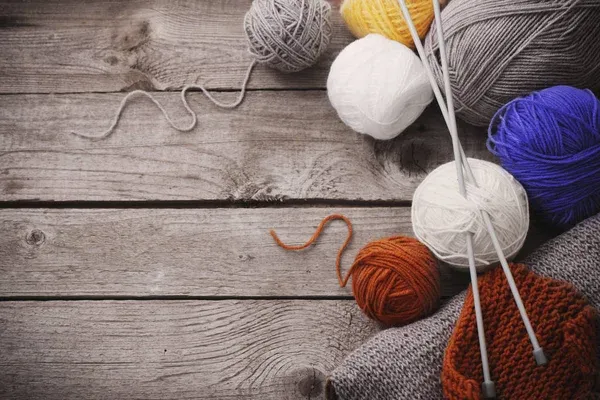
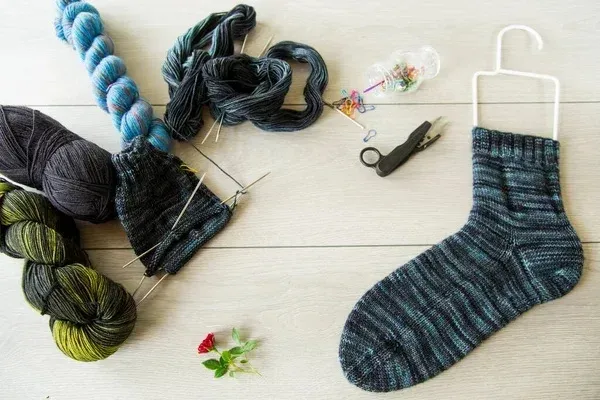
To begin knitting a sock, gather the following simple tools:
- sock yarn
- knitting needles in the size your pattern recommends
- stitch markers
- scissors
- tapestry needles
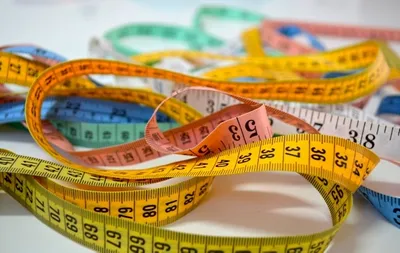
- measuring tape
- row counter if you need it
- printed or digital pattern instructions
- a small project bag to keep the work together
Beginner tools ensure a smoother start. Light-colored yarn is easier to see than dark shades, while smooth yarn is simpler to control than other textures. Choose needles that have a little grip for better handling than slippery metal ones.
Using a starter kit or downloadable pattern helps to simplify your projects. These collections provide matching yarn and needles, alongside clear guidance, which helps remove all guesswork.
| Material | Why you need it | Beginner Tip |
|---|---|---|
| Sock yarn | Create a strong and wearable sock. | Choose a washable wool blend. |
| Needles. | They control stitch size and fabric firmness. | Make sure to follow the pattern size your project requires. |
| Stitch markers | Mark the start of the round. | As a beginner, use a bright marker. |
| Tapestry needles. | They weave in ends and close the toe. | Use a blunt needle. |
| Measuring tape | This helps you get an accurate fit. | Measure before and during the meeting. |
Other optional accessories can help, but they are not required. A rowel counter helps you track rowel rolls, and needle stoppers can keep shoes from slipping off.
Choose a beginner sock knitting kit or downloadable vanilla sock pattern with washable wool nylon yarn, matching needles, size guide, heel photos, and step-by-step instructions for confident practice.
What Is The Best Sock Yarn For Beginner Knitters?
Durable, stretchy, and washable yarn is essential for a knit sock. Wool mixed with nylon provides warmth and strength. Delicate fibers wear out fast, while slippery ones are difficult to manage. Choose yarn that feels comfortable. Fingering weight is standard. Quality materials support learning, ensuring socks remain comfortable and sturdy for daily use.
Regarding tools, patterns specify small needles for firm fabric. If unsure about what size knitting needles to use for socks, check your pattern. Sizes usually range from two to three millimeters. Proper selection is vital. Loose stitches stretch, while tight ones feel stiff. Using the correct sizes ensures your project remains consistent and professional.
What Size Knitting Needles Do You Need For Beginner Socks?
Many beginner sock patterns use small needles because socks need firm fabric. If you wonder what size knitting needles to use for socks, check the pattern first. Common sock needle sizes are often between 2 mm and 3.25 mm, depending on yarn and gauge. Double-pointed, long circular, or short circular needles work well. Needle size affects gauge, fit, and durability, so do not guess if the pattern provides a clear size.
If your stitches are loose, your sock may stretch out. If they are too tight, the socks feel stiff. This is why gauge matters in a simple knit sock pattern.
How Many Stitches Should You Cast On To Knit Socks?
Determining the right cast-on count depends on your foot size, yarn weight, needle size, and gauge. A reliable pattern offers a safer starting point than guessing. Excess stitches make the sock loose, while too few stitches make it tight and hard to pull over the heel.
A gauge swatch or careful stitch calculation helps you adjust a knitted sock pattern to your own foot. Many adult socks use a count fitting the yarn and circumference, but always compare the pattern size with your actual measurements to ensure the final fit is comfortable and secure for your unique foot shape.
How Do You Measure Your Feet For Knitting Socks?
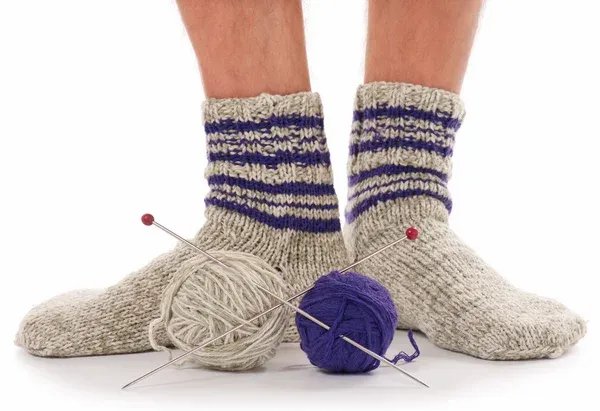
To get the right fit, you must measure the widest part of your foot and the distance from heel to toe. Also, decide on your preferred leg length. Remember that socks need negative ease, meaning they should be slightly smaller than your actual foot size to stay securely in place while worn.
Always compare your specific measurements with the size chart provided in your pattern to ensure the final fit is comfortable, secure, and flattering for your unique foot shape.
How Do You Choose An Easy Sock Knitting Pattern For Beginners?
A good beginner pattern should be clear, plain, and detailed. It should explain the heel slowly and tell you when to measure.
Look for the following features:
- Simple ribbed cuff.
- Plain stockinette leg and foot.
- Clear stitch counts.
- Detailed heel instructions.
- Toe shaping instructions.
- Size chart.
- Gauge information.
- Photos or step notes.
- Simple finishing instructions.
A vanilla sock pattern is the best first choice because it teaches basic structure. You can also use free sock knitting patterns for beginners to practise before buying detailed designs. Once you understand the shape, try more decorative knit sock patterns. Avoid patterns with too many new skills at once. Your first sock should focus on teaching shape and fit.
What Is A Vanilla Sock Pattern In Knitting?
A vanilla sock is a plain design without complex textures, lace, or cables. It is popular because it lets you focus on construction. A simple sock knit pattern teaches the cuff, leg, heel, foot, and toe. Later, you can easily add stripes, longer cuffs, or different stitches.
A collection of knit sock patterns offers many styles, but the plain version is indeed the best starting point for beginners. Once you understand the base, every new design becomes easier to create.
Need custom socks for your next promotional giveaway or other project?
We can bring your designs to life on custom socks for personal expression, branding, corporate gifting, team events, or promotional purposes, offering diverse customization options to make a lasting connection.
Explore options for custom socks hereHow Do You Knit The Cuff And Leg Of Your First Sock?
The cuff is essential for keeping your socks in place. Most cuffs use ribbing because it stretches and returns to shape. Popular choices include knitting one, purling one, or knitting two, purling two. After the cuff, the leg is worked in plain knitting. This creates smooth fabric and allows you to practice tension. When using an easy sock knitting pattern, follow the recommended cuff length initially, although you can adjust the leg length later to suit.
Always keep your cuff stretchy. A tight cast on makes the sock difficult to pull over the heel. A stretchy cast-on helps those with wide ankles. The leg section is a place to monitor tension. Many stitches look smoother after washing and blocking.
Customize socks with bespoke or branded designs and make an impression
We supply high-quality custom socks with your unique designs and an array of customization options to deliver comfort, style, and brand visibility for your aesthetic and functional needs.
How Do You Knit A Sock Heel Without Getting Confused?
The heel shapes the sock around the back of the foot. This is the part many beginners worry about, but it is easier when you know the common parts.
- Heel flap: This creates fabric at the back of the heel.
- Heel turn: This curves the heel under the foot.
- Gusset: This adds and then reduces stitches for foot shaping.
- Foot setup: This returns the sock to a tube shape.
Read one row at a time and count stitches often. If the heel turn looks strange, do not panic because the shaping settles later. Learning how to knit a sock becomes much easier after the first heel. The second sock feels more familiar to you.
Do not skip stitch counts during the heel. Small mistakes affect the gusset and foot. If you lose your place, stop and count before continuing.
How Do You Knit The Foot Of A Sock So It Fits Comfortably?
The foot section follows heel and gusset shaping, worked in plain stitches until the sock reaches the correct length for toe shaping. Try the sock on periodically, or measure from the back of the heel to the needles, comparing the length with your pattern. This ensures accuracy before beginning your final decreases.
The foot should feel smooth inside your shoes without knots or bulky joins. Good socks knitting feels snug, secure, and comfortable, avoiding any tightness or sliding. Check the fit carefully for wide toes, as trying the sock on during this stage prevents it from being too short or long.
Looking for an affordable solution for custom socks?
With our online service, you have a fast, reliable way to customize socks with high-quality craftsmanship at affordable prices. We offer a range of benefits and hassle-free solutions for branded socks, giveaways, and custom apparel projects.
Get started with custom socks hereHow Do You Finish A Knitted Sock Neatly?
After the foot reaches the correct length, you shape the toe with decreases. Then you close the small opening at the end. Common finishing steps include
- Work time decreases as instructed.
- Close the toe with Kitchener stitch or another pattern method.
- Weave in yarn ends with a tapestry needle.
- Check the inside for loose strands.
- Block the sock if needed.
- Repeat the same finishing steps for the second sock.
The Kitchener stitch provides a smooth toe that ensures optimal comfort inside shoes. Blocking your completed socks helps even out the stitches and creates a professional, polished shape. Neat finishing techniques are essential because they make handmade socks significantly more comfortable and durable.
When weaving in ends, keep the interior flat to prevent thick, uncomfortable knots. Finally, blocking is highly beneficial when stitches look uneven, ensuring you always wash and dry your socks properly for a clean and professional appearance.
Frequently Asked Questions About How To Knit Socks
How Can Beginners Learn How To Knit Socks The Easy Way?
Beginners can learn how to knit socks the easy way by choosing a plain pattern, using suitable yarn, and following one section at a time. Start with a vanilla sock pattern and avoid decorative stitches until you understand the basic structure. If you are learning how to knit socks with circular needles, practice joining in the round first to prevent twisted stitches. A first pair is practice, so choose simple yarn.
Can You Knit Socks With Straight Needles?
You can knit socks with straight needles by using a flat sock pattern, though they usually require seaming. For the smoothest result, many knitters prefer sock knitting in the round. Still, straight needles can be useful for beginners who want familiar tools before trying circular needles or double-pointed needles.