How To Measure A Bubble Mailer? Shipping, Sizes, Rules, And Accuracy
Measuring a bubble mailer may appear straightforward, but it is actually one of the most common sources of shipping errors we see in practice. Small inaccuracies can lead to higher postage, damaged items, or frustrating returns.
In this guide to how to measure a bubble mailer for shipping correctly, we help you make more confident packaging decisions to reduce avoidable costs. Accuracy at this stage sets the foundation for professional, predictable fulfillment and fewer surprises at the post office.

Key Takeaways
- Always measure bubble mailers seam to seam while flat, not once filled, to avoid costly sizing errors.
- Listed dimensions differ from usable internal space, especially due to bubble padding and side seals.
- Accurate measurements reduce postage issues, improve protection, and support consistent shipping practices.
- We supply high-quality custom bubble mailers and other shipping solutions to enable you to get the perfect size and look for your products and brand.
Table of contents
-
How To Measure A Bubble Mailer?
-
How To Measure The Length And Width Of A Poly Mailer Accurately
-
How Do You Measure Bubble Mailer Thickness Or Height?
-
Why Should You Consider The Flap And Closure When Measuring?
-
Why Should You Allow For Expansion When Choosing A Bubble Mailer?
-
How Can You Double-Check And Correct Your Measurements?
-
Why Does Accurate Bubble Mailer Measurement Matter?
-
How Does A Bubble Mailer Size Calculator Work?
-
How Do You Measure A Padded Envelope For Shipping Properly?
-
How Do You Determine The Right Internal Usable Space For Your Item?
-
What Is The Most Important Tip When Measuring A Bubble Mailer?
How To Measure A Bubble Mailer?
To measure a bubble mailer correctly, we follow the same seam-to-seam conventions used across shipping and packaging industries. This means that you measure the exterior of the mailer from one sealed edge to the other, excluding the flap.
When explaining how to measure a bubble mailer, it is important to distinguish between:
- The listed size: This reflects the flat outer dimensions.
- The usable internal space: This is slightly smaller due to the bubble lining and seams.
In practice, this distinction matters more than many people expect - the same goes for custom corrugated mailer boxes and other shipping solutions. We have seen products that technically “fit” on paper but fail once you attempt to insert them.
Measuring a bubble mailer for shipping should always be done with an empty, fully flattened poly mailer on a hard surface, using a tape measure rather than estimating by sight. Accuracy at this stage in 2026 prevents damaged items, sealing issues, and unexpected carrier adjustments later.
How To Measure The Length And Width Of A Poly Mailer Accurately
When explaining how to measure a bubble mailer, length and width should always be addressed first, as these are the primary dimensions carriers and suppliers reference. We recommend laying the mailer completely flat on a hard surface and smoothing out the seams without stretching the material.
- Length is measured from the bottom seam to the top opening, excluding the flap.
- Width is measured from seam to seam at the widest point.
One common issue we see is underestimating width, especially with padded interiors that reduce usable space. Bubble padding slightly curves inward, which means the listed size is not always the true interior size.
Measuring accurately prevents fit issues, failed seals, and unnecessary frustration. A study into air shipments of small packages revealed that there can be changes in the physical characteristics of small packages as they move through shipping environments, so bubble mailers can be crucial for protecting your products.
From experience, a few millimeters overlooked here can easily force a size upgrade later, increasing both packaging and shipping costs unnecessarily.
|
Common Name / Code |
Listed Size (External, Flat) |
Approx. Usable Internal Space* |
Best Suited For |
|
000 |
4 × 8 in (102 × 203 mm) |
~3.5 × 7 in (89 × 178 mm) |
Jewelry, cables, USB drives |
|
00 |
5 × 9 in (127 × 229 mm) |
~4.5 × 8 in (114 × 203 mm) |
Phone accessories, cosmetics |
|
0 |
6 × 10 in (152 × 254 mm) |
~5.5 × 9 in (140 × 229 mm) |
Phone cases, small books |
|
1 |
7.25 × 12 in (184 × 305 mm) |
~6.75 × 11 in (171 × 279 mm) |
Paperback books, T-shirts |
|
2 |
8.5 × 12 in (216 × 305 mm) |
~8 × 11 in (203 × 279 mm) |
Clothing, documents with padding |
|
3 |
8.5 × 14.5 in (216 × 368 mm) |
~8 × 13.5 in (203 × 343 mm) |
Magazines, catalogs |
|
4 |
9.5 × 14.5 in (241 × 368 mm) |
~9 × 13.5 in (229 × 343 mm) |
Larger books, bundled items |
|
5 |
10.5 × 16 in (267 × 406 mm) |
~10 × 15 in (254 × 381 mm) |
Hoodies, boxed soft goods |
|
6 |
12.5 × 19 in (318 × 483 mm) |
~12 × 18 in (305 × 457 mm) |
Bulky soft items |
*Usable internal space assumes seam-to-seam measurement and excludes the closure flap. Actual usable space varies slightly by manufacturer and bubble thickness.
How Do You Measure Bubble Mailer Thickness Or Height?
Thickness, sometimes referred to as height, is less straightforward when learning how to measure bubble mailers because it is not fixed until the mailer is filled. Unlike boxes, bubble mailers expand based on the contents inside.
For shipping purposes, carriers usually care about thickness only when it pushes a parcel into a higher rate tier. We recommend measuring thickness after placing the item inside and gently sealing the mailer without compressing it excessively. This gives a realistic height measurement that reflects actual shipping conditions.
In practice, height matters most when shipping rigid or bulky items that prevent compression. You also need to think about putting stamps on a bubble mailer - every bit of weight can potentially push a package into a higher tier.
From our experience, treating thickness as a functional measurement rather than a listed dimension helps avoid surprises at the post office. Work with us to create custom matte bubble mailers in a range of sizes at great prices and enjoy predictable size measurements.
Looking for a custom bubble mailer in your required size?
Our custom matte bubble mailers are available in a range of sizes and you can personalize them to fit your brand perfectly.
Why Should You Consider The Flap And Closure When Measuring?
One of the most overlooked aspects of how to measure a bubble mailer for shipping is the flap. Flaps are intentionally excluded from the listed length, yet they are essential for proper sealing. If the contents sit too high, the adhesive strip may not fully close, compromising security.
We always advise allowing enough clearance so the flap can fold naturally without tension. Ignoring this detail often results in issues like:
- Weak seals
- Exposed contents
- The need for additional tape, which looks unprofessional.
Some brands choose to add custom kiss-cut stickers over the seal for added security, which can also strengthen visual identity.
From a practical standpoint, a well-sealed flap also protects against dust and moisture during transit. We have found that planning for flap space upfront leads to smoother packing and fewer last-minute adjustments.
Measuring without considering closure mechanics is a small oversight that can create avoidable shipping risks.
Why Should You Allow For Expansion When Choosing A Bubble Mailer?
Bubble mailers are designed to flex, and that flexibility must be accounted for when deciding on size. When learning how to measure a bubble mailer, it is important to remember that bubble padding expands once items are inserted.
A tight fit may look acceptable when flat, but once filled, the seams stretch and the adhesive closure becomes unreliable. We recommend allowing modest expansion room to protect the item and maintain structural integrity.
In our experience, overly snug mailers increase the risk during transit of things like:
- Popped bubbles
- Damaged seams
- Torn edges
You can learn more about how packaging sizes are evaluated by looking at the journal Packaging Technology and Science.
Allowing space also improves shock absorption, which is the primary purpose of the padding. Choosing a slightly larger size often results in better protection, cleaner presentation, and fewer delivery issues, especially for items with uneven or rigid shapes.
How Can You Double-Check And Correct Your Measurements?
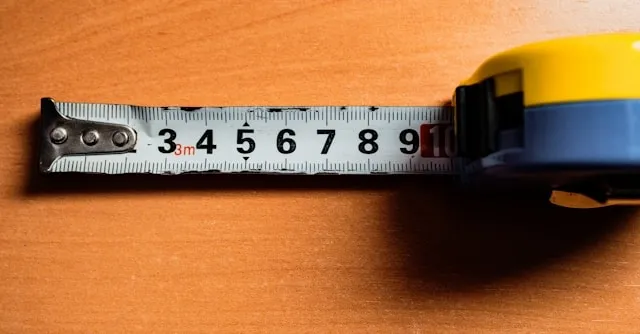
Double-checking measurements is a habit that saves time, money, and frustration. After measuring a bubble mailer flat, we recommend repeating the process once the item is placed inside.
This second check confirms that length, width, and thickness still fall within acceptable limits. When learning how to measure bubble mailers accurately, consistency is critical. Use the same surface, the same measuring tool, and the same method each time.
From experience, discrepancies often appear when different people measure the same mailer using slightly different techniques. An academic paper recommending package types for ecommerce shipments discusses how product size and shape influence package choice, highlighting the importance of measuring the mailer once it is filled.
If the filled mailer feels strained or difficult to seal, that is a signal to size up. Verifying measurements before shipping reduces rejected parcels, rework, and unexpected postage adjustments at the carrier counter.
Common Mistakes Should You Avoid When Measuring Mailers
Several recurring mistakes appear when people first learn how to measure a bubble mailer. Measuring while the mailer is partially filled is one of the most common errors, as contents distort the true flat dimensions.
Let’s look at some other frequent issues we have observed:
- Including the flap in the length measurement, which leads to undersized choices.
- We also see people stretch the mailer while measuring, unintentionally inflating dimensions.
These mistakes can result in poor fit, damaged goods, or higher shipping costs.
From our perspective, rushing the measurement process is usually the root cause. Taking a few extra moments to measure carefully, flat, and consistently prevents costly errors. Avoiding assumptions and relying on actual measurements ensures your packaging performs as intended during transit.
Get a custom poly mailer designed to fit your specific needs
With a huge range of dimensions available, our custom poly mailers offer the perfect fit for your products to ensure safe and efficient shipping.
Learn moreWhy Does Accurate Bubble Mailer Measurement Matter?
Accurate measurement of a bubble mailer has direct cost implications with shipping carriers, and this is often underestimated. Postal services calculate postage based on precise dimensions and total parcel size, not rough estimates.
Even small discrepancies can push a shipment into a higher pricing tier, particularly for First-Class or international services. Beyond cost, poor sizing increases the risk of damage. When items are forced into undersized mailers, it can cause issues like:
- Stretched seams
- Compressed padding
- Compromised protection
We have seen avoidable returns occur simply because a mailer was chosen based on assumption rather than measurement. From a professional standpoint, consistent and accurate sizing reflects operational discipline.
It reduces delays, prevents rejected parcels, and supports predictable shipping workflows. Measuring correctly is not just a technical step; it is part of presenting a reliable, professional shipping operation, and a key component of how to use custom printed promotional items effectively.
How Does A Bubble Mailer Size Calculator Work?
A bubble mailer size calculator is designed to simplify the decision-making process by translating product dimensions into a recommended mailer size. These tools typically require the item’s length, width, and thickness as inputs, sometimes including weight or quantity.
The calculator then factors in padding allowance and expansion tolerance to suggest an appropriate bubble mailer. It is important to understand that calculators provide guidance, not guarantees. We advise treating the result as a starting point rather than a final answer.
There has been extensive research into dimensional packing problems relevant to shipping in 3D space, so everything needs to be considered. Real-world factors may require sizing up, so consider things like:
- Rigid edges
- Irregular shapes
Interpreting results correctly means checking whether the suggested size refers to exterior dimensions or usable internal space. When used thoughtfully, size calculators save time and reduce guesswork, but they should always be paired with physical measurement and test fitting.
Need the perfect bubble mailer size with added style?
Stand out with your packaging by choosing our custom holographic bubble mailers, available in a range of sizes to suit your needs.
How Do You Measure A Padded Envelope For Shipping Properly?
Measuring a padded envelope follows similar principles to bubble mailers, but there are key differences worth noting. Let’s look at some of these to ensure you have a strong understanding:
- Padded envelopes often use paper exteriors with internal padding, which reduces usable space more than poly bubble mailers.
- Measurements should always be taken seam to seam on an empty, flat envelope, excluding the flap.
- Carriers generally expect padded envelopes to be measured the same way as other flat mailers, focusing on length and width rather than fixed height.
It’s important to note that, once filled, thickness becomes relevant for rate classification. We recommend measuring both the empty envelope and the packed envelope to confirm compliance.
Padded envelope rules typically apply when shipping documents, books, or rigid items that benefit from structure. Understanding these nuances helps prevent misclassification - take advantage of guidance like the Royal Mail size and weight guide to make the right choices.
How Do You Determine The Right Internal Usable Space For Your Item?
Determining usable internal space is where many shippers make quiet but costly mistakes. The listed size on a bubble mailer reflects exterior dimensions, not the space your product can actually occupy.
Bubble padding reduces usable width and length, sometimes more than expected. We recommend measuring the item first, getting accurate dimensions for:
- Length
- Width
- Thickness
From here, mentally subtract the bubble lining from the mailer’s stated size. In practice, we have found that rigid or boxed items need more clearance than soft goods.
A snug fit may look efficient, but it often creates sealing problems or stresses the seams. The goal is balance: enough internal room to insert the item comfortably, while still allowing the adhesive flap to close securely.
Customized bubble mailers are actually popular types of promotional products for business as well as functional necessities for shipping. When in doubt, selecting the next size up usually prevents damage, delays, and unnecessary frustration later.
What Is The Most Important Tip When Measuring A Bubble Mailer?
The most reliable advice we can offer is to test your measurements in real conditions, not just on paper. Measuring tools provide guidance, but inserting the actual product reveals issues numbers often miss.
We recommend placing the item into the bubble mailer before committing to a size, then checking things like:
- Closure
- Expansion
- Edge tension
If the mailer bows excessively or the flap barely seals, it is undersized. In our experience, this simple step catches most errors early. It also helps account for bubble compression, uneven shapes, or minor product variations.
A few extra seconds spent testing your custom holographic bubble mailer can prevent postage adjustments, damaged shipments, or returns. Accurate measuring is not about perfection; it is about consistency and verification.
Frequently Asked Questions About How To Measure A Bubble Mailer
How To Measure A Bubble Mailer Easily?
Lay the empty mailer flat, smooth out wrinkles, and measure seam to seam for length and width. Always exclude the flap and focus on usable interior space.
What Are The Standard Bubble Mailer Sizes And Dimensions?
Standard sizes are listed by exterior dimensions, such as 4x8 or 6x9 inches, but usable space is slightly smaller due to bubble padding.