Bubble Mailer Sizes: Dimensions, Charts, And Standard Measurements
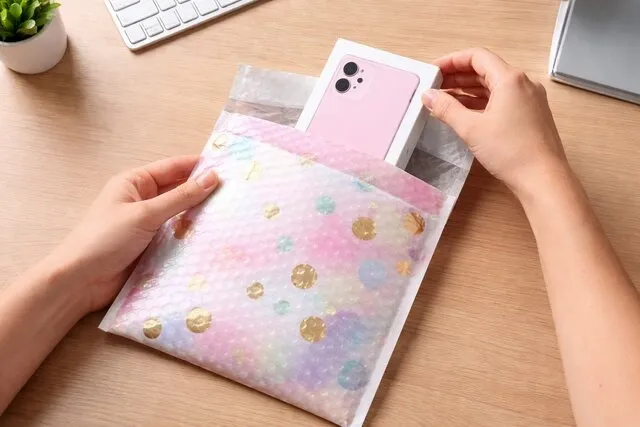
Bubble mailers are deceptively simple packaging tools, but choosing the wrong size can quietly undermine shipping efficiency, product protection, and custom satisfaction. We have worked with enough ecommerce sellers to know that sizing mistakes are among the most common errors made early on.
In this guide, we explain standard bubble mailer sizes, how to measure them accurately, and how to choose sizes that align with real-world shipping demands. Remember that listed dimensions reflect exterior measurements, not interior space, so work with us to understand bubble mailer dimensions and strike the right balance between protection and economy.

Key Takeaways
- Bubble mailer sizing directly impacts postage costs, product safety, and customer experience.
- Exterior dimensions differ from usable interior space and must be evaluated carefully.
- Selecting the correct size reduces waste, damage, and fulfillment inefficiencies.
- We supply high-quality custom bubble mailers in various designs and sizes so you can find the ideal solutions for your products and branding when shipping to customers.
Bubble Mailer Sizes
Bubble mailer sizes refer to the range of padded envelope formats designed to protect lightweight or fragile items during shipping. These sizes typically progress from compact mailers for small accessories to oversized options used for bulkier soft goods.
Bubble mailers are among the top 5 types of promotional products with logos for ecommerce sellers, but practical considerations like sizing are crucial. In practice, sellers select sizes based not on a one-size-fits-all approach, but on things like:
- Product type
- Thickness
- Shipping method
We often remind newer sellers that bubble mailer sizes are not standardized across all manufacturers. This means dimensions can vary slightly even when labels appear similar.
Understanding how bubble mailer sizes are categorized helps businesses anticipate fit issues before they occur. Small variations in padded envelope sizes can influence shipping rates, especially when mailers expand beyond expected limits.
Choosing appropriately sized bubble mailers in 2026 ensures protection without excessive material usage, supporting both cost control and sustainability. Thoughtful sizing decisions for your custom poly mailers also contribute to a more professional unboxing experience for customers.
Standard Bubble Mailer Sizes
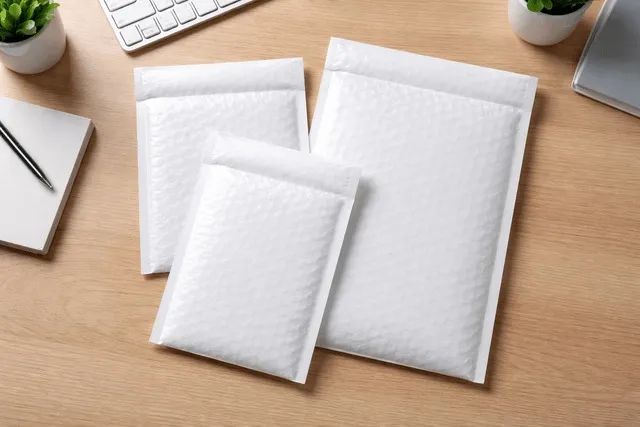
Standard bubble mailer sizes are industry-accepted ranges commonly used across ecommerce, retail, and fulfillment operations. These sizes exist because carriers and manufacturers have identified practical dimensions that balance protection, cost efficiency, and compatibility with automated sorting systems.
While there is no universal authority defining padded envelope sizes, commonly recognized formats have emerged through widespread adoption. Numbered systems, such as size #0 through #7, are frequently used to classify bubble mailers by approximate length and width.
In our experience, these labels are helpful starting points but should never replace physical measurement. Just like with custom corrugated mailer boxes, standard bubble mailer sizes simplify bulk purchasing and inventory planning, particularly for businesses shipping similar products daily.
However, it is important to remember that “standard” does not mean identical across brands. Minor differences in seam width or padding thickness can affect usable space, which makes verification essential before committing to large quantities.
|
Mailer Size |
Listed Exterior Dimensions (in) |
Approx. Usable Interior (in) |
|
#000 |
4 × 8 |
~3.5 × 7 |
|
#00 |
5 × 10 |
~4.5 × 9 |
|
#0 |
6 × 10 |
~5.5 × 9 |
|
#1 |
7 × 12 |
~6.5 × 11 |
|
#2 |
8.5 × 12 |
~8 × 11 |
|
#3 |
8.5 × 14.5 |
~8 × 13.5 |
|
#4 |
9.5 × 14.5 |
~9 × 13.5 |
|
#5 |
10.5 × 16 |
~10 × 15 |
|
#6 |
12.5 × 19 |
~12 × 18 |
|
#7 |
14.25 × 20 |
~13.5 × 19 |
Dimensions Of A Bubble Mailer
Bubble mailer dimensions describe the exterior length and width of the padded envelope when laid flat. These measurements help carriers calculate postage and determine machinability. Height is not typically listed but becomes relevant once the mailer is filled and sealed.
Bubble mailer dimensions are usually presented as length by width, though orientation may vary by supplier. Researchers have compared different mailer options in terms of environmental impact, and choosing the optimal size is a key consideration for sustainability.
From experience, confusion often arises when sellers mistake exterior measurements for interior capacity. Padding thickness reduces usable space, which can lead to overstuffed mailers or damaged closures.
Dimensions of a bubble mailer also influence how it moves through sorting equipment, making accurate sizing critical for smooth delivery. While some sellers focus exclusively on product fit, understanding how carriers interpret padded envelope dimensions prevents unexpected surcharges.
Proper dimension awareness ensures both compliance and consistency, especially for businesses shipping at scale.
How Do You Measure Length, Width, And Height Of A Bubble Mailer?
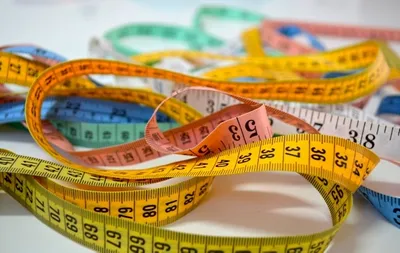
Measuring bubble mailers correctly requires distinguishing between flat and filled states. Length and width should be measured when the mailer is empty and fully flattened, excluding seams.
Height becomes relevant only after the mailer is filled, as padding expands to accommodate contents. Carriers typically care most about the filled dimensions, particularly thickness, which can affect classification and cost.
Studies have investigated handling and drop conditions for small shipping packages in different types of mailers, and the benefits of bubble mailers for impact resistance are clear. However, we have seen sellers underestimate expansion limits, resulting in mailers that burst or fail adhesive seals.
To avoid this, it is best to measure the product first, then add allowance for padding compression. Bubble mailers are designed to expand within limits, but exceeding them compromises protection.
Accurate measurement practices reduce errors and help sellers select padded envelopes that perform reliably during transit rather than merely fitting on paper.
Looking for a stylish, branded bubble mailer?
We supply high-quality custom matte bubble mailers in a wide range of sizes so you can get optimal protection with maximum style.
What Are Padded Envelope Sizes?
Padded envelope sizes encompass both bubble mailers and other cushioned mailing formats, such as fiber-lined envelopes. While these terms are often used interchangeably in ecommerce, they serve slightly different purposes.
- Bubble mailers: These rely on air-filled cushioning.
- Traditional padded envelopes: These may use paper padding or other cushioning methods.
Padded envelope sizes overlap significantly, which can create confusion when sourcing supplies. Choosing the right packaging solution and size for shipping is a key consideration for how to make custom shirts and ship a variety of other personalized products.
In practice, bubble mailers are preferred for moisture resistance and impact absorption. Understanding padded envelope sizes allows sellers to choose the most appropriate protection level for their products.
We generally advise evaluating both material and size rather than relying solely on naming conventions. We supply high-quality custom matte bubble mailers and other varieties at great prices that you can tailor to your brand and order in a variety of sizes to suit your shipping needs.
Selecting the correct padded envelope size ensures items remain secure without unnecessary bulk, improving shipping efficiency and presentation.
What Is The Smallest Bubble Mailer Size Available?
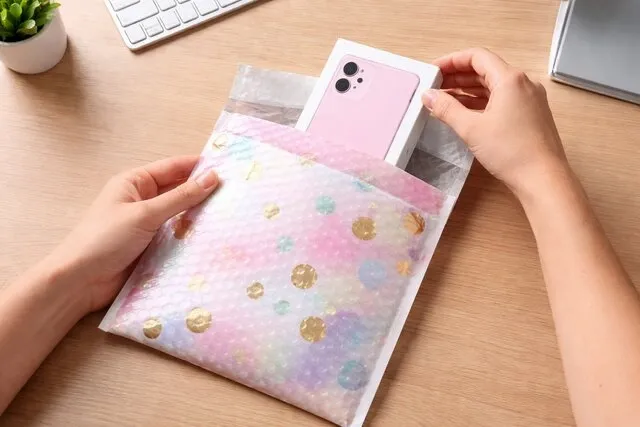
The smallest bubble mailer size typically measures around 4x8 inches, though exact bubble mailer dimensions can vary slightly by manufacturer. This size is designed for compact, flat items such as:
- Jewelry
- Memory cards
- Small cables
- Documents that need light padding
While it may appear restrictive, the smallest bubble mailer size is surprisingly practical when product dimensions are measured accurately. A study into internal package conditions during transit indicates that optimal size is a key consideration for keeping products safe.
In our experience, many shipping issues stem from attempting to overfill small padded envelope sizes rather than selecting the next size up. These mailers offer limited expansion, so thickness must be considered carefully.
Carriers generally accept these padded mailing envelope sizes without issue, provided they remain flexible. Understanding the true usable space, rather than relying solely on exterior measurements, helps avoid returns and postage adjustments.
Small bubble mailer dimensions are best suited for low-profile products where protection is needed without unnecessary bulk or cost.
Enjoy a bubble mailer with a holographic exterior
We can create custom holographic bubble mailers in any size and quantity to meet your needs.
Learn moreWhat Are The Most Common Bubble Mailer Sizes Used Today?
Among standard bubble mailer sizes, several options dominate ecommerce and retail shipping. Sizes such as 6x9, 8.5x11, and 9x12 are widely considered the most common bubble mailer sizes because they accommodate a broad range of products.
These padded envelope sizes are frequently used for products like:
- Apparel accessories
- Books
- Cosmetics
- Electronics
Their popularity is largely driven by balance, as they provide adequate cushioning without triggering dimensional shipping surcharges. Technical analysis shows that there can be environmental trade-offs to choosing bubble mailers over paper padded envelopes, but they do tend to offer superior performance.
From practical experience, these bubble mailers sizes are often the safest default for sellers managing varied inventory. Carriers recognize these dimensions of a bubble mailer as flexible mailpieces, which helps control costs.
Many bubble mailer size charts highlight these dimensions due to consistent demand. Choosing from these commonly used sizes reduces packing guesswork and simplifies supply ordering, particularly for businesses shipping high volumes of mixed products.
In search of a basic poly mailer for your shipping needs
Work with us to create custom poly mailers that carry your products and help promote your brand in style.
What Size Mailers Does USPS Sell?
USPS offers a limited selection of padded envelopes through its retail locations and online store, primarily focused on standardized shipping needs. These padded envelope sizes are typically branded as Priority Mail or Priority Mail Express, with fixed bubble mailer dimensions that cannot be altered.
While convenient, USPS padded mailing envelope sizes may not align perfectly with all product dimensions, especially for businesses requiring precise fits. In practice, these mailers work best for things like:
- Documents
- Books
- Uniformly sized goods
USPS does not provide a full bubble mailer sizes chart comparable to private suppliers, which can limit flexibility. Additionally, their dimensions of bubble mailer options are tied to service pricing rather than packaging efficiency.
For consistent branding or tighter size control, many sellers supplement USPS options with custom or third-party padded envelope sizes. And, if you work with us, you can also order custom shape stickers to further enhance the branding of your packaging and strengthen customer relationships.
How Do You Interpret Bubble Mailer Sizes Correctly?
Interpreting bubble mailer sizes requires understanding how manufacturers label dimensions versus how the mailer functions in use. Most bubble mailer dimensions refer to exterior measurements, not the usable interior space.
This distinction is critical, as padding reduces internal capacity. We often recommend subtracting at least half an inch from both length and width to estimate usable space accurately.
Bubble mailer size charts can help, but only when read carefully. An assessment of consumer preference for overpackaging in ecommerce solutions found that protection is a major priority for consumers, so size is crucial in your bubble mailer choices.
Another common mistake is ignoring expansion limits; bubble wrap envelopes sizes allow minimal thickness increase. Misreading length width height bubble mailer information frequently leads to damaged items or rejected shipments.
Proper interpretation ensures the padded envelope size matches both the product footprint and thickness. Accurate reading of labels ultimately saves time, materials, and postage costs.
What Is The Difference Between Exterior And Usable Size?
The difference between exterior and usable size is one of the most misunderstood aspects of bubble mailer sizes. Exterior dimensions reflect the full measurement of the padded envelope, including seams and padding. Usable size refers to the actual interior space available for the item.
Because bubble padding occupies volume, the usable dimensions of a bubble mailer are always smaller. This is especially important when referencing padded envelope dimensions for rigid or boxed items, and misunderstanding it is one of the common mistakes to avoid when using promotional products for small business.
In our experience, overlooking this distinction leads to overstuffing, which compromises protection and may void carrier requirements. Bubble mailer envelope sizes should always be evaluated based on interior fit rather than appearance.
Understanding usable space improves packing efficiency, reduces damage risk, and ensures compliance with shipping guidelines. Pay close attention to it when ordering custom holographic bubble mailers and similar products.
Frequently Asked Questions About Bubble Mailer Sizes
What Are The Standard Bubble Mailer Sizes?
Standard bubble mailer sizes commonly range from 4x8 inches up to 14x20 inches, with mid-range options like 6x9 and 9x12 used most frequently.
What Size Mailers Does The USPS Have?
USPS offers branded padded envelopes in fixed sizes through Priority Mail services, though selection is limited compared to third-party padded mailers sizes.