Why Do Flight Attendants Wear Scarves? Safety Roles, Comfort, Tradition And Branding
Scarves have been part of flight attendant uniforms for so long that many passengers barely notice them, but their presence is no accident. In aviation, every piece of the uniform is designed with purpose, whether for practicality, comfort, or perceived identity.
In this guide, we explore why flight attendants wear scarves, exploring their role in elevating appearances and strengthening branding through color, style, and heritage.

Key Takeaways
- Scarves blend practicality, safety usefulness, and polished appearance for cabin crew.
- They serve as branding tools, reinforcing airline identity across uniforms and promotions.
- Scarves offer comfort and situational utility, particularly during long flights or emergencies.
- We supply high-quality custom scarves in various formats that can be used for a range of applications in casual or professional settings.
Table of contents
-
Why Do Flight Attendants Wear Scarves?
-
What Safety And Emergency Functions Do Scarves Provide During Flights?
-
What Practical Purposes Make Scarves Useful For Cabin Crew?
-
How Do Fashion And Tradition Influence The Scarves Worn By Cabin Crew?
-
How Do Scarves Support Airline Branding And Corporate Identity?
-
How Has The History Of Flight Attendant Scarves Evolved Over Time?
-
What Regulations And Materials Shape Modern Crew Scarves?
Why Do Flight Attendants Wear Scarves?
Scarves remain part of flight attendant uniforms in 2026 because they occupy an unusual intersection between function and tradition. On the practical side, a scarf allows crew members to maintain a composed appearance, despite:
- Fluctuations in cabin temperatures
- Fast-paced service
- Constant movement
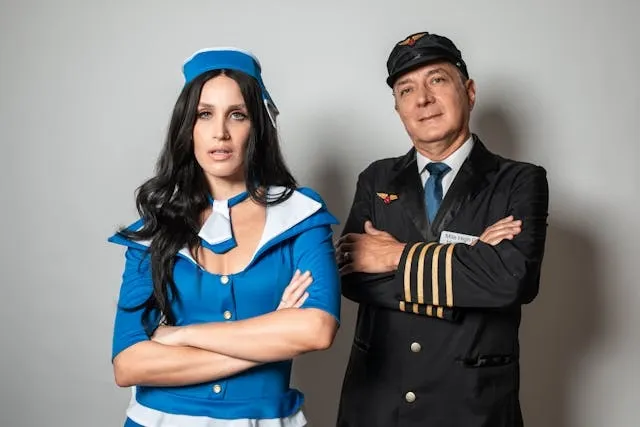
Historically, airlines introduced scarves to infuse elegance into uniforms, signaling hospitality and professionalism during the early age of commercial flights. Over time, that aesthetic identity has expanded into branding, where colors, styles, and patterns all help reinforce the airline’s visual signature.
While the general public often views scarves and custom hair scarves as purely decorative, many crew members rely on them for quick comfort adjustments or an easy way to correct a uniform after hours of duty.
In this way, the scarf remains both a nod to aviation history and a functional piece of everyday crew attire.

Why Wear A Scarf When Flying In A Cabin Environment?
Cabin environments shift constantly, especially on long-haul flights where temperature differences between service areas can feel surprisingly abrupt. A lightweight scarf helps flight attendants adapt without interrupting their workflow or compromising their appearance.
From our conversations with frequent flyers and former crew, many say a scarf is the one item that maintains a polished look even when the cabin becomes:
- Cool
- Dry
- Drafty
It also protects the collar area from friction caused by harnesses, straps, and repetitive bending during service. Beyond that, scarves subtly tie together a uniform that must remain presentable for hours at a time.
For travelers, this raises an interesting question: why wear a scarf when flying? The answer mirrors the crew’s reasoning - comfort, consistency, and maintaining a composed appearance regardless of cabin conditions. The same principles can apply to customized digital printing ties on cabin staff.
|
Scarf Style |
Visual Description |
How to Tie It (Step-by-Step) |
|
The Classic Airline Fold |
Sleek, flat, sits close to the neck with a crisp triangular front |
1. Fold the scarf diagonally into a triangle. 2. Roll from the long edge toward the point to create a smooth band. 3. Wrap around the neck and tie a small side knot. |
|
The French Twist |
Long, elegant twist with a small knot on the side |
1. Fold diagonally. 2. Roll tightly until long and thin. 3. Wrap twice around the neck. 4. Tie the ends together slightly off-center. |
|
The Side Bow Knot |
Small bow to one side of the collar—classic “air hostess” look |
1. Fold diagonally into a triangle. 2. Roll halfway; leave some width. 3. Tie a bow on either side of the collarbone. |
|
The Infinity Loop |
Continuous loop with no visible knot; smooth and professional |
1. The tie scarf ends into a small, tight knot. 2. Wrap around the neck twice. 3. Tuck the knot under the fabric. |
|
The Loose Drape Knot |
Relaxed drape with a simple front knot |
1. Fold diagonally. 2. Roll loosely. 3. Tie a single knot low on the chest. |
What Safety And Emergency Functions Do Scarves Provide During Flights?
Although scarves aren’t classified as formal safety equipment, they provide surprising utility in unexpected situations. Flight attendants are trained to adapt quickly during emergencies, and a scarf can serve as a temporary barrier against things like:
- Smoke
- Dust
- Strong odors
This can be helpful when passengers need assistance moving through a compromised cabin. In rare medical events, a scarf may even be used as a makeshift bandage or sling until proper equipment is accessible.
Several retired attendants have mentioned that, during chaotic moments, having something close at hand can be helpful. While these uses are secondary to official safety procedures, they reflect aviation’s culture of preparedness.
Crew members are encouraged to think creatively, and a scarf offers a flexible, immediate tool when circumstances demand improvisation. Studies show that scarves can be key tools for expressing professional image, but they can also perform various functional roles.
How Do Crew Scarves Offer Functional Benefits During In-Flight Emergencies?
In urgent situations, flight attendants rely on anything available to protect themselves and assist passengers. A scarf positioned around the neck is easily accessible, allowing crew members to cover their mouth and nose if smoke or airborne irritants become a concern.
This quick form of protection is not meant to replace oxygen equipment but can provide short-term relief during movement or communication. Additionally, the scarf can shield the face from debris during evacuation, especially when visibility is limited.
Some attendants have noted that a scarf’s length and foldability make it particularly adaptable. While passengers rarely connect scarves with safety, crew members understand that every accessible item matters in a crisis.
The advantages may be modest, but in aviation, small functional details often make significant differences when time is limited. Research into scarves enhancing the perceived attractiveness and femininity of uniforms sometimes fail to acknowledge the potential safety benefits.
Do you want a custom shawl you can adapt to the flight attendant style?
With our custom service, you can create unique shawls that are adaptable to a variety of style preferences.
What Practical Purposes Make Scarves Useful For Cabin Crew?
Scarves provide day-to-day practical benefits that crew members rely on more often than passengers realize. A scarf helps protect the uniform from spills during meal and beverage service, especially in tight cabins where movement is constant.
Let’s look at some other benefits:
- It also adds a modest buffer against chilly galley areas, allowing attendants to maintain comfort without disrupting their professional appearance.
- For many crew, the scarf becomes a quick “reset” accessory - something they can adjust after a long shift to restore a neat, cohesive look.
- When blended into an airline uniform, a scarf unifies the team visually, supporting a calm, coordinated presence that passengers find reassuring.
A study from Braniff Airways involving Pucci-designed uniforms from the 1960s showed the scarf functioned as both a head covering and a fashion statement. The practical purposes are the icing on the cake for this image-defining characteristic.
If you appreciate quality accessories yourself, you can even explore our collection of custom square scarves and other products, designed with durability and refined aesthetics at excellent prices.

How Do Fashion And Tradition Influence The Scarves Worn By Cabin Crew?
Aviation uniforms have always balanced function with a certain aspirational charm, and scarves play a central role in that tradition. During the mid-20th century, airlines leaned heavily into fashion-forward designs to distinguish themselves in an increasingly competitive market.
Designers introduced scarves as bold, elegant touches that conveyed hospitality and sophistication. The tradition stuck, becoming part of passengers’ expectations. Today, scarves remain visible symbols of professionalism, blending historical style with modern branding.
- Some airlines continue to refresh their scarf designs every few years.
- Others maintain long-standing patterns that loyal passengers instantly recognize.
In many ways, these accessories act as small ambassadors for the airline, demonstrating how fashion and service culture have evolved together across decades of commercial flight. They are among the most popular types of promotional products for businesses in the aviation sector.
How Did Fashion And Tradition Drive The Adoption Of Scarves In The 1960s?
The 1960s marked a period of dramatic transformation in commercial aviation, often referred to as the glamorous “jet age.” Airlines embraced bold, memorable uniforms, believing that style would help position air travel as an exclusive experience.
Renowned designers were hired to create uniforms that mirrored contemporary fashion, and scarves quickly became defining pieces of these collections. A study of femininity in flight by Kathleen M. Barry details the history of flight attendant uniforms, emphasizing scarves as symbols of glamor and corporate identity.
Airlines project elegance without compromising practicality through these scarves, relying on their:
- Color
- Drape
- Versatility
This era cemented scarves as essential components of cabin crew attire, blending global fashion trends with a desire to create airline-specific identities. Even passengers who never flew during that time still associate the image of a neatly tied scarf with hospitality, confidence, and the golden age of air travel.
Create your own custom square scarf
Perfect for the flight attendant look, your square scarf can be matched to any brand or design and worn in a style that works with a flight attendant outfit.
Learn moreHow Do Scarves Support Airline Branding And Corporate Identity?
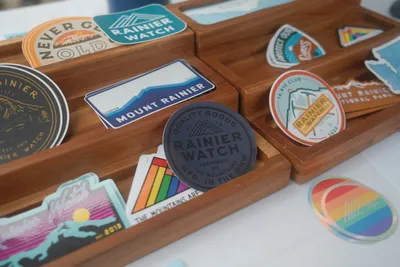
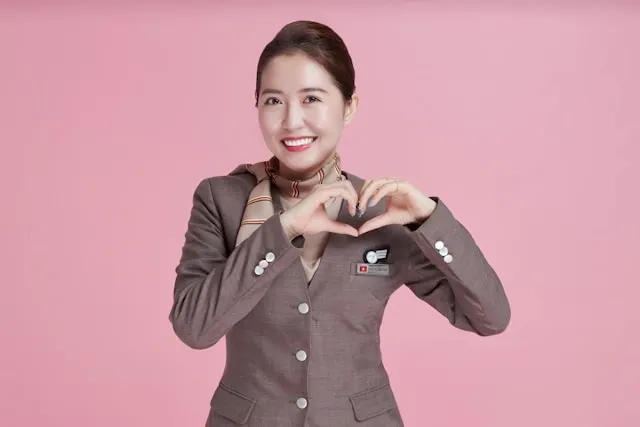
Uniforms play a significant role in shaping an airline’s visual identity. Just like custom printed patches, scarves help bridge corporate branding with personal presentation. Their patterns, colors, and textures often reflect brand values, whether:
- Minimalistic
- Vibrant
- Traditional
- Luxury-driven
Many marketing teams collaborate closely with uniform designers to ensure scarves reinforce a recognizable aesthetic throughout the passenger journey. When crew members move through airports, greet passengers, or appear in promotional images, the scarf subtly ties the brand together - literally and figuratively.
A well-designed scarf signals reliability and consistency, traits passengers instinctively trust. From a branding perspective, it also creates continuity, allowing even small visual cues to enhance recognition.
Over time, these scarves become part of the airline’s cultural identity, remembered long after the flight has ended.
How Do Signature Scarves Strengthen Brand Marketing?
Signature scarves often appear far beyond the cabin, featured in advertisements, safety videos, training materials, and press photos. Their distinctive colors or patterns act as shorthand for the airline, instantly recognizable even without a logo present.
Some carriers are known globally for their uniforms, largely because of iconic scarf designs repeated across decades. These scarves reinforce brand storytelling, aligning crew presentation with the airline’s broader message of:
- Hospitality
- Professionalism
- Heritage
In marketing, consistency builds trust, and a well-designed scarf helps create that consistency across visual platforms. We have even noticed that when airlines refresh branding, the scarf is often among the first items updated.
This reflects its importance in shaping how passengers perceive the airline’s personality and service values. They may not be among the top 5 types of promotional products with logos, but they are a core part of many airlines’ identity.
Want something glamorous or stylish for your hair?
The flight attendant look can be enhanced with custom hair scarves created to match your brand or uniform.
How Has The History Of Flight Attendant Scarves Evolved Over Time?
The evolution of flight attendant scarves mirrors broader shifts in aviation culture, global fashion, and passenger expectations. In “Lines Of Flight”, researchers mapped 60 years of Qantas uniform design and positioned scarves as key visual identifiers.
- Early uniforms were strictly utilitarian, with scarves serving limited functional purposes.
- As air travel expanded in the 1950s and 1960s, scarves adopted more decorative roles, symbolizing the refinement associated with commercial flying.
- By the 1980s, airlines began emphasizing corporate identity, transforming scarves into tools of visual branding.
- In more recent years, materials and designs have adapted to suit long working hours, multicultural crews, and modern textile technologies.
Today, scarves remain part of a uniform that balances tradition with function, drawing from a history shaped by fashion, marketing, and the realities of airline operations. Their evolution shows how small accessories can embody decades of industry change.
What Regulations And Materials Shape Modern Crew Scarves?
Modern airline scarves must satisfy practical considerations such as comfort, durability, and compliance with internal uniform standards. While major aviation authorities typically do not mandate scarves, airlines often issue detailed internal guidelines covering approved:
- Fabrics
- Colors
- Wear instructions
Materials are chosen for breathability and ease of maintenance, as crew members endure long shifts with frequent temperature transitions. Increasingly, airlines select textiles that resist wrinkles, remain lightweight, and retain color despite consistent laundering.
Some carriers use fabrics designed for fire resistance or moisture management, though these choices vary widely. Failing to think about practical implications is one of the most common mistakes to avoid when using promotional products.
The result is a scarf that looks refined while meeting the daily demands of cabin service. These materials represent a blend of modern textile innovation and the established expectations of a polished cabin crew uniform.
Do Aviation Regulations Require Scarves In Crew Uniforms?
Scarves are not typically mandated by international aviation authorities such as the FAA or EASA. Instead, airlines decide whether to include scarves as part of their official uniforms, guided by things like:
- Branding needs
- Cultural preferences
- Internal safety considerations
Some carriers require scarves for specific roles or during certain operational phases, while others offer them as optional accessories that enhance presentation without functioning as regulated equipment.
The distinctions between mandatory and optional uniform elements vary, but scarves usually fall within the category of appearance-enhancing items rather than safety-critical components. Nevertheless, airlines often maintain detailed uniform policies to ensure consistency, and scarves remain among the most standardized accessories.
Whether it’s a custom shawl or something smaller and more subtle, scarves are valued not for legal necessity, but for the recognizable professionalism they help convey throughout the passenger experience.
Frequently Asked Questions About Why Do Flight Attendants Wear Scarves
Why Do Flight Attendants Wear Scarves For Both Function And Style?
They provide comfort, polish the uniform, and support branding traditions. Many crew also appreciate their practical benefits during long shifts.
How Do Scarves Assist Safety In Emergency Situations?
They can offer quick coverage for the mouth and nose, help with minor first-aid improvisation, and remain immediately accessible throughout a crisis.