Poly Mailer Vs Bubble Mailer: Key Differences, Cost, Protection & Boxes
Choosing the right packaging often looks simple until costs rise, damage claims appear, or customers comment on presentation. Over the years, we have seen how a small packaging decision can quietly affect margins, delivery speed, and brand perception.
In this guide to poly mailers vs bubble mailers, we look at how correct packaging selection reduces waste, protects shipments, and improves the customer experience. It isn’t about choosing a winner, but about knowing when each option genuinely makes sense.

Key Takeaways
- Choosing between a bubble mailer vs poly mailer depends primarily on product fragility, not preference or habit.
- Poly mailers prioritize cost efficiency and flexibility, while bubble mailers emphasize built-in protection.
- Many growing businesses benefit from using both mailer types strategically rather than committing to one.
- We supply high-quality custom poly mailers and custom bubble mailers in a variety of sizes and at great prices to ensure your shipping needs are met.
Table of contents
-
Poly Mailer Vs Bubble Mailer
-
Is A Bubble Mailer A Poly Mailer?
-
When To Use A Poly Mailer Vs. A Bubble Mailer?
-
Which Is Better To Ship Out Bubble Mailer, Poly Mailer, Or Boxes?
-
Do I Need Both Poly Mailers And Bubble Mailers?
-
What Is A Poly Mailer Best Used For?
-
How Do You Choose Between Poly Mailers And Bubble Mailers?
-
How Does Your Product Type Determine The Right Mailer Choice?
Poly Mailer Vs Bubble Mailer
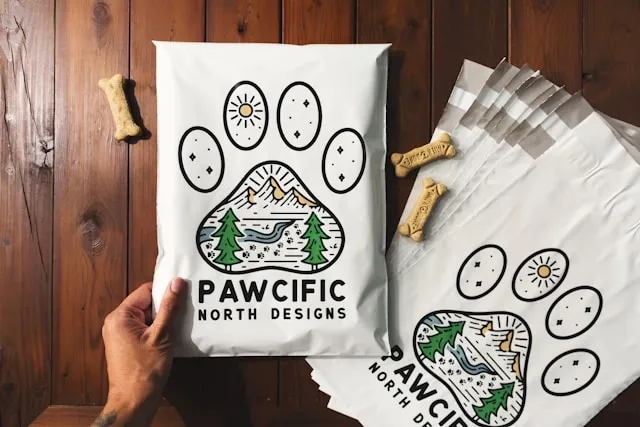
At a high level, the poly mailer vs bubble mailer comparison comes down to structure and purpose. Poly mailers are thin, flexible plastic envelopes designed to protect items from moisture, dirt, and tearing while keeping shipping weight low.
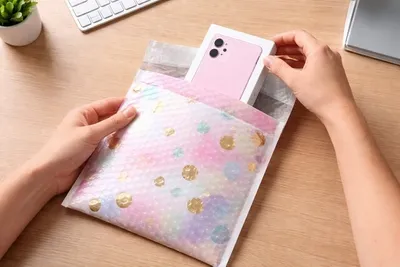
Bubble mailers, by contrast, include an interior layer of bubble cushioning that absorbs impact during transit. This single difference significantly changes how each performs in real shipping environments.
- Poly mailers rely on the durability of the item itself.
- Bubble mailers actively reduce movement and shock.
This distinction matters because shipping carriers handle thousands of packages daily, and even short drops can cause damage.
Cost is also affected. Poly mailers are generally cheaper and lighter, whereas custom matte bubble mailers add expense in exchange for protection. Understanding these fundamentals in 2026 helps businesses avoid overpaying for unnecessary padding or underprotecting valuable products, which is a mistake we have seen repeatedly over time.
Material Composition
Material composition is where poly mailers vs bubble mailers begin to diverge clearly. Poly mailers are typically made from polyethylene film, which is lightweight, tear-resistant, and water-resistant.
This material performs well for soft goods and non-fragile items, especially when shipping efficiency matters. A peer-reviewed study from 2010 provides empirical insights into how protective packaging elements perform under real logistics conditions, and this is where poly mailers fall short.
Bubble mailers usually combine a similar poly exterior with an interior bubble lining made from air-filled plastic cells. That layered construction increases thickness and rigidity, offering better impact resistance.
From a supplier standpoint, the materials also affect storage and handling:
- Poly mailers take up less space and are easier to stock in bulk.
- Bubble mailers require more room and cost more per unit.
We have found that understanding the raw materials helps set realistic expectations for performance. Neither option is inherently better; they are simply engineered for different levels of protection and shipping conditions.
Padding
Padding is the defining functional difference in the bubble mailer vs poly mailer discussion. Poly mailers contain no built-in cushioning, which means they rely entirely on the product’s durability or internal packaging. This works well for:
- Apparel
- Fabrics
- Soft accessories that can tolerate compression
Bubble mailers, however, include integrated padding that absorbs shocks and reduces movement during transit. This can significantly lower damage rates for small, breakable, or rigid items. For some, the padding affects how to address a bubble mailer, often requiring additional stickers.
From experience, padding often becomes important only after a business starts receiving returns or complaints. While bubble mailers cost more, they can prevent far greater losses caused by damaged goods.
That trade-off is not always obvious at first glance. Padding also influences shipping dimensions and weight, which can affect carrier pricing. Choosing the correct level of protection ensures you are paying for value rather than unnecessary insurance.
Intended Uses
Intended use cases highlight why the poly mailer vs bubble mailer decision should always be product-driven. Poly mailers are best suited for non-fragile items such as clothing, textiles, soft promotional products, and flat goods. They excel when priorities include:
- Speed
- Cost control
- Lightweight shipping
Bubble mailers are intended for items that benefit from shock absorption, including electronics accessories, small décor pieces, signage components, or rigid branded items. We have seen businesses misuse both types by defaulting to one option for everything.
That approach often leads to wasted money or preventable damage. When packaging aligns with product characteristics, fulfillment becomes smoother and more predictable. And you can improve package security and branding by adding custom square stickers and similar items.
Intended use is not about guessing; it is about matching packaging behavior to how an item reacts under pressure, vibration, and handling throughout the shipping process.
|
Mailer Type |
Best For |
Avoid For |
Required Add-Ons |
|
Poly Mailer (No Padding) |
- Apparel (t-shirts, hoodies, leggings) - Soft textiles (scarves, plush items) - Non-fragile, compressible items - Low replacement-cost products |
- Fragile items of any kind - Rigid items with sharp edges - Scratch-sensitive surfaces (painted, glossy finishes) - Multi-item orders that can collide |
- Inner tissue or poly sleeve to prevent scuffing - Correct sizing to avoid excess slack - Strong adhesive seal (or tamper-evident strip) |
|
Bubble Mailer (Poly + Bubble Lining) |
- Small electronics & accessories - Phone cases, cables, chargers - Cosmetics in plastic containers - Jewelry with no sharp protrusions |
- Heavy items (weight compresses bubbles) - High-value fragile goods (glass, ceramics) - Items requiring rigid structure |
- Inner wrap for scratch-prone finishes - Tape reinforcement for heavier contents - Correct orientation (item centered) |
|
Box (With Void Fill) |
- Glass, ceramics, liquids - Multi-item orders - High-value or irreplaceable goods - Products with rigid geometry |
- Single low-value soft items (cost inefficiency) - Lightweight apparel shipments |
- Void fill (paper, air pillows, foam) - Correct box size (no empty space) - Tape rated for parcel handling |
Is A Bubble Mailer A Poly Mailer?
This question comes up frequently, and the confusion is understandable. Technically, many bubble mailers do include a poly exterior, which leads some suppliers to group them together. Functionally, however, they are not the same.
A bubble mailer is more accurately described as a hybrid product, combining a poly shell with an internal cushioning layer. Researchers have compared bubble mailers to products with paper padding - the key is that padding is present, unlike in simple poly mailers.
In poly mailers vs bubble mailers, the difference lies in performance, not surface material. Manufacturers and shipping suppliers often use inconsistent terminology, which adds to the misunderstanding. From a practical standpoint, it is better to focus on protection level rather than naming conventions.
When we evaluate packaging, we look at how it behaves in transit, not how it is labeled. Treating bubble mailers as upgraded poly mailers oversimplifies their purpose and can lead to poor packaging decisions when protection truly matters.
Looking for the best poly mailers money can buy?
Work with us to create custom poly mailers and enjoy diverse customization and size options and high-quality, durable pieces for your shipping.
When To Use A Poly Mailer Vs. A Bubble Mailer?
Deciding when to use a poly mailer vs bubble mailer should always begin with an honest assessment of the product. Fragility, shape, and replacement cost all matter. In many cases, it may even be better to opt for a custom mug box or another type of cardboard packaging.
Soft goods with low breakage risk usually perform well in poly mailers, keeping fulfillment lean and cost-effective. Bubble mailers can be better with items that can:
- Crack
- Dent
- Scratch
We recommend considering bubble mailers to package products like these, even if the upfront cost is higher.
Shipping distance and carrier handling are also factors. Longer routes increase exposure to impact and vibration. In practice, we advise matching packaging to the worst-case shipping scenario rather than the best.
For businesses scaling fulfillment, having both options available creates flexibility. Customers can purchase custom poly mailers directly from our online store, with benefits like competitive pricing and diverse size and customization options.
Smart packaging choices protect products, reduce returns, and quietly reinforce professionalism at every delivery stage.
Which Is Better To Ship Out Bubble Mailer, Poly Mailer, Or Boxes?
When comparing bubble mailer vs poly mailer vs boxes, it helps to think in terms of necessity rather than hierarchy. Boxes provide the highest level of protection but also introduce higher material costs, dimensional weight charges, and packing time.
You can look at ASTM D7386-16 and associated Packaging and Technology Science references to evaluate shipping performance of packaging units. For many products, the level of protection offered by boxes is simply unnecessary:
- Poly mailers are often sufficient for soft, flexible items and help minimize shipping expenses.
- Bubble mailers occupy the middle ground, offering protection without the bulk of a box.
In our experience, boxes are best reserved for fragile, high-value, or irregularly shaped items that cannot tolerate compression.
Using boxes when a mailer would suffice often erodes margins without improving outcomes. Understanding this packaging hierarchy allows businesses to streamline fulfillment and choose the best promotional products for business.
The goal is not maximum protection at all costs, but appropriate protection based on realistic shipping risks.
Create your own bubble mailers for ecommerce
With our help, you can create your own custom matte bubble mailers with branded designs and more to improve customer service.
Learn moreDo I Need Both Poly Mailers And Bubble Mailers?
Many established businesses ultimately find that the answer is that both types of mailers are useful. Using both options allows flexibility when dealing with varied product catalogs and fluctuating order types.
Poly mailers vs bubble mailers is not an either-or decision for most sellers. Research from 2020 found that package type selection is a quantitative trade-off between protection and cost, so both types can be right for different scenarios:
- Apparel, textiles, and flat items ship efficiently in poly mailers.
- Smaller rigid goods benefit from bubble mailers.
Maintaining both in inventory reduces the temptation to overpackage or underprotect items simply due to availability. From an operations standpoint, this approach also supports faster order fulfillment because packers can choose the most appropriate option without improvisation.
Inventory management does require planning, but the cost is often offset by fewer returns and better customer satisfaction. We have seen businesses grow more confident in their shipping decisions once they stop forcing one packaging solution to fit every product.
What Is A Poly Mailer Best Used For?
Poly mailers are best used for items that do not require internal cushioning and can withstand compression. These lightweight mailers excel in cost-effective fulfillment, particularly for apparel, soft accessories, fabric signage, and flat promotional materials.
One of their greatest advantages is efficiency. Benefits of poly mailers include that they:
- Reduce shipping weight
- Take up minimal storage space
- Speed up packing workflows
In high-volume environments, those efficiencies add up quickly. However, poly mailers do have limitations.
They offer no impact protection, which makes them unsuitable for rigid or fragile products unless additional internal packaging is added. Understanding these boundaries prevents misuse. When used correctly, poly mailers strike an excellent balance between protection, cost, and speed.
In our experience, they are a foundational tool for modern shipping operations, especially when branding and presentation are also part of the customer experience. But relying only on them without having alternatives is a common mistake when using promotional products for business.
Enhance style with holographic mailer designs
Our custom holographic bubble mailers can be personalized and offer superior protection and branding for your shipping needs.
How Do You Choose Between Poly Mailers And Bubble Mailers?
Choosing between poly mailers vs bubble mailers becomes easier when decisions are framed around risk and cost rather than habit. Start by assessing how the product reacts to pressure, impact, and movement.
If damage is unlikely and replacement cost is low, a poly mailer is often sufficient. If even minor damage affects usability or perceived quality, a bubble mailer may be the safer option. You should also consider factors like:
- Shipping distance
- Carrier handling
- Customer expectations
Over-packaging increases costs, while under-packaging invites complaints and returns. We have found that a simple decision framework reduces guesswork and improves consistency across teams.
The goal is to protect the product adequately without inflating fulfillment expenses. Experts evaluate packaging materials in terms of protective performance, carbon footprint, cushioning design, and mailer materials. Thoughtful packaging choices often reflect operational maturity more than marketing language ever could.
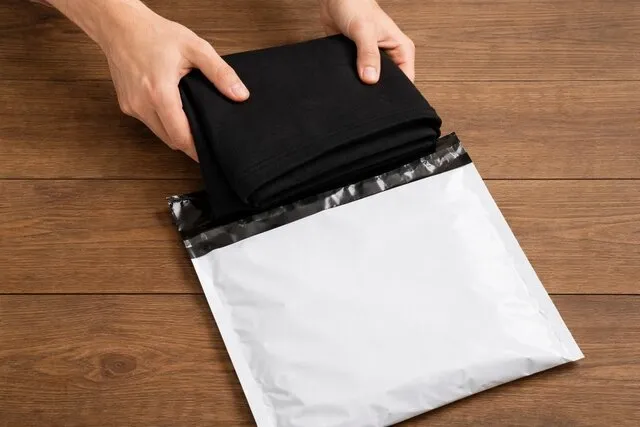
How Does Your Product Type Determine The Right Mailer Choice?
Product characteristics ultimately drive the bubble mailer vs poly mailer decision. Weight, rigidity, fragility, and surface finish all influence how an item behaves in transit. Cost considerations should never override safety entirely, but they should inform the level of protection chosen.
- Soft, compressible products generally tolerate poly mailers well.
- Rigid or delicate items benefit from bubble cushioning.
A low-cost item may not justify premium packaging, whereas a branded or custom product often does. Customer experience also plays a role since receiving a damaged product, even if replaced, undermines trust.
We consistently emphasize balance: protection that aligns with value, risk, and presentation. When your choice between poly and custom holographic bubble mailer reflects the product itself, shipping becomes a supporting process rather than a recurring problem.
Frequently Asked Questions About Poly Mailer Vs Bubble Mailer
What Is The Difference Between A Poly Mailer And A Bubble Mailer?
A poly mailer is a lightweight plastic envelope without padding, while a bubble mailer includes an internal bubble layer for impact protection. The difference affects cost, protection level, and suitable use cases.
Do I Need Both Poly Mailers And Bubble Mailers?
Many businesses benefit from using both, especially when shipping a mix of soft and rigid products. Having both options allows better protection decisions without unnecessary expense.