What Size Backpack Do I Need? Travel, Hiking, School, And Everyday Use
Choosing the right backpack size is one of those decisions that seems simple until it’s not. We often see people focus primarily on brand or style, only to realize later that the capacity doesn’t match their actual needs from the bag.
In this guide, we break down what backpack size you need in practical terms. Read on for help deciding how big your backpack should be based on real-world use rather than guesswork or trends. Backpack size is crucial for comfort, posture, and convenience.


Key Takeaways
- Backpack size should match activity type, duration, and packing habits, not just appearance.
- Proper fit and torso length matter more than raw capacity for long-term comfort.
- Understanding liter ranges helps visualize how much a backpack can truly carry.
- We supply high-quality custom backpacks for a variety of needs, so come to us to explore different backpack styles and sizes at competitive prices.
Table of contents
-
What Size Backpack Do I Need?
-
How Big Of A Backpack Do I Need Based On How I’ll Use It?
-
What Size Backpack For My Height And Body Type?
-
What Does A Backpack Size Chart By Liters Tell You?
-
How Big Is A Backpack In Practical Terms?
-
How Do You Choose The Perfect Backpack Size For Yourself?
-
How Does Activity, Fit, And Packing Style Affect Backpack Size?
What Size Backpack Do I Need?
For everyday use, backpack size depends largely on what you carry and how often you need to access it. Commuting, school, office work, and casual outings generally require space for essentials such as:
- A laptop
- Books
- Lunch
- Chargers
- A light jacket
Only you can truly know what your carrying needs are, and this should be the main component of choosing the optimal backpack size.
In these cases, a small to medium backpack often works best. Smaller backpacks are compact and lightweight, but they can become frustrating if organization is limited. Medium backpacks offer more flexibility without feeling overly bulky.
We have found that people who slightly underestimate their daily carry tend to overstuff their bags, which affects comfort. Understanding the balance between compactness and storage flexibility helps determine what size backpack you should get for regular use - perhaps a custom High Sierra Enzo backpack, for instance.

How Big Of A Backpack Do I Need Based On How I’ll Use It?
In 2026, Activity type is one of the most important factors when deciding how big of a backpack you need. Day use, overnight trips, and multi-day travel all place different demands on storage. It is down to you to think about your specific needs and explore the bags that will work for you.
Here are a couple of examples of poor choices:
- A backpack suitable for daily commuting will not accommodate camping gear.
- A large hiking pack feels excessive for errands.
As trips become longer, gear becomes bulkier, increasing volume needs. Clothing layers, food, and specialized equipment quickly add up. We encourage readers to think about duration and purpose together rather than focusing on a single trip.
This perspective helps narrow down backpack size before moving into more specific categories like camping or backpacking. For many basic needs, it might be more prudent to think about how to style a belt bag rather than choose a large backpack - only you can determine your needs.
What Size Camping Backpack Do I Need For Different Trips?
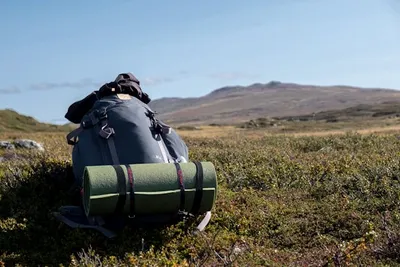
Camping backpacks vary widely depending on trip length and style. Car camping allows for larger packs or multiple bags, while weekend camping requires fitting tents, sleeping bags, cookware, and clothing into one backpack.
A comprehensive review in the International Journal of Environmental Research and Public Health discusses how optimal load placement and design features vary depending on activity and load. Multi-day camping increases size needs even further, especially when carrying food and water.
Seasonal gear also matters - for example, colder weather demands bulkier insulation. Here’s a general, very simple guideline:
- Shorter trips may work with moderate-sized backpacks
- Longer outings require higher capacity.
We have seen many campers struggle with packs that are technically large enough but poorly organized. Choosing the right size camping backpack means accounting for both volume and how gear fits together efficiently.
Looking for a good backpack for daily use?
Work with us to create a custom Bellroy Transit 20L workpack and enjoy functional superiority with a stylish, personalized look at a great price.
What Size Backpack For My Height And Body Type?
Height alone does not determine what size backpack you need. Torso length is the key measurement that affects how a backpack fits your body. Things like custom Bellroy Lite recycled sling 7L fanny packs are more flexible, but the correct backpack size is important for comfort.
Two people of the same height may require different pack sizes due to variations in proportions. Improper sizing often leads to issues over time, such as:
- Shoulder strain
- Lower back discomfort
- Poor posture
We emphasize fit over raw capacity because a well-fitted backpack carries weight more efficiently, even if it is slightly smaller. Adjustable packs can help fine-tune fit, but understanding your body type makes a noticeable difference.
Selecting a backpack that matches your torso length supports comfort, balance, and long-term usability. We supply custom Topo Designs recycled Rover 15 laptop backpacks and an abundance of other backpack types that can be personalized and bought at competitive prices for varying needs.
How Do I Measure Myself For A Backpack?
Measuring yourself correctly is an essential step when deciding what size backpack you need, especially for hiking or travel. The most important measurement is torso length, not overall height.
It is fairly straightforward to measure your torso for backpack fit. Here’s how it’s done:
- To begin, locate the C7 vertebra, which is the bony bump at the base of your neck when you tilt your head forward.
- Then find the top of your hip bones, known as the iliac crest.
- Measure the distance between these two points along your spine.
We recommend having another person take this measurement to ensure accuracy. Once you have your torso length, you can compare it to manufacturer sizing guidelines. A systematic review of physiological responses across different backpack loads helps to understand considerations related to different sizes and weights.
This step often surprises people, as assumed sizes frequently differ from actual fit. Accurate measurements make choosing a comfortable backpack far more predictable.
How Do You Measure Backpack Sizes And Fit?
Backpack sizes are measured using two main factors: volume and fit. Manufacturers usually list capacity in liters, while fit relates to torso length ranges. Adjustable backpacks allow the suspension system to shift, accommodating different torso sizes, whereas fixed-size packs are built for specific ranges.
Confusion often arises when shoppers mix up torso size with volume. A study into carrying methods for different loads demonstrates how size plus weight impacts posture and discomfort. A large-capacity backpack may still fit poorly if the suspension does not match your body.
Once you have measured your torso length, we advise reading sizing charts carefully and checking adjustment limits. Understanding how brands label backpack sizes helps avoid assumptions and ensures the pack carries weight correctly instead of pulling uncomfortably on shoulders or hips.
What Does A Backpack Size Chart By Liters Tell You?
Liters describe the internal volume of a backpack and provide a more accurate picture than external dimensions. A backpack size chart helps translate capacity into practical use cases, such as daily carry, hiking, or backpacking.
When you look at standard backpack sizes, you will probably find details for both the external dimensions and the number of liters it can carry. Unlike height or width measurements, liters account for things like:
- Pockets
- Compartments
- Expandable areas
We find that liter charts simplify decision-making by narrowing options quickly. However, they should be viewed as guidelines rather than strict rules. Internal organization and packing style can affect how usable that space feels.
Understanding what liter ranges typically hold prepares readers for selecting the right size backpack confidently. This is a decision that takes time and attention, and you should definitely take the capacity in liters into account.
What Backpack Fits Into Each Liter Range?
Backpack capacity ranges serve different purposes. It is down to you to explore the available liter ranges and determine which one is the best fit for your needs. Let’s look at the full spectrum of liter ranges and suggest some possible uses for them:
- 0-10 liters: These packs suit minimalist carry like essentials only.
- 10-20 liters: Packs with this capacity work for light commuting or short outings.
- 20-30 liters: These packs are common for day hiking or school use.
- 20-40 liters: This capacity often suits weekend trips.
- 40-50 liters: With this capacity, packs fit ultralight travel.
- 50-60 liters: Packs in this range are typical for backpacking.
- 60-70 liters: These packs support multi-day trips.
Packs above 70 liters are used for expeditions or winter travel. While these ranges help visualize capacity, packing habits and organization can make the same size feel very different in practice.
Laboratory analysis has explored how backpack size and load distribution affect gait and posture in hikers. The results suggest that, regardless of backpack size, if you don’t distribute the load evenly, you could experience discomfort and poor posture.
|
Backpack Size (Liters) |
What It Can Comfortably Hold |
|
5–10L |
Phone, wallet, keys, sunglasses, compact water bottle, small snacks |
|
10–15L |
Tablet or slim laptop, charger, notebook, water bottle, light layer |
|
15–20L |
13–15” laptop, charger, notebook, lunch, water bottle, compact jacket |
|
20–25L |
Laptop, lunch, over-ear headphones, book, jacket, gym clothes |
|
25–30L |
Laptop, full workday essentials, shoes or gym kit, rain shell |
|
30–35L |
1–2 outfits, toiletries, shoes, laptop, chargers |
|
35–40L |
2–3 outfits, shoes, toiletries, tech pouch, light jacket |
|
40–50L |
3–5 outfits, shoes, toiletries, jacket, small towel |
|
50–60L |
Tent or tarp, sleeping bag, stove, food, clothing layers |
|
60–70L |
Multi-day camping gear, cold-weather layers, food, cookware |
|
70L+ |
Expedition gear, winter equipment, extended food and water |
Create your own regular-use backpack
With our service, you can customize a Case Logic Jaunt recycled 15 computer backpack to carry your everyday essentials when commuting or on days out.
Learn moreHow Big Is A Backpack In Practical Terms?
Backpack size can feel very different once worn. Two backpacks with identical liter capacities may carry differently due to internal layout, frame structure, and pocket placement. A well-organized pack distributes gear efficiently, making it feel smaller and more balanced.
Conversely, poor organization wastes space and shifts weight awkwardly. We often advise visualizing what you plan to carry rather than relying solely on numbers. Translate abstract capacity into real-world use by thinking in terms of things like:
- Jackets
- Shoes
- Food containers
This approach makes choosing the right backpack size more intuitive and realistic. A study involving 10 different backpack configurations with trained infantry soldiers found that backpack weight and volume measurably affected physical performance, and load placement is a key part of this.
Seeking a stylish backpack with a good capacity?
We can help you create a custom High Sierra Curve backpack with various panels and compartments and abundant storage capacity for your needs.
How Do You Choose The Perfect Backpack Size For Yourself?
Choosing the perfect backpack size combines activity type, trip length, and personal packing habits. Minimalist packers can often size down, while those who prefer extra layers or gear may need more space.
Fit should always be confirmed before committing, as even the right volume can feel wrong if it sits poorly. We recommend trying backpacks with weight inside to assess comfort. It may also be relevant to think about how to wash a dirty backpack, as maintenance of your pack is crucial at any size.
You can get more insight into how the pack will behave in motion by adjusting:
- Straps
- Load lifters
This process helps avoid regret and ensures your backpack supports your needs rather than complicating them.
How Does Activity, Fit, And Packing Style Affect Backpack Size?
Daily commuting, travel, and outdoor adventures all demand different backpack sizes. Activity determines baseline volume, while fit dictates how comfortably that volume is carried. For some, a custom Bellroy Via 16 work bag might be a better choice than a backpack.
Packing style adds another layer, as some people prefer streamlined loads and others carry extras “just in case.” Torso fit often matters more than size alone, particularly for long wear. We have seen smaller packs outperform larger ones simply because they fit correctly.
Make smarter, more comfortable backpack choices by balancing:
- Activity needs
- Body fit
- Personal habits
With our service, you can create your own custom Jansport Cool student 15 computer backpack or any other variety to get the right solution for your needs. We offer various customization options and competitive pricing, including bulk options, for maximum convenience.