Can You Look At A Solar Eclipse With Sunglasses? Safe Methods & Totality Timing
Solar eclipses are fascinating astronomical events, and even people who rarely think about space can become captivated when one approaches. On the question of whether you can look at a solar eclipse with sunglasses, the simple answer is no.
Though sunglasses protect against everyday brightness, they cannot shield your eyes from the concentrated intensity of looking directly at the sun. In this guide, we explain proper viewing techniques, clarify the risks, and offer practical advice based on both scientific consensus and personal experience observing multiple eclipses.
Key Takeaways
- The most important rule of eclipse viewing is that ordinary sunglasses, no matter how dark or “protective” they appear, are not safe for looking at the sun.
- Sunglasses filter brightness not the intense ultraviolet and infrared radiation that can cause permanent retinal injury.
- Safe viewing requires specialized solar filters meeting ISO 12312-2 standards, or other proven methods that make it safe without specialist equipment.
- We supply high-quality custom sunglasses that are not safe for viewing an eclipse but make a great personalized option for general eye protection on sunny days.
Table of contents
-
Can You Look At A Solar Eclipse With Sunglasses?
-
What Can You Safely Use Instead Of Sunglasses During A Solar Eclipse?
-
When Can You Safely Remove Eclipse Glasses During A Total Solar Eclipse?
-
What Is The Danger Of Looking Directly At The Sun During An Eclipse?
-
How Can You Tell If Your Eclipse Glasses Or Handheld Viewers Are Safe?
-
What Additional Eclipse Safety Precautions Should You Consider?
Can You Look At A Solar Eclipse With Sunglasses?
Regular sunglasses cannot protect your eyes during a solar eclipse under any circumstances. For people who ask if you can look at a solar eclipse with sunglasses, the assumption is that the dark or polarized lenses will block enough sunlight.
The truth is that even the highest-quality sunglasses only reduce visible brightness. They do not prevent the intense ultraviolet and infrared radiation that causes retinal burns. This is why the answer is always the same when people ask if they can look at the eclipse with sunglasses: no.
Special-purpose ISO-certified filters are required to view the sun directly. These filters do something that ordinary sunglasses can never accomplish - they reduce sunlight to a safe level. Having personally tested premium polarized lenses against certified eclipse glasses, the difference is substantial.
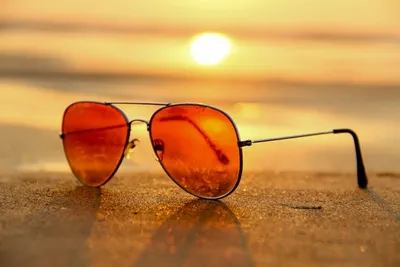
Products like Admired customized sunglasses make the sun appear dimmer, but they cannot protect your vision. If you relied on them to look at a solar eclipse, you could do permanent damage to your eyes in a matter of seconds.

Is It Safe To View An Eclipse With Regular Sunglasses?
Regular sunglasses, regardless of tint, polarization, or UV-blocking ability, are not safe for eclipse viewing. Scientifically, sunglasses filter visible light but allow dangerous levels of ultraviolet and infrared radiation to pass through.
Even if the sun feels less bright, the invisible rays remain intense enough to injure your retina. Many people ask if we can see a solar eclipse with sunglasses, assuming high-end brands offer better protection. Unfortunately, price does not change the physics.
Whether inexpensive or premium, sunglasses are designed for everyday glare reduction, not direct solar observation. During an eclipse, sunlight becomes deceptively comfortable to look at, encouraging people to stare longer. This increases the risk of the following types of injuries:
- Photochemical
- Thermal
We have all seen reports of people unknowingly damaging their eyes during past eclipses. As such, remember that even the best promotional products for business in the form of sunglasses are not safe for looking at eclipses. Safe viewing in 2026 requires ISO-certified solar filters, not fashion accessories.
Let’s look at some common eclipse myths:
|
Myth |
Why People Believe It |
Truth (What Actually Happens) |
Why It’s Dangerous |
|
“Sunglasses are dark enough to view an eclipse.” |
Dark lenses feel protective. |
Sunglasses only reduce visible light—they do not block dangerous UV/IR radiation. |
Causes retinal burns within seconds. |
|
“Polarised sunglasses offer extra protection.” |
Polarisation reduces glare, making the sun look dimmer. |
Polarisation has zero impact on ultraviolet or infrared penetration. |
Makes the sun look safer, encouraging longer staring. |
|
“Two pairs of sunglasses = double protection.” |
People assume stacking lenses compounds safety. |
Stacking sunglasses still allows thousands of times too much UV/IR to enter the eye. |
False sense of security leads to prolonged direct viewing. |
|
“Cloudy weather makes it safe to look.” |
Clouds reduce brightness dramatically. |
Clouds only dim visible light—harmful wavelengths still pass through. |
You stare longer without discomfort, increasing retina exposure. |
|
“Phone cameras or screens protect your eyes.” |
People think the phone “blocks” the sun for you. |
The sun’s rays still enter your eyes while aligning the camera. |
You still look directly at the sun, plus phone sensors can burn. |
|
“You can look safely during a 99% partial eclipse.” |
99% sounds close enough to totality. |
Even 1% of the sun is dangerously bright. Only 100% totality is safe. |
This misconception leads to the highest number of injuries. |
What Can You Safely Use Instead Of Sunglasses During A Solar Eclipse?
Safe eclipse viewing requires tools specifically engineered to reduce sunlight to a harmless level. Certified eclipse glasses labeled with ISO 12312-2 compliance are the most accessible option for the general public.
The Royal College of Ophthalmologists in the UK warns that there is no safe way to directly view a solar eclipse without proper protection. If you’re wondering if you can use sunglasses to look at a solar eclipse, the answer is a very simple “no”.
There are a couple of other makeshift options you could consider:
- Handheld solar viewers are another excellent choice and are often more durable than disposable eclipse glasses.
- For families and classrooms, pinhole projectors or indirect viewing methods create surprisingly clear and safe images without ever looking at the sun directly. People who have used these with children during past events often find the indirect methods more fun and understandable.
- Welders’ glass of shade 14 can also be used safely, though anything lower is insufficient.
The key is ensuring the tool blocks both visible and invisible harmful wavelengths, something sunglasses simply cannot guarantee. Making false claims is one of the most common mistakes to avoid when using promotional products for small business. Telling people they can view an eclipse through your sunglasses could have serious consequences.
Why Should You Avoid Cameras, Phones, Or Telescopes Without Proper Filters?
Optical devices such as cameras, binoculars, and telescopes concentrate sunlight to extreme levels, amplifying danger to both eyes and equipment. Using these devices without proper solar filters, even if you are wearing eclipse glasses, can cause immediate retinal burns.
We have seen reports of camera sensors permanently damaged by brief exposure during past eclipses. The same concentrated energy can harm your vision even faster. People who question whether you can wear sunglasses for a solar eclipse overlook the fact that sunglasses offer no protection when sunlight is magnified through lenses.
Eclipse glasses cannot substitute for telescope or camera filters because they are designed for diffuse sunlight, not magnified rays. Additionally, when you point phones and tablets directly at the sun, they can suffer things like:
- Overheating
- Lens damage
Proper solar filters must be mounted securely on the front of the device, not held in front by hand. If you cannot obtain a certified filter for your optical equipment, use indirect viewing methods instead. Never rely on sunglasses, which are essentially types of promotional products with logos that reduce indirect sunlight.

Looking for some stylish sunglasses for daily use?
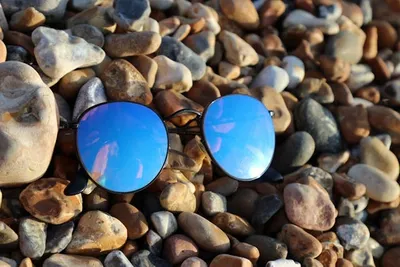
Our custom Makrolon mirrored sunglasses offer effortless style but are not adequate protection for looking at an eclipse.
When Can You Safely Remove Eclipse Glasses During A Total Solar Eclipse?
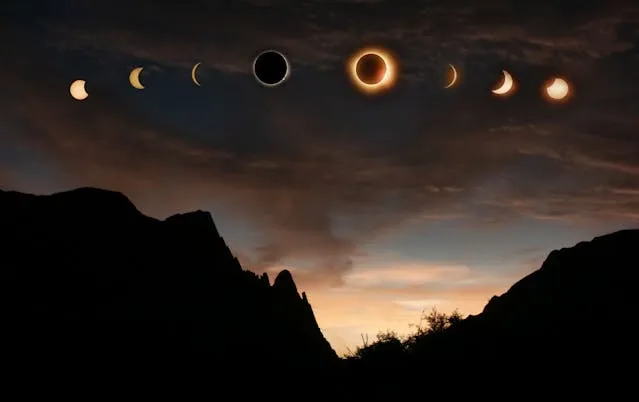
You can only remove your eclipse glasses during the brief period of totality - the moment when the moon completely covers the sun and no direct sunlight reaches Earth. This phase can last anywhere from a few seconds to several minutes, depending on the eclipse.
Totality is the only time when there is a slight change in the answer to the question of whether you can wear sunglasses for a solar eclipse. During totality, you don’t need any protective glasses at all.
It’s important to note that this only applies to total eclipses. There is no stage where eye protection can be removed safely if you are looking at other eclipse types, like:
- Partial
- Annular
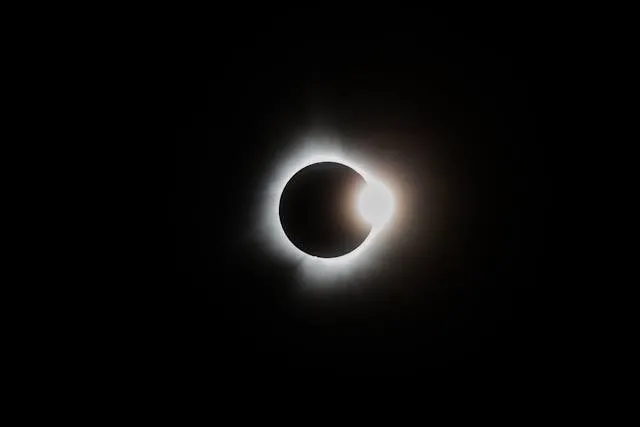
Having observed several eclipses firsthand, we can warn you that the transition into and out of totality happens faster than you might expect. As soon as the first bright bead of sunlight appears - the “diamond ring” effect - eclipse glasses must go back on immediately.
Though not suitable for eclipse viewing, our custom Alluring aviator sunglasses and other models look fantastic, offer diverse options for personalization, and deliver excellent protection against UV light in normal conditions. Work with us to explore options.
Enjoy a stylish, bespoke set of sunglasses
With our custom two-tone sunglasses, you can create real style, but not a product suitable for looking at a solar eclipse.
Learn moreWhat Is The Danger Of Looking Directly At The Sun During An Eclipse?
Looking directly at the sun during a solar eclipse exposes your eyes to concentrated ultraviolet and infrared radiation. What makes eclipses uniquely dangerous is the deceptive comfort they create. Because the sun appears dimmer, people feel safe staring at it longer.
Questions about whether you can use sunglasses for a solar eclipse arise because brightness drops, but harmful radiation does not. Ophthalmologists explain that this combination leads to a higher risk of retinal injury - a condition known as solar retinopathy.
During partial phases, the sun’s intensity remains strong enough to burn photoreceptors, even if you don’t feel immediate discomfort. When you listen to individuals who experienced blurred vision after eclipses they viewed improperly, the regret is always profound.
The eye lacks pain receptors in the retina, so damage occurs silently. Without proper solar filters, irreversible harm can occur within seconds. Understanding the seriousness of this risk is essential for anyone planning to watch an eclipse safely.
Why Does Staring At The Sun Cause Severe Vision Loss?
Staring at the sun, even briefly, can cause a condition known as solar retinopathy. This occurs when intense visible, ultraviolet, and infrared radiation burns through the delicate photoreceptor cells in the retina.
These cells do not regenerate, which is why damage can be permanent. During eclipses, people often ask if you can wear sunglasses for a solar eclipse because the sun seems dimmer, but this illusion increases danger. The reduced brightness tricks the brain into thinking it’s safe to look longer, allowing more concentrated radiation to reach the retina.
Once photoreceptors are damaged, symptoms of damage can start to appear within hours. These can include:
- Blind spots
- Distorted vision
- Color changes can appear within hours
We’ve heard firsthand accounts from people who thought their sunglasses were enough, only to realize later that their vision had been permanently altered. Solar retinopathy is preventable, but only with proper eclipse filters.
Other types of harm that can occur during solar eclipses need further study. For example, researchers have noted potential effects of eclipses on animal behavior and atmosphere measurement, though the true level of risk has not been determined yet.
How Can You Tell If Your Eclipse Glasses Or Handheld Viewers Are Safe?
Ensuring your eclipse glasses are safe begins with checking for ISO 12312-2 certification. This is the international standard required for solar viewing. For traceability, safe glasses should include:
- The manufacturer’s name
- Instructions
- A lot number
If you’re wondering whether you can use sunglasses to look at eclipse, certified eclipse glasses are the correct alternative - not everyday sunglasses. Hold them up to a bright lamp indoors: you should see almost nothing except the lamp itself as a faint, dim glow. If you see household objects, they are unsafe.
Additionally, glasses should be free of scratches, punctures, warping, or loose filters. We find that genuine products always feel sturdier and more consistent in tint compared to counterfeits. Handheld viewers must follow the same standards.
When in doubt, compare them to a verified pair or consult reputable vendors listed by astronomy organizations. Proper certification is your clearest indication of safety. Making it safe to view an eclipse can be life-changing - a landmark empirical study in 2017 found that watching an eclipse leads to increased feelings of social connection, humility, and collective identity.
How Do You Check If Eclipse Glasses Are Counterfeit Or Damaged?
Counterfeit eclipse glasses have become increasingly common, especially online. While reviewing eclipse safety, people sometimes ask if you can wear sunglasses for a solar eclipse. The answer is no, but uncertified eclipse glasses can be just as dangerous.
To ensure safety, examining the:
- Print quality
- Certification markings
- Manufacturer details.
Blurry logos or missing ISO 12312-2 labels are red flags. If you’re still unsure, test them by facing a bright indoor light. You should barely see the bulb - certainly not the lamp shape or surrounding objects.
If the lenses admit too much light, they’re unsafe. Make sure the filters are uniform; patchy or inconsistent areas indicate poor manufacturing. Always inspect for scratches, tears, or creases, as even minor damage compromises safety.
We recommend purchasing only from reputable astronomy suppliers or local science centers. When a product feels flimsy, overly shiny, or suspiciously cheap, trust your instincts. One recent study published a so-called “Okay Method” that you could study to observe an eclipse without risking eye damage.
Need some anti-blue light sunglasses?
While they won’t protect your eyes when looking at a solar eclipse, these custom anti-blue light sunglasses offer other protection and a stylish aesthetic.
What Additional Eclipse Safety Precautions Should You Consider?
Beyond eye protection, eclipse viewers should consider environmental and situational safety. Preparing ahead ensures that your viewing experience remains enjoyable, safe, and stress-free.
You may spend long periods outdoors, so it is wise to consider:
- Sunscreen
- Hats
- Long-sleeve t-shirts or protective clothing
Crowds can become dense during major events, so stay aware of your surroundings and avoid sudden movements while looking upward. Tripod legs, backpacks, and uneven ground create tripping hazards when your gaze is fixed on the sky.
Many people become so focused on questions about wood-tone sunglasses and other eye protection that they forget basic comfort. Water, shade, and breaks are important during warm weather. Protect children by supervising their eyewear closely and teaching them not to remove eclipse glasses prematurely.
Pets should also be kept from staring upward, though the risk is lower since animals rarely look directly at the sun.
Frequently Asked Questions About Can You Look At A Solar Eclipse With Sunglasses
Can You Look At A Solar Eclipse With Sunglasses For Safe Eclipse Viewing?
No. Regardless of tint, polarization, or UV rating, sunglasses cannot block the dangerous radiation emitted by the sun during an eclipse. Only ISO-certified solar filters provide adequate protection.
How Can You Safely Watch A Solar Eclipse?
Use certified eclipse glasses, handheld solar viewers, or indirect projection methods. For optical equipment like cameras or telescopes, only specialized solar filters attached to the front of the lens are safe.