How To Measure A Poly Mailer For Shipping? Steps, Dimensions, And Mistakes To Avoid
Learning how to measure a poly mailer for shipping sounds straightforward, yet it is one of the most common points of failure we see among small businesses and first-time shippers. A few millimeters misjudged can result in torn seams, rejected parcels, or unexpected postage increases.
In this guide, we break down the steps for how to measure a poly mailer for shipping. Let us highlight frequent mistakes and explain why precision matters more than speed when preparing shipments.

Key Takeaways
- Always measure poly mailers flat and empty to avoid distorted dimensions and sizing errors.
- Product-first measurement ensures better protection and prevents costly returns or repackaging.
- Small allowances for bulk and handling stress make shipping more reliable and predictable.
- We supply high-quality custom poly mailers and other shipping solutions that you can personalize and order in a variety of sizes to get the optimal solution for your needs.
Table of contents
-
How To Measure A Poly Mailer For Shipping?
-
How Big Of A Poly Mailer Do You Need For Your Product?
-
What Are The Dimensions Of A Poly Mailer?
-
What Does L x W x H Mean When Measuring A Poly Mailer?
-
How Do You Measure Your Product Before Choosing A Poly Mailer?
-
How Much Wiggle Room Should You Allow In A Poly Mailer?
-
How Do You Measure An Empty Poly Mailer Before Use?
-
How Should Shipping Method And Handling Affect Your Measurements?
How To Measure A Poly Mailer For Shipping?
Learning how to measure a poly mailer for shipping is less complicated than it first appears, but it does require consistency. We always recommend starting with a clean, empty mailer laid on a flat surface.
From here, the steps are as follows:
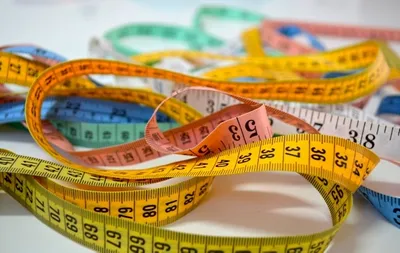
- Use a rigid ruler or tape measure rather than estimating by hand.
- Measure the width from left to right.
- Then measure the height from top to bottom.
- Accuracy matters here, because even small errors can affect postage tiers and carrier acceptance.
Many returns we have seen over the years stem from guessing instead of measuring. Understanding how to measure poly bags for shipping in 2026 before you order or pack helps avoid wasted materials and unexpected costs.
When measurements are done correctly upfront, you will get the best possible experience with your custom matte bubble mailers or other variations. Reduce the risk of damaged goods, rejected parcels, and overspending on oversized mailers.
How Do You Lay A Poly Mailer Flat Before Measuring It?
A poly mailer must always be measured empty and fully flat. This step is often overlooked, yet it has a direct impact on accuracy. We typically smooth the mailer with my hands, pushing out trapped air and straightening creases before measuring.
Wrinkles can easily add half an inch or more if ignored. Measuring while the bag is filled is another common mistake, as it exaggerates dimensions and leads to purchasing mailers that are unnecessarily large.
When learning how to measure a poly mailer correctly, remember that carriers base acceptance on flat dimensions, not stretched ones. Flattening is also helpful for putting stamps on bubble mailers.
Taking an extra moment to flatten the material ensures your recorded size reflects reality rather than worst-case expansion, which ultimately saves money and prevents confusion.
|
Scenario |
Product Description |
Measured Product Size (L × W × T) |
Bulk Calculation (Rule Applied) |
Recommended Mailer Size |
|
1. Single T-Shirt (Folded) |
Standard cotton T-shirt, folded for shipping |
10” × 8” × 1” |
Width needed ≈ 8” + (2 × 1”) = 10” |
10” × 13” poly mailer |
|
2. Hoodie (Bulky Soft Good) |
Adult hoodie, folded compactly |
12” × 10” × 2.5” |
Width needed ≈ 10” + (2 × 2.5”) = 15” |
14.5” × 19” poly mailer |
|
3. Two-Item Apparel Bundle |
T-shirt + baseball cap packed together |
12” × 9” × 3” |
Width needed ≈ 9” + (2 × 3”) = 15” |
15” × 18” poly mailer |
How Big Of A Poly Mailer Do You Need For Your Product?
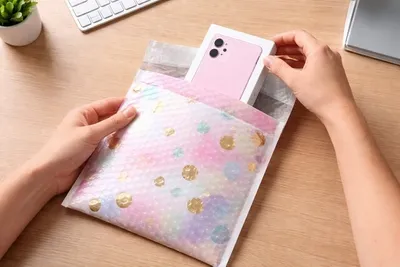
Choosing the right size begins with the product, not the packaging. Measure your item’s length, width, and thickness first, then compare those numbers to available mailer sizes. Experts agree that it’s important to understand how flexible packaging dimensions affect handling, sorting, and shipping performance to assess the optimal size.
In our experience, undersizing causes far more issues than selecting a slightly larger option. A mailer that is too tight risks things like:
- Seam failure
- Visible stretching
Both of these are things that carriers notice. When deciding how to measure poly mailer needs, consider not only dimensions but also shape. Soft goods compress easily, while rigid items do not. If the product barely fits, it usually does not fit well enough.
Allowing for realistic bulk ensures the package closes securely and survives transit without stress on seals or adhesive strips.
How Do You Calculate The Size Of A Poly Mailer For Shipping?
Calculating the correct size involves understanding how length, width, and depth interact. Start with the product’s flat dimensions, then account for thickness by doubling it and adding it to the width calculation.
This is where many sellers misjudge how to measure poly mailer requirements. We usually advise sizing up if the math produces a borderline result. Poly mailers have limited stretch before seams weaken.
If your product has uneven bulk, measure the thickest point rather than the average. Calculations should reflect the worst-case scenario, not the ideal one. This will help you get the best possible results for how to use custom printed promotional items effectively.
This approach may feel cautious, but it prevents damaged packaging and ensures smoother acceptance across carriers that enforce dimensional consistency.
Looking for custom poly mailers in various sizes?
We offer a range of sizes for our custom poly mailers and you can personalize them however you need for your business.
What Are The Dimensions Of A Poly Mailer?
Poly mailer dimensions are typically listed as width by height when laid flat. This can confuse first-time shippers who expect a three-dimensional measurement. Thickness is implied rather than stated.
Standard sizes are designed to accommodate common product categories, but actual usable space depends on material flexibility. From experience, listed dimensions are reliable for flat items but optimistic for bulky contents. This is why understanding how to measure poly mailer sizing yourself is so important.
If you require precise fits or branded packaging, work with us to create custom poly mailers for a practical solution. This can be especially helpful when you want consistent results across shipments. We can even supply custom circle stickers and other things for your shipping needs.
Accurate dimension awareness helps prevent overbuying and improves packing efficiency.
What Does L x W x H Mean When Measuring A Poly Mailer?
Length, width, and height describe order, not always physical orientation. For poly mailers, height usually refers to the opening-to-seal measurement, while width runs side to side. There are studies that analyze things like how polybags will behave on conveyor systems and during transit, but you have to measure the dimensions yourself.
Height is not depth, which often causes confusion. When carriers process shipments, they interpret these fields consistently, even for flat packaging. We have seen errors occur simply because sellers reversed width and height when listing sizes.
Knowing how to measure a poly mailer correctly includes understanding this order so your records align with carrier systems. Clear labeling reduces disputes, prevents misrated shipments, and ensures your packaging data remains accurate across platforms.
Why Is It Recorded As Width x Height For Mailers?
Mailers differ from boxes because they are flat packaging by design. Width and height are recorded instead of length, width, and depth since thickness varies with contents. A peer-reviewed study from 2010 highlights the importance of measuring package dimensions for small shipments, so you need to understand the appropriate dimensions for you.
This convention simplifies categorization for carriers and suppliers. When learning how to measure poly bags for shipping, it helps to accept that mailer standards are intentionally different. In practice, this system works well as long as thickness is accounted for during product measurement.
In our personal experience, we find this format easier once you stop thinking in rigid dimensions and start thinking in usable surface area. Understanding this distinction avoids mismatched expectations when comparing mailers to boxes or cartons.
Create your own bubble mailers in any size
Work with us to create custom matte bubble mailers with reliable, durable protection and branded designs available in any size.
Learn moreHow Do You Measure Your Product Before Choosing A Poly Mailer?
Always measure the product first, including any protective wrapping you plan to use. Guessing leads to wasted materials and repacking delays. Researchers emphasize the importance of geometric shape and dimensional variability of small consignments for handling systems - accuracy is crucial.
We recommend measuring at the widest and thickest points, especially for irregular shapes. Soft items may compress, but you should not rely on compression to make sizing work. These properties are unpredictable, and you certainly don’t want to overcompress products.
When determining how to measure a poly mailer properly, remember that the product dictates the mailer, not the other way around. Measuring accurately upfront allows you to select a size that seals easily, protects the contents, and meets carrier guidelines without forcing or stretching the packaging.
How Much Wiggle Room Should You Allow In A Poly Mailer?
Wiggle room is a balance between protection and efficiency. Too little space strains seams, while too much increases shipping costs. This is the fine line you walk with these products, and the same applies to custom product boxes in shipping.
We usually allow an extra half inch to one inch in width, depending on product bulk. Fragile items may require more room for internal padding. When applying how to measure a poly mailer logic, think about handling stress during transit.
During shipping, packages are subject to:
- Squeezing
- Stacking
- Shifting
A small buffer prevents tearing and adhesive failure. From experience, slightly generous sizing often saves more money than it costs by reducing damaged shipments and customer complaints.
How Does Bulk Change Poly Mailer Size Calculations?
Bulk introduces depth, which must be translated into width. A common rule is to double the thickness and add it to one side of the mailer. This is usually sufficient to accommodate the depth needed for your products.
Bulky items also resist compression, so assumptions about stretch can be risky. Researchers have explored dimensional adjustment in packaging as it relates to achieving the perfect product fit. We have seen poly mailers split simply because bulk was underestimated.
Understanding how to measure poly mailer needs means respecting material limits. Compression has boundaries, and once exceeded, failure is likely. This is why we do not recommend relying on compression when assessing the right mailer size for you.
Accounting for bulk accurately ensures seals close properly and packages maintain their integrity throughout the shipping process. This will ensure safe handling of your products during shipping.
Want a more distinctive look for your custom mailers?
We can create custom holographic bubblemailers in any size with your branded designs for a high-quality, durable, and protective shipping solution.
How Do You Measure An Empty Poly Mailer Before Use?
Measuring an empty poly mailer confirms whether listed dimensions match reality. Manufacturing tolerances can vary slightly. Knowing how to measure a poly mailer yourself helps you identify discrepancies early.
Here is a basic process you can follow to get accurate measurements for an empty poly mailer:
- Lay the mailer flat
- Smooth it out
- Measure edge to edge without stretching
- Do this for both length and width
This simple process is especially useful when consistency matters across large shipments. I often recommend spot-checking new batches to ensure uniformity. Custom poly mailers are among the most popular types of promotional products for business because they can be very effective at communicating your brand, but size is everything.
This small habit prevents packing delays and avoids surprises when products that once fit suddenly no longer do.
How Should Shipping Method And Handling Affect Your Measurements?
Different carriers handle parcels differently, and this should influence sizing decisions. We generally allow extra space for international shipments to account for rougher handling. By doing this, we ensure products pass seamlessly through the requirements without any wasted space or weight.
Here’s an example of the types of differences you might encounter with different shipping methods:
- Domestic shipping: With this, carriers may allow tighter fits.
- International routes: These tend to involve more handling and longer transit times.
When learning how to measure poly mailer requirements, factor in destination and service level. This will allow you to determine whether to pack in a basic or custom holographic bubble mailer, and also evaluate size needs to ensure safe shipping with no delays.
Lightweight efficiency is important, but durability matters more when packages travel farther. Thoughtful measurement protects your product and reduces the risk of transit-related damage.
Frequently Asked Questions About How To Measure A Poly Mailer For Shipping
How To Measure A Poly Mailer For Shipping The Right Way?
Lay the mailer flat and empty, smooth out wrinkles, and measure width and height accurately using a ruler or tape measure.
How Do You Match Your Product To The Right Mailer Size?
Measure the product first, include bulk and padding, then choose a mailer that allows secure closure without stretching.