How Many Granny Squares To Make A Blanket: Throw, Baby, Twin And Queen Size
The question of how many granny squares to make a blanket often comes up right after someone finishes their first square. Figuring out how many you will need isn’t complicated, but it does require a little planning upfront.
In this guide, we show how the size of each square, the final blanket dimensions, and even the joining method all play a role. Once you understand how these pieces connect, the process feels more manageable and a lot more enjoyable to work through.

Key Takeaways
- The number of granny squares depends on blanket size and square dimensions, so simple math upfront saves time and yarn later.
- Small squares create more detail but require more joining, while larger squares reduce effort and speed up completion.
- Always test a few joined squares first, since blocking and seams can slightly change the final size.
- We supply high-quality custom blankets with personalized designs and you can enjoy a range of sizes and competitive pricing with no compromise on quality.
Table of contents
-
How Many Granny Squares To Make A Blanket?
-
How Many Granny Squares To Make A Throw Blanket?
-
How Many Granny Squares To Make A Baby Blanket?
-
How Many Granny Squares To Make A Queen Size Blanket?
-
How Many Granny Squares To Make A Twin Size Blanket?
-
How To Use A Blanket Calculator For Granny Square Counts?
-
Can You Make A Blanket Out Of One Big Granny Square?
-
What If My Blanket Will Take Too Many Squares To Make?
How Many Granny Squares To Make A Blanket?
The easiest way to approach how many granny squares to make a blanket is to break it into width and length. We take the finished square size, divide it into the desired blanket width, then do the same for the length. Multiply those two numbers and you have your total.
This looks simple on paper, but real life adds a few wrinkles. For example:
- Joining seams take up space.
- Blocking can stretch or tighten your squares slightly.
We usually make a small sample grid first to see how everything behaves. Before starting, it helps to note your target size, square size, and yarn availability so you are not adjusting halfway through. Alternatively, order a custom fleece blanket in your desired size and get the finished product delivered.
How Many Granny Squares For A Blanket?
We tend to see people underestimate how much square size changes the total count. A blanket made with 4 inch motifs can easily require double the pieces compared to one using 6 inch squares.
So when we think about how many granny squares for a blanket, it is less about a fixed number and more about proportions. Layout matters too:
- A strict grid feels tidy but can leave you with awkward leftovers.
- A more relaxed layout gives you flexibility if your count is slightly off.
We usually suggest deciding the visual style early, because it directly affects how many granny squares in a blanket you will realistically need.
|
Blanket Type |
Finished Size (inches) |
Finished Size (cm) |
4" Squares (Total) |
5" Squares (Total) |
6" Squares (Total) |
|
Baby |
30" × 36" |
76 × 91 cm |
72 (8×9) |
42 (6×7) |
30 (5×6) |
|
Throw |
50" × 60" |
127 × 152 cm |
195 (13×15) |
120 (10×12) |
90 (9×10) |
|
Twin |
66" × 90" |
168 × 229 cm |
391 (17×23) |
234 (13×18) |
165 (11×15) |
|
Queen |
90" × 100" |
229 × 254 cm |
575 (23×25) |
360 (18×20) |
255 (15×17) |
How Many Squares For A Granny Square Blanket?
We always start by deciding how many squares go across the width. That single decision shapes the entire project. Once that feels right, we map out how many rows are needed down the length.
This avoids the common issue where a blanket ends up too narrow or overly long. When mixing colors or motifs, the math still applies, but we stay mindful of balance. A quick trick we use is joining one full row early on.
This gives a more honest sense of scale than a single square ever could, especially when calculating how many squares for a granny square blanket in a real setting. The same process applies to joining custom square table covers to make a rectangle shape.
How Many Granny Squares Do You Need For A Blanket?
There is always the number you calculate, and then there is the number you actually need. We usually add a buffer without thinking twice. This is helpful because:
- Yarn tension shifts
- Mistakes happen
- Sometimes we just change our mind halfway through
When working out how many granny squares do you need for a blanket, adding an extra 5 to 10 percent saves frustration later. We also prefer batching the work. Making ten squares at a time feels manageable and keeps progress visible.
It is a small thing, but it helps maintain momentum, especially on larger blankets where the total count can feel a bit overwhelming. Studies have highlighted the importance of modeling crochet styles mathematically, demonstrating the number of variables that can have an impact.
How Many Granny Squares To Make A Throw Blanket?
Throw blankets are where things feel a bit more relaxed. They are smaller, easier to handle, and a great place to experiment. They can even be top types of promotional products with logos in the right context.
When deciding how many granny squares to make a throw blanket, we usually aim for something in the range of 48 by 60 inches, then build a grid from there. Square size plays a big role in how quickly the project comes together. Larger squares mean fewer joins, which we personally prefer for a cleaner look.
Color choice is important too. In a living space, softer transitions or repeating tones tend to hide joins better and feel more cohesive.
Considering options to get a new blanket?
If you’d rather avoid the DIY effort, work with us to create custom fleece blankets with personalized designs.
How Many Granny Squares To Make A Baby Blanket?
Baby blankets are a different kind of project. They are smaller, yes, but the details matter more. When thinking about how many granny squares to make a baby blanket, we consider how it will actually be used.
A stroller blanket needs different proportions than one for tummy time. We usually lean toward softer yarns and tighter stitches so the surface feels smooth. Comfort can suffer when you opt for things like:
- Loose joins
- Bulky seams
It is also worth taking extra care with finishing. Securing ends properly is not just about appearance, it is about safety, especially when the blanket will be used daily. Researchers have explored granny square tiles as modular units, helping identify the best approach to blanket construction.
How Big Should A Granny Square Be For A Baby Blanket?
Square size makes a noticeable difference in both look and feel. Smaller squares create a more detailed pattern, but they also introduce more seams, which can add texture. Larger squares speed things up and reduce bulk, which we often prefer for baby blankets.
When deciding how big a granny square should be for a baby blanket, we usually test one fully finished and blocked square. Then we place it against a soft surface to see how it feels. It is a simple step, but it helps avoid committing to a size that looks good visually but feels slightly too heavy or structured.
Baby blankets can rank among the best promotional products for businesses that offer products or services for new parents, but size is important.
Skip the DIY work with a warm, personalized blanket
Our custom plush fleece blankets are perfect for comfort and a bespoke look, and we do all the hard work for you.
Learn moreHow Many Granny Squares To Make A Queen Size Blanket?
A queen size blanket shifts things into a more serious project. The scale alone changes how we approach it. When calculating how many granny squares to make a queen size blanket, bed drop becomes important.
- Some people want the blanket to hang generously over the sides.
- Others prefer a cleaner edge.
Larger squares help reduce the total number of joins, which can save time and keep the blanket from feeling too heavy.
We often break larger blankets into panels and join them later. It makes the process more manageable and avoids handling a full blanket too early. Once ready, combining your DIY blanket with a custom neon sign in the space can help create a cozy environment.
How Many Granny Squares To Make A Twin Size Blanket?
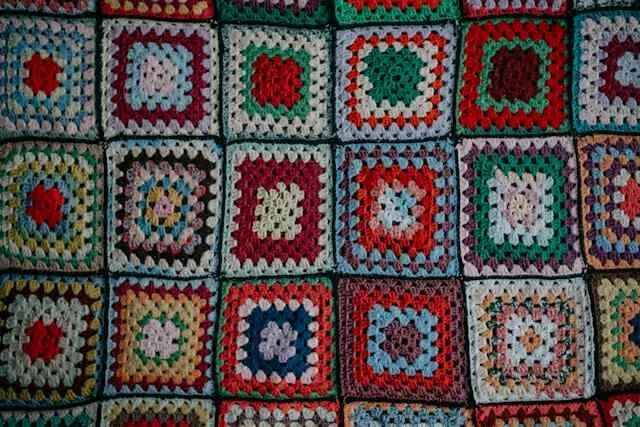
Twin blankets sit somewhere in the middle. They are large enough to require planning but still manageable for most people. When working out how many granny squares to make a twin size blanket, we usually aim for a neat fit with minimal overhang, especially if it is for everyday use.
Narrower beds can look overwhelmed by overly busy patterns, so we tend to keep layouts a bit more structured. Repeating patterns or subtle color changes work well here. It keeps the blanket visually balanced without making it feel crowded, which can happen surprisingly quickly on a smaller bed.
Research has revealed systematic approaches to arranging granny squares into larger textile forms, but you need to know the size you want from the outset.
Looking for a premium blanket?
Rather than combining granny squares, work with us to create a custom sherpa blanket and enjoy the ultimate warmth and comfort.
How To Use A Blanket Calculator For Granny Square Counts?
Blanket calculators are helpful, but we do not treat them as absolute. We input the finished square size, target width, and length, then use the result as a guide. What matters more is verifying that output in real life.
We usually create a small joined sample, maybe a 3 x 3 grid, and measure it. This step catches small differences caused by tension or joining style. It is worth doing before committing to a full count.
A simple planning sheet alongside a calculator can also help track progress, especially when working through larger totals that take time to complete. If you want to avoid all this complexity, work with us to create your own custom plush fleece blanket and enjoy personalized comfort at an affordable price.
How Many 5x5 Granny Squares To Make A Blanket?
Five inch squares are a popular choice because they strike a balance between detail and efficiency. When calculating how many 5x5 granny squares to make a blanket, we still factor in the join width, which can slightly increase the final size.
This is where many people miscalculate, as the join can add up across multiple squares. We usually choose a joining method early so the measurements stay consistent. Visually, 5 inch squares create a nice rhythm across the blanket without feeling too busy.
They are also manageable to produce in batches, which helps keep the project moving. Researchers have highlighted the benefits of modular textile units, detailing key considerations for combining 5x5 granny squares into full blankets.
How Many 6 Inch Granny Squares To Make A Blanket?
Six inch squares reduce the total number of motifs quite noticeably. That alone can make a large project feel more achievable. When working out how many 6 inch granny squares to make a blanket, we consider how the larger size affects drape.
Bigger squares often create a softer, more fluid blanket with fewer seams. That can be more comfortable in use. If your finished squares vary slightly from the intended size, small adjustments to the grid can compensate.
We have found it easier to tweak layout than to remake multiple squares just to match an exact measurement. Blankets made from granny squares can be popular types of promotional products for business, but a manufactured alternative might be more efficient to produce in bulk.
Create a blanket that isn’t just for cozy weekends
Create your own custom picnic blanket with our service and enjoy durable designs, personalization, and affordable prices.
Get startedCan You Make A Blanket Out Of One Big Granny Square?
It is possible to make a blanket out of one big granny square, and it is a very different experience. A continuous granny square grows outward from the center, which means you are working on the full blanket quite early.
That can feel satisfying, but also a bit cumbersome as it gets larger. The main limitation is maintaining shape. Without careful edging, the blanket can start to develop problems like:
- Warping
- Curling
We usually add structured borders to keep everything aligned.
Color changes become more important too. Planning rounds in advance helps avoid awkward transitions. It is a simpler construction method, but it still benefits from a bit of forward thinking. Be mindful of studies into different fabric structures, as different fabrics behave differently.
What If My Blanket Will Take Too Many Squares To Make?
It is not uncommon for people to find that a blanket takes too many squares to make. You do the math, see the total, and it feels like too much. At that point, we step back and adjust the plan.
- Increasing square size is the quickest fix. It reduces the number of pieces immediately.
- Another option is slightly resizing the blanket or adding a wider border to fill space.
- We have also simplified motifs mid-project to speed things up.
Setting small milestones helps as well. Completing ten or twenty squares at a time makes the process feel manageable instead of overwhelming, which is often the real challenge. If the whole project is too daunting, consider working with us to create custom sherpa blankets for a personalized look and a luxurious piece.
Frequently Asked Questions About How Many Granny Squares To Make A Blanket
How Many Granny Squares To Make A Blanket For Any Size?
Divide the blanket width and length by your finished square size, then multiply the results. Add a small buffer for joins and adjustments to get a realistic total.
What Size Can A One Piece Granny Square Blanket Reach?
It can scale to any size, including queen or larger, but handling becomes harder as it grows. Most people stop where it remains comfortable to work and shape stays consistent.