How To Use A Heated Blanket Safely: Sleep, Storage, And Setup
The question of how to use a heated blanket safely comes up more than you might think. People don’t just want warmth, they want certainty. They want to know if a heated blanket is actually safe or if it’s one of those products that quietly carries a risk.
Having worked with and tested these products for years, we can tell you that the truth sits somewhere in the middle. In this guide, we discuss how to use heated blankets properly to ensure they do exactly what they promise - nothing more, nothing less.

Key Takeaways
- Heated blankets are generally safe when used correctly, but most risks come from wear, damage, or misuse rather than the product itself.
- Modern safety features like auto shutoff and temperature control reduce risk, but they don’t replace good habits or regular checks.
- The safest approach is simple: use low settings, inspect regularly, and avoid leaving them running unattended or overnight without safeguards.
- We supply high-quality custom blankets in various designs that don’t rely on heating, so you never need to worry about safety or fire concerns.
Table of contents
-
Are Heated Blankets Safe?
-
Are Electric Blankets Safe?
-
Can I Leave A Heated Blanket On All Night?
-
Who Cannot Use An Electric Blanket?
-
Electric Blanket Fire Prevention
-
What Is The Safest Way To Position A Heated Blanket During Use?
-
Can Electric Blankets Cause Burns?
-
Do Electric Blankets Put Out EMF?
-
Are Heated Blankets Safe For Dogs?
-
Are Heated Blankets Safer Than Space Heaters In The Bedroom?
Are Heated Blankets Safe?
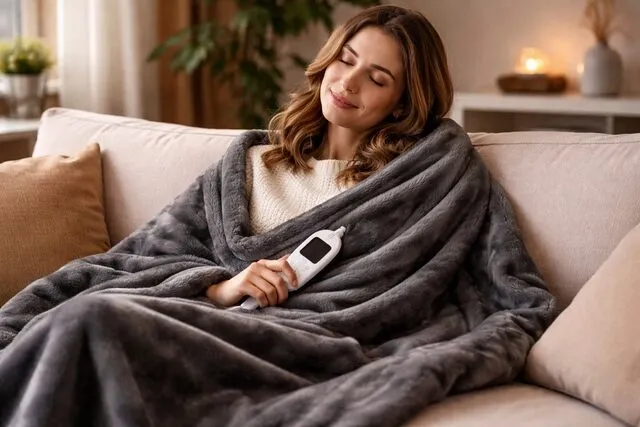
When people ask “are heated blankets safe?”, what they are really asking is whether there are any hidden dangers connected to normal use. In most cases, there are not. A modern heated blanket, used as intended, is considered safe, but misuse can be a problem.
The safety equation shifts when you do things like:
- Folding it tightly
- Placing pressure on it
- Using an older unit with worn wiring
We’ve seen older blankets behave unpredictably, especially those without any auto shutoff. Typically, today’s designs include temperature sensors and low voltage systems, both included to significantly reduce risk.
Nevertheless, the biggest issues come from user habits, not manufacturing flaws. If you want a blanket that doesn’t come with any risk of fire or overheating, consider a custom fleece blanket instead.
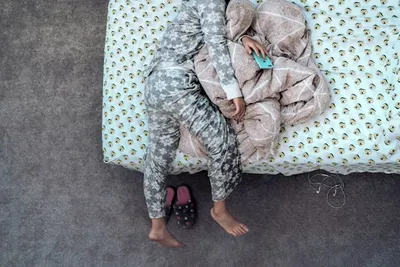
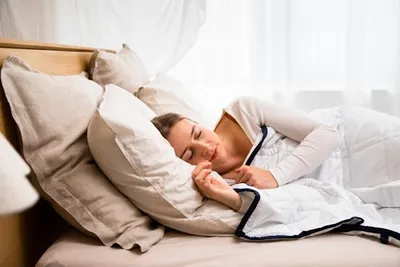
Are Heated Blankets Safe To Sleep With?
Sleeping with one running all night is where caution really comes into play. There’s a difference between warming the bed and maintaining continuous heat for hours. Preheating is the safest route:
- Turn it on
- Let the bed warm up
- Then switch it off before you fall asleep
Some newer models have auto shutoff timers, which help, but we don’t treat that as a free pass. Lower settings reduce risk, but they don’t eliminate it. If you notice uneven warmth, hot spots, or a faint burning smell, stop using it immediately.
We’ve found that most problems start subtly. Paying attention early makes all the difference.
Are Heated Blankets Safe To Use?
First-time setup tells you a lot about how safe your experience will be long term. We always start with a full inspection - check for frayed fabric, exposed wires, or stiff sections. Once you have done this, here are a few safety tips:
- Plug directly into a wall outlet, not an extension cord.
- Keep the controller visible and easy to reach.
- Day to day, turn it off when leaving the room. That sounds obvious, but it’s often ignored.
Layering matters too - avoid placing heavy items on top that trap heat. Consider heated vs standard blankets when considering how to choose the right custom merchandise for business, as non-heated options are often sufficient for this.
When storing a heated blanket, don’t fold it sharply. Loose folds protect the internal wiring.
Are Electric Blankets Safe?
Electric blankets, heated throws, and mattress pads all work differently, and that affects safety. Let’s see how they all compare to one another:
- Throws can bunch up, which increases risk.
- Mattress pads distribute heat more evenly.
- Electric blankets sit somewhere in between.
Common failure points include connectors and internal wiring fatigue. When people ask whether electric blankets are safe, the honest answer is that they are, but only when the product is in good condition and used properly.
Certifications make a difference. Look for tested, compliant models with built-in protections - we tend to avoid anything that feels inconsistent in heating. If you are worried, consider alternatives like a custom contrast fleece robe to help keep you warm and comfortable.
Looking for a non-heated blanket that still keeps you warm?
Work with us to create custom fleece blankets with personalized designs for the right balance of style and warmth.
Can I Leave A Heated Blanket On All Night?
Technically, some blankets are designed for overnight use, but we rarely recommend it as the default. Risk depends on the blanket’s age, condition, and features. Auto shutoff helps, but it’s still safer to use it for preheating.
If you choose to keep it on, use the lowest setting and make sure the controller is within reach. A study from 2024 found a 50% increase in burn injuries linked to personal heating equipment, but these are usually associated with misuse, disrepair, or prolonged exposure.
Avoid extension cords entirely. We’ve noticed that people who leave blankets on overnight tend to overlook small warning signs. If you’re going to do it, stay conservative with heat and stay aware.
Is It Safe To Leave A Heated Blanket Plugged In But Off?
Leaving a heated blanket plugged in but switched off is usually low risk with modern units, but it’s not risk-free. There’s still a small amount of standby power involved. Older blankets or questionable wiring increase that risk slightly.
We prefer unplugging as a default, especially if you’re leaving the house or not using it for a while. Here are some tips if you choose to keep it plugged in:
- Check that the outlet is secure and not loose.
- Avoid overloading sockets with multiple high-draw devices.
- When storing, make sure the cord isn’t bent sharply or trapped under furniture.
Heated blankets are a popular type of promotional product for business, but you need to provide guidance to keep your customers safe.
Who Cannot Use An Electric Blanket?
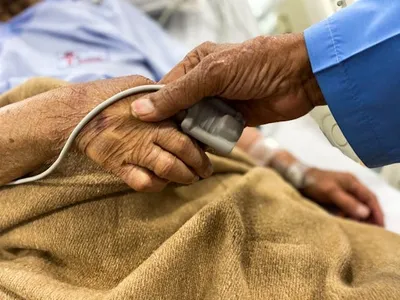
Some users face higher risk because they may not notice overheating or may not react quickly. It’s not about fear, it’s about awareness. Those who are more at risk include people with:
- Reduced sensation
- Limited mobility
- Certain medical conditions
Children and older adults also fall into this category depending on their sensitivity and mobility. In these cases, alternatives like layered bedding or non-electric warming options are safer. Analysis from 2024 suggests malfunctioning electrical devices are a major cause of home fires, so minimizing them reduces risk.
We always suggest checking the manufacturer’s guidance, since restrictions vary by model. What matters most is the ability to respond to heat changes.
|
User Group |
Why Risk Is Higher |
Practical Risk Mechanism |
Safer Use Protocol |
|
People with reduced sensation (e.g., neuropathy, diabetes-related nerve damage) |
May not feel heat building or detect hot spots |
Prolonged localized heat → low-grade burns without discomfort warning |
• Use preheat only, turn off before getting in bed • Always place a thin barrier layer (sheet) between blanket and skin • Use lowest setting • Inspect blanket monthly |
|
Individuals with limited mobility (e.g., arthritis, injury, post-surgery recovery) |
May struggle to reposition or switch off quickly |
Inability to adjust position → prolonged pressure over heating wires |
• Controller placed within easy reach • Avoid overnight use • Choose models with automatic shutoff ≤ 2–3 hours • Avoid heavy layering over the blanket |
|
Older adults (65+) |
Higher likelihood of thinner skin, slower heat perception, circulation issues |
Increased susceptibility to skin injury |
• Preheat bed and turn off before sleep • Avoid high settings • Regular inspection for cord wear • Replace blanket older than ~10 years |
|
Children |
Smaller body mass → quicker overheating; may not communicate discomfort clearly |
Overheating or unsafe folding/bunching during sleep |
• Follow manufacturer minimum age guidance strictly • Prefer preheating method • Never allow unsupervised experimentation with settings |
Concern About Using A Heated Blanket While Pregnant
The concern here usually centers on overheating rather than the blanket itself. The safest approach is to limit direct, prolonged heat exposure. It can help to choose alternatives like wearing custom Gleeful acrylic leg warmers.
Preheating the bed and turning the blanket off before lying down is a practical option many people use. You could also keep the following tips in mind:
- Keeping settings low also helps.
- Short, controlled use is very different from continuous heat.
We’re not in a position to give medical advice, so it’s always worth checking with a healthcare provider for reassurance. What we can say is that moderation is everything. Always follow product guidance, since temperature limits and features vary more than people expect.
Choose a blanket that offers maximum comfort
Our custom plush fleece blankets are warm and soft, and you can have them personalized to display any design.
Learn moreElectric Blanket Fire Prevention
Most fire incidents tied to heated blankets come down to age, damage, or misuse. Rarely is it a new, properly used product. Prevention is actually quite straightforward:
- Inspect regularly
- Replace older blankets that show wear
- Use proper outlets and avoid extension cords
Cleaning makes a big difference too - rough handling during washing can damage internal wiring. Storage should be loose, not tightly rolled.
If we’re choosing a blanket today, we look for certified models with auto shutoff and overheat protection. A strong warranty is another good sign. Alternatively, you could work with us to create your own custom plush fleece blanket that offers warmth and personalized style without the fire risk of a heated blanket.
What Are The Chances Of A Heated Blanket Catching Fire?
There’s no single statistic that applies across all situations - risk varies widely. Age, damage, and inconsistent heating all increase risk. This means:
- A new, well-maintained blanket has a very low chance of catching fire.
- An older one with visible wear is a different story.
Experts point out that all bedding materials come with a risk of fire development from various sources. With heated blankets, we think of it as a sliding scale. Modern safety features reduce the likelihood, but they don’t eliminate it entirely.
If a blanket is more than several years old or shows uneven heating, it’s time to replace it. Waiting too long is where most problems begin.
What Is The Safest Way To Position A Heated Blanket During Use?
Positioning affects both safety and performance. Folding or bunching creates pressure points and traps heat, which can lead to hot spots. Lay the blanket flat and avoid tucking it tightly under the mattress.
If used under another blanket, make sure airflow isn’t completely restricted. Heavy comforters can trap excess heat, so we prefer light layering. Studies into best practices for electric blankets identify wire spacing and temperature control strategies as important.
When storing, fold loosely instead of rolling tightly as tight rolls stress internal wires over time. It’s one of those details people overlook, but it adds up.
Interested in a personalized blanket with thickness and comfort?
Without any heated feature, our custom sherpa blankets keep you warm through their softness and thickness, and you can add any design you like.
Can Electric Blankets Cause Burns?
Burns are uncommon, but they do happen, usually due to hot spots or prolonged contact. The surface warmth should feel even - if it doesn’t, that’s a warning sign.
People with reduced sensitivity are more at risk because they may not feel heat building up. Reduce risk by:
- Using lower settings
- Limiting duration
We also recommend that you avoid direct skin contact for long periods. If irritation or redness appears, stop using the blanket and check it thoroughly.
In our experience, uneven heating is the biggest red flag. If you are concerned, remember that these are not sustainable products, which is another reason to choose an alternative. Remember the benefits of using eco-friendly promotional products and choose a non-heated blanket.
Do Electric Blankets Put Out EMF?
Heated blankets do emit low levels of electromagnetic fields, like most electrical devices. The actual exposure depends on distance, duration, and design. For most people, this isn’t a major concern, but some prefer to reduce exposure.
Simple steps help, so try the following:
- Preheat the bed, then turn the blanket off.
- Keep the controller away from your body while sleeping.
Claims about completely blocking EMF should be approached with caution. No product eliminates it entirely. We tend to focus on practical use like limiting exposure time rather than chasing perfect conditions.
Choose a different type of blanket for outdoor comfort
Use our service to create custom picnic blankets. They aren’t for warmth or softness, but for comfort and function with a personalized design.
Get startedAre Heated Blankets Safe For Dogs?
Pets add another layer of unpredictability. Dogs may chew cords, scratch fabric, or shift frequently, which can stress the blanket. They also can’t adjust settings or recognize overheating the way we can.
If a dog shares the bed, use a barrier layer, keep the heat low, and never leave it on unattended. We generally recommend pet-specific warming pads instead. Studies show that blankets containing conductive materials can overheat and ignite, but this won’t happen with warming pads.
Watch for signs of discomfort in your dog, such as:
- Restlessness
- Constant repositioning
If a pet seems unsettled, turn the blanket off. Their behavior is often the first clue something isn’t right.
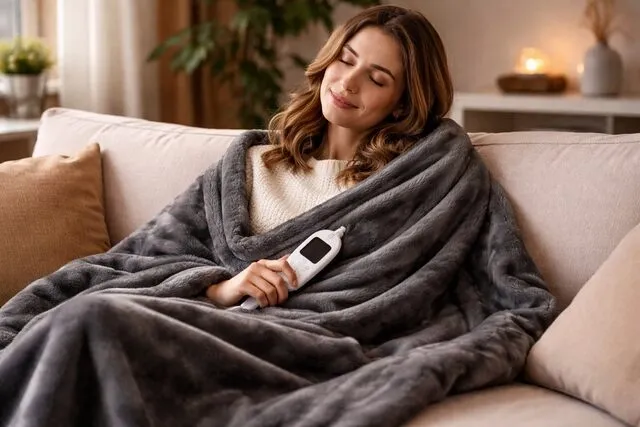
Are Heated Blankets Safer Than Space Heaters In The Bedroom?
Both heated blankets and space heaters have risks, but they’re different. Space heaters warm the air and can pose a fire risk if placed too close to fabrics or knocked over. Heated blankets apply direct warmth, which reduces the need to heat the entire room.
We find that blankets can be more efficient, so we often lean toward personal heating for that reason, but proper use is key:
- Space heaters require clear space and stable positioning.
- Heated blankets require careful handling and inspection.
If you’re choosing between the two, think carefully about control. Alternatively, use our service to create your own custom sherpa blanket and enjoy abundant warmth and comfort at a great price without worrying about electronics or fire risks.
Frequently Asked Questions About Are Heated Blankets Safe
Are Heated Blankets Safe To Sleep With?
They can be, but preheating and turning them off before sleep is the safest approach. Continuous overnight use increases risk slightly.
Can I Leave A Heated Blanket On All Night?
It’s not recommended unless the blanket has auto shutoff and is in excellent condition. Even then, low settings and caution matter.