Where Does A Spring In A Ball Point Pen Or A Pogo Stick Get Its Energy? Elastic Potential Energy
Springs feel simple because we interact with them every day without thinking much about it. Click a pen, bounce on a pogo stick - something moves, something pushes back, and the motion feels almost automatic. But when we slow it down, the physics underneath is surprisingly elegant.
In this guide, we explain the concept of where a spring in a ballpoint pen or pogo stick gets its energy. They don’t generate it on their own; they respond. Understanding this helps you make sense of everyday objects, from ballpoint pens to larger mechanical systems. Read on to learn about the connection between force, motion, and stored energy.

Key Takeaways
- Springs do not create energy. They store energy that comes from an external force applied to them and release it later in a controlled way.
- Both a ball point pen and a pogo stick rely on elastic potential energy, even though the scale and forces involved feel very different.
- The same physical rules apply whether the spring is tiny or large. Size changes the effect, not the underlying science.
- We supply high-quality custom retractable pens that use small springs as a core component of their operation, and they are available at competitive prices.
Table of contents
-
Where Does A Spring In A Ball Point Pen Or A Pogo Stick Get Its Energy?
-
Where Does A Spring In A Ball Point Pen Get Its Energy?
-
Where Does A Pogo Stick Get Its Energy?
-
What Type Of Energy Is Stored In The Spring Of A Pogo Stick?
-
Where Does Energy Go In A Spring?
-
What Does The Spring In A Pen Do?
-
What Is The Pogo Stick?
-
How Does Energy And The Pogo Stick Work Together?
-
How Does Energy Transfer Differ Between A Ballpoint Pen And A Pogo Stick?
-
Why The Same Energy Principles Apply To Pens And Pogo Sticks
Where Does A Spring In A Ball Point Pen Or A Pogo Stick Get Its Energy?
A spring never acts alone - it only responds to work that is done on it. When we ask where a spring in a ballpoint pen or a pogo stick gets its energy, the answer always starts outside the spring itself.
Here’s how it works in the clip of your custom acrylic clipboard or anything else:
- Energy enters the system when a force compresses or stretches the spring. This force comes from a hand pressing a pen, a person landing on a pogo stick, or fingers opening a clip.
- Mechanical work is done when force causes movement, and that work becomes stored energy inside the spring.
This is an important distinction: the spring is not producing energy, it is holding onto energy that was put there moments before. Custom Universal Two-Tone metal ball pens and pogo sticks feel different because of size and scale, but the process is exactly the same.
Energy goes in through force, stays temporarily stored, then comes back out as a motion when the spring returns to its original shape.
Where Does A Spring In A Ball Point Pen Get Its Energy?
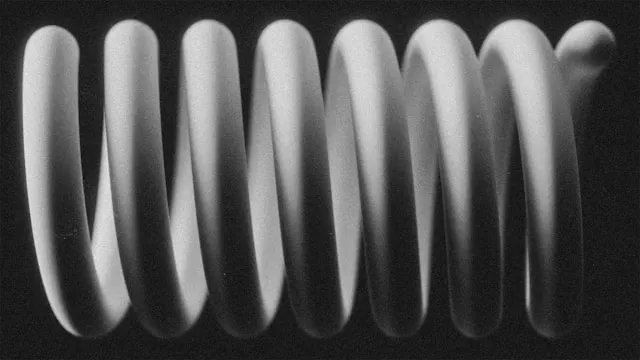
Every time we click a pen, we supply the energy it uses without thinking about it. Pressing the button applies a downward force that compresses the spring inside. As the spring shortens, it resists that force and stores the energy created by our hand.
That stored energy remains locked in place by the pen’s internal mechanism until it is released. When the mechanism shifts, the spring expands and pushes the pen tip outward. The key idea here is connection. The spring’s energy comes directly from the motion of the hand:
- No press means no energy.
- No compression means nothing to release.
This is why worn springs feel weak. They cannot store the same amount of energy from the same input force. Think about that the next time you are exploring how to remove pen ink from clothes after drying - careful use would have prevented the stain in the first place!
In a simple object like a pen, this transfer happens fast, but the physics remain precise.
|
System |
Typical Force Applied |
Compression Distance |
Approx. Energy Stored |
Main Energy Losses |
What the User Experiences |
|
Ballpoint Pen Spring |
~1–3 newtons (finger press) |
~2–5 mm |
Very small (fractions of a joule) |
Internal friction, metal fatigue |
A clean “click” and controlled tip movement |
|
Pogo Stick Spring |
~600–1,200 newtons (body weight + impact) |
~5–15 cm |
Tens to hundreds of joules |
Heat, vibration, air resistance |
Upward lift and repeated bouncing |
|
Car Suspension Spring |
Thousands of newtons (vehicle mass + motion) |
~10–20 cm |
Hundreds to thousands of joules |
Heat, damping fluid resistance |
Smooth ride, reduced jolts |
Interested in a retractable ballpoint pen?
Work with us to create custom Field retractable plastic ball pens with personalized designs and a flawless click action for use.
Where Does A Pogo Stick Get Its Energy?
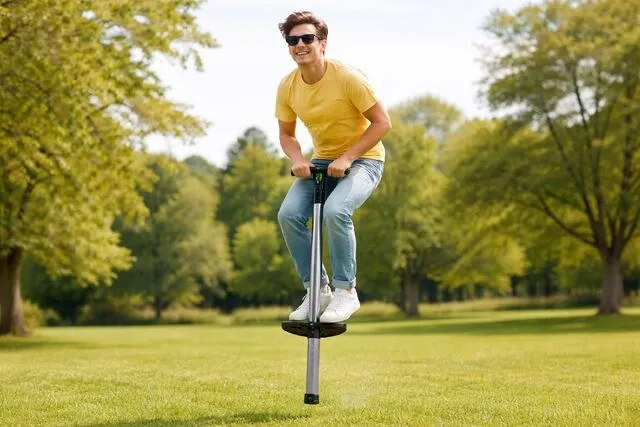
A pogo stick works on the same principle as a pen, just with more force and motion involved. When a rider jumps and lands, their body weight and downward motion apply force to the pogo stick’s spring.
Gravity plays a role by accelerating the rider toward the ground, increasing the energy transferred on impact. As the pogo stick compresses, that downward motion is converted into stored energy inside the spring. Studies show that springs store mechanical energy as elastic potential energy that can be rapidly released.
The spring resists the compression and temporarily holds that energy instead of letting it disappear. When the spring expands, it pushes back against the ground and the rider, lifting them upward.
The rider is not lifted by the spring alone. They are lifted by energy they already put into the system. Each bounce repeats this cycle, with energy flowing from motion to storage and back again.
What Type Of Energy Is Stored In The Spring Of A Pogo Stick?
The energy stored in the spring of a pogo stick is called elastic potential energy. It is considered stored energy because it exists due to the position and shape of the spring rather than movement.
When the spring is compressed, it holds energy that can later be released. This differs from kinetic energy, which depends on motion:
- A moving rider has kinetic energy.
- A compressed spring has elastic potential energy.
Springs are efficient energy stores because they can return a large portion of the energy they absorb, provided friction and material fatigue are minimal. That efficiency is why springs appear in so many mechanical designs. They store energy briefly, predictably, and without complex components.
Once released, that stored energy becomes motion again, continuing the cycle. Pens must be precision-engineered to ensure the right amount of pressure. Too much, and pens could leak, leading to problems like ink stains or even ink poisoning from pens in some instances.
Choose a retractable ballpoint pen with elegant style
Our custom classy retractable plastic ball pen is the perfect choice for a balance of form and function with a smooth, spring-loaded action.
Learn moreWhere Does Energy Go In A Spring?
Energy does not vanish when a spring is compressed - it changes form. As force is applied, energy moves from the person or object applying the force into the spring itself. Researchers point out that the energy in a spring depends on its geometry and deformation.
Inside the spring, the material deforms slightly at a microscopic level. That deformation is where the energy is held. When the spring expands, the stored energy is released and transferred back into motion. Some energy is always lost to heat and sound due to friction and internal resistance, which is why no spring system is perfectly efficient.
Nevertheless, most of the energy remains usable. This constant exchange follows conservation of energy. Energy moves, changes form, and transfers between objects, but it is not created or destroyed by the spring.
What Does The Spring In A Pen Do?
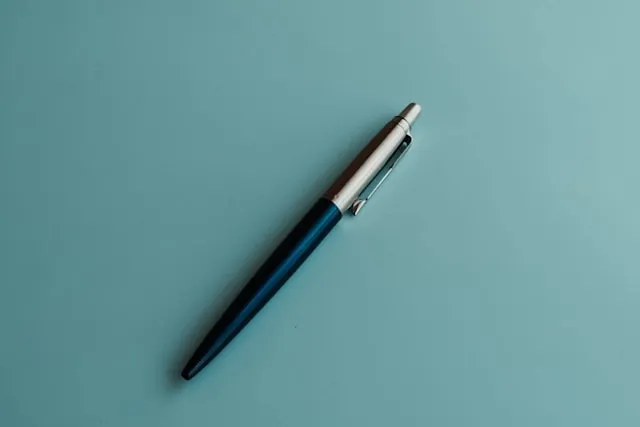
In a ball point pen, the spring’s job is control. It manages the movement of the pen tip in a predictable way. When compressed, the spring stores energy that keeps pressure on the internal locking mechanism. That pressure allows the pen to switch between extended and retracted positions.
When the lock releases, the stored energy pushes the tip outward smoothly. Without the spring, the pen would have no reliable way to move the tip or hold it in place. Similarly, in the clip on a custom Two-Tone lanyard, the spring forces the clip to grip tightly.
The spring does not decide when to act - it responds to the mechanism around it. Its role is purely energetic and mechanical. That simplicity is what makes it dependable, and the same logic applies when we design mechanical components where consistent motion matters.
Work with us to create custom Lady Retractable metal ball pens with the same spring-activated mechanism to extend and retract the tip. Our products are high-quality, personalized, and available at competitive prices and generous bulk discounts on larger orders.
Looking for a metal ballpoint pen?
Choose our custom Double Line metal ball pens with a range of colors and ergonomic grip features, and personalize to your taste.
What Is The Pogo Stick?
A pogo stick is a compact mechanical system built around one main idea: controlled energy return. At its core, it consists of a rigid frame, foot pegs, a handle, and a spring housed inside the shaft. That spring is the heart of the device.
When we stand on a pogo stick and jump, our body weight applies force through the frame directly into the spring. The structure around it keeps that force aligned so the energy moves vertically instead of sideways. This alignment is what makes the bounce feel stable rather than chaotic.
A study from 2023 by Lo & Parslew explains this spring-driven jumping system in detail. The pogo stick does not generate lift on its own; it redirects energy we supply into upward motion.
Over time, we have seen how small changes in spring stiffness can dramatically affect performance:
- Too soft and the bounce feels sluggish.
- Too stiff and it becomes difficult to compress.
Balance is a key consideration.
How Does Energy And The Pogo Stick Work Together?
Each bounce on a pogo stick is a repeating energy cycle. As the rider lands, kinetic energy from the downward motion transfers into the spring. The spring compresses and stores that energy as elastic potential energy.
Once the compression reaches its limit, the spring reverses direction and releases the stored energy. That release pushes the rider upward, converting stored energy back into motion. Research shows how the same principles work for compact, repetitive mechanisms in small devices like pens.
In pogo sticks, the rider’s timing matters:
- If they jump in sync with the spring’s movement, less energy is lost and the bounce feels smoother.
- When timing is off, energy escapes as heat and vibration.
This is why pogo sticks reward rhythm. The system works best when energy transfer stays clean and aligned. Over many cycles, small inefficiencies add up, which explains why bouncing eventually slows even without obvious mistakes.
Equip yourself with a reliable ballpoint pen
With our service, you can create custom Pastel retractable metal ball pens that are available in multiple colors with sleek, personalized designs.
Get startedHow Does Energy Transfer Differ Between A Ballpoint Pen And A Pogo Stick?
The physics behind a pen and a pogo stick are the same, but the scale changes everything we notice. Motion outcomes differ because mass and distance are larger, not because the rules change.
Here’s a quick comparison:
- In a ballpoint pen, the forces are small and the energy transfer happens in fractions of a second. A finger press compresses the spring just enough to move a lightweight tip.
- In a pogo stick, the forces are much larger. Body weight, gravity, and momentum all contribute to compression. The energy stored is greater, and the release is strong enough to lift a person off the ground.
Experts point out that spring geometry and material choice directly affect energy storage capacity and performance. Both pens and pogo sticks rely on elastic potential energy and conservation of energy. One produces a click, the other produces a jump.
The difference feels dramatic, but the underlying mechanics remain familiar once you see the pattern.
Why The Same Energy Principles Apply To Pens And Pogo Sticks
It is tempting to assume small objects follow different rules than large ones. In practice, physics does not scale that way. The same energy principles apply whether the spring lives inside a pen or supports a rider on a pogo stick.
Springs store energy when deformed and release it when allowed to return to their original shape. Force, motion, and resistance behave consistently across sizes. What changes is how much energy is involved and how visible the result becomes:
- A custom metal pen hides its energy transfer inside a plastic body.
- A pogo stick puts it on full display.
When we explain this to people for the first time, there is often a pause. The realization that everyday objects share the same rules helps make mechanical systems feel more intuitive. The amount of force in a pen tip extension could even have an impact on considerations like how to get pen ink off skin with deeper penetration.
Understanding the connection between spring mechanisms at different scales builds confidence in how these tools work.
Frequently Asked Questions About Where Does A Spring In A Ball Point Pen Or A Pogo Stick Get Its Energy?
Where Does A Spring In A Ball Point Pen Or A Pogo Stick Get Its Energy From?
The energy comes from an external force. A hand pressing a pen or a person landing on a pogo stick does mechanical work that the spring stores temporarily as elastic potential energy.
What Type Of Energy Is Stored In The Spring Of A Pogo Stick?
A pogo stick stores elastic potential energy. That energy is released when the spring expands, converting stored energy back into motion.