Blanket Stitch By Hand: Tips For Better Embroidery
Blanket stitch by hand is one of those stitches that looks fancy before you learn it, then suddenly it makes sense. It creates a looped edge with little upright bars sitting along the fabric border. In this guide, we explore techniques to understand how it is done for your projects.

Key Takeaways
- Blanket stitch by hand creates a looped edge that can finish, join, or decorate fabric neatly.
- Even spacing and balanced thread tension matter more than speed when learning the stitch.
- Practice on scrap fabric first, especially before stitching blankets, appliqué pieces, or visible borders.
- We supply high-quality custom blankets with perfect edge finishing and personalized designs to take the DIY work out of creating throws and covers.
Table of contents
Blanket Stitch By Hand Explained For Beginners
Blanket stitch by hand is a basic sewing and embroidery stitch used along fabric edges. The thread wraps around the edge then locks into a small loop before the next stitch is made. That loop is what gives the stitch its clean border.
It works well on felt because felt doesn’t fray much. However, it is also useful on:
- Fleece
- Appliqué
- Wool
- Light blanket edges
We like it because it does two jobs at once: it protects the edge and adds decoration. For beginners, the main goal is not speed, but learning where the needle enters, where the loop sits, and how firmly to pull.
How Can Beginners Make A Blanket Stitch By Hand?
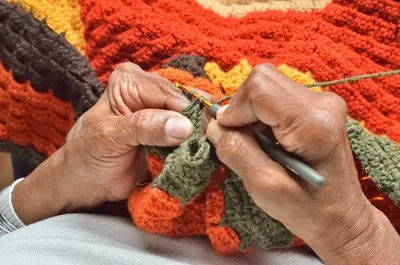
As a blanket stitch beginner, start with scrap fabric rather than the real project. Thread the needle, knot the end, and bring the needle up from the back so the knot is hidden. From here, the process is as follows:
- Place the needle a short distance from the edge, then pass it through the fabric again.
- Before pulling tight, keep the working thread under the needle tip.
- Pull gently, and the loop will form along the edge.
- Repeat with the same stitch height and spacing.
- Mark dots with a pencil or fabric pen if your eye needs help.
- To finish, take two tiny stitches on the back and bury the thread tail so there is no bulky knot.
Whether on the edge of a custom fleece blanket, tablecloth, or any other fabric project, this helps create a secure and decorative border. Here’s some guidance on matching project type to the right needle and thread.
| Fabric or project | Best thread | Best needle | Why |
|---|---|---|---|
| Felt | Embroidery floss or pearl cotton | Sharp embroidery needle | Stable fabric that suits visible stitches. |
| Fleece | Floss, pearl cotton, or strong cotton | Larger-eye embroidery needle | Helps the thread pass through without stretching the fabric. |
| Wool | Pearl cotton, floss, or wool thread | Embroidery or chenille needle | Works well with bolder decorative stitching. |
| Lightweight cotton | Cotton thread or 2–3 floss strands | Fine sharp needle | Reduces holes and puckering. |
| Appliqué | Cotton thread, floss, or pearl cotton | Sharp embroidery needle | Lets the edge blend in or stand out. |
| Thick blanket edges | Pearl cotton or heavy-duty cotton | Larger needle with strong eye | Handles thicker fabric without dragging. |
| Delicate fabric | Fine cotton thread | Small sharp needle | Keeps the stitch light and neat. |
Can A Video Tutorial Help You Learn Blanket Stitch Faster?
A video tutorial can help because blanket stitch is easier to understand when you see the loop form in motion. Written steps explain the process, but the hand movement can feel strange at first.
A useful video should show the needle angle, where the thread sits, and how the loop locks along the edge. It should also move slowly enough for beginners to copy. There is also a lot to be said for learning with stitch samplers.
We suggest watching once without sewing, then watching again with scrap fabric in your hands. Use a written guide beside the video so you can pause, check the steps, and avoid guessing when the thread starts twisting.
How Do You Join Two Pieces Of Fabric With Blanket Stitch?
To join two pieces of fabric with blanket stitch, line up the edges first and hold them with pins or clips. Felt, fleece, and wool shapes are good practice because they do not slide around as much as silky fabric.
- Bring the needle up between the two layers to hide the knot.
- Then pass the needle through both pieces, keeping the thread under the needle tip before pulling. Each stitch should catch both layers.
This creates a seam and a decorative border at the same time. It works well for felt ornaments, soft toys, appliqué shapes, handmade patches, and small fabric gifts. If you are using it to create a queen-size quilt, make sure you understand queen-size blanket dimensions.
Common Blanket Stitch Mistakes And How To Fix Them
Most blanket stitch mistakes come from rushing. This leads to problems like uneven spacing, loose loops, tight thread, and knots. Let’s look at why these things are problems:
- Uneven spacing makes the border look jumpy.
- Loose loops can sag away from the edge.
- Tight thread can pull the fabric inward.
- Knots happen when the thread twists or is too long.
- Crooked stitch lines usually mean the needle is entering at different depths each time.
Fix these problems early. Check every five or six stitches instead of waiting until the whole edge is finished - if one stitch looks wrong, remove it right away. We have all tried to ignore one messy stitch, and it somehow becomes the only stitch you can see later.
How Does Uneven Spacing Affect Blanket Stitch?
Uneven spacing makes blanket stitch look untidy, especially on visible borders. If one gap is wide and the next is tight, the eye notices straight away. This matters most on blankets, appliqué letters, patches, and decorative embroidery because the stitch is part of the design.
Beginners can mark small dots along the edge before sewing. Use a ruler for straight edges or make light pencil marks by eye on felt. This will ensure you have an even border on your custom rectangle table cover or other project.
Practice on straight fabric before trying curves. Curves need shorter spacing because the stitch has to turn with the shape. A neat blanket stitch by hand does not need to be perfect, but it should look steady.
Why Does Thread Tension Matter In Blanket Stitch?
Thread tension controls how the stitch sits. If the thread is too loose, the loops look weak and may lift away from the edge. If it is too tight, the fabric can pucker, curl, or pull out of shape. The sweet spot is firm but gentle.
Pull until the loop rests on the edge, then stop - do not yank. Thick thread needs even more care because it can tug at softer fabrics. Thread tension is a key sewing-quality variable and can make or break a project.
We usually tell beginners to slow down at the pulling stage. The stitch is often formed correctly, then ruined by one hard pull. Balanced tension makes the border stronger and better looking.
Looking for personalized blankets with perfect edge finishing?
Work with us to create custom fleece blankets that look great and are built to last no matter where you use them.
Is Blanket Stitch The Same As Buttonhole Stitch?
Blanket stitch and buttonhole stitch are closely related, and some tutorials use the names in similar ways. The difference depends on the craft:
- In embroidery and felt work, blanket stitch is often decorative and used around edges.
- Buttonhole stitch is usually tighter and stronger because it was made to reinforce buttonholes that get repeated wear.
The movement looks similar, but the purpose can change the spacing and density. If you see both names online, do not panic - look at the picture and the use. When you work with us, our custom plush fleece blankets and other textile projects are always finished for maximum strength and aesthetic appeal.
Get a personalized design on a warm, comfortable blanket
A custom plush fleece blanket is simple to have made for you but difficult to make yourself. Order from us to enjoy perfect craftsmanship.
Learn moreHow Do You Prevent Puckering When Blanket Stitching?
Puckering usually happens when the thread is pulled too tightly. It can also happen when the needle is too large, the thread is too thick, or the fabric is too delicate for the stitch. In most cases, sewing thread tension is the key variable in seam puckering.
To prevent it, support the fabric with your fingers and pull the thread only until the loop sits neatly on the edge. Keep the fabric flat in your hand - do not bunch it up while sewing. If puckering starts, stop and loosen the last few stitches before continuing.
A light press with an iron may help some fabrics, but test first. Once puckering sets in deeply, it is harder to hide.
Which Thread And Needle Work Best For Blanket Stitch?
The needle should match the fabric and thread. If the needle is too small for thick thread, it will drag through the fabric and make stitching harder. If the needle is too large, it may leave holes.
Here are a few thread suggestions:
- Embroidery floss works well for visible decorative blanket stitch.
- Cotton sewing thread is better for a finer edge.
- Pearl cotton gives a bolder, raised look.
This is a key consideration when looking at how many blanket squares to make a blanket if you want to use blanket stitch.
For felt, a sharp embroidery needle usually works well. For thicker blanket edges, use a larger needle with a strong eye. Test everything on scrap fabric first - it takes one minute and can save the real project from messy holes.
Best Blanket Stitch Variations For Decorative Embroidery
Once the basic stitch feels comfortable, variations can make the edge more interesting. Spaced blanket stitch leaves wider gaps and looks light. Closed blanket stitch places the stitches close together for a denser border.
Slanted blanket stitch angles the upright bars so the edge has movement. You can also change things like:
- Thread color
- Stitch height
- Spacing
Just make sure your choices suit the design. On a custom blanket, patch, or appliqué piece, those small choices affect the whole feel.
We wouldn’t start with complex variations on day one. Learn the plain stitch first - a clean basic edge usually looks better than a fancy one done badly. Embroidery stitch traditions apply to both hand and machine embroidery, so it helps to be well-versed in variations.
What Are The Best Blanket Stitch Variations For Beginners?
The best beginner variations are spaced blanket stitch, closed blanket stitch, and slanted blanket stitch. Let’s take a look at why each is great when you are getting started:
- Spaced blanket stitch is easiest because it gives your hands room to work. It suits straight edges, felt shapes, and simple borders.
- Closed blanket stitch is better for dense outlines, but it needs more control.
- Slanted blanket stitch adds a decorative angle and works well on leaves, curves, and small embroidery details.
Make a small sampler before using a variation on a real project like a custom cloth dinner napkin. Stitch three short lines side by side and compare them. That simple test shows which version matches the fabric, thread, and style best.
How Does Blanket Stitch Help With Appliqué Projects?
Blanket stitch is useful for appliqué because it holds the appliqué shape down while decorating the edge. The upright stitch goes into the appliqué and background fabric, while the loop sits along the outer edge.
This stops the shape from lifting and gives it a finished outline. It works well for quilt blocks, fabric letters, patches, motifs, children’s designs, and decorative blanket corners.
- Matching thread creates a soft look.
- Contrasting thread makes the edge stand out.
If the shape has curves, use shorter stitches so the line stays smooth. We like blanket stitch for appliqué because it looks handmade in the best way.
How Do You Make A Closed Blanket Stitch By Hand?
Closed blanket stitch is a tighter version of blanket stitch. The steps are the same, but the stitches sit much closer together. Your stitch quality will be the main variable in how the end result looks, so here’s how it’s done:
- Bring the needle through the fabric, keep the thread under the needle tip, and pull gently so the loop forms on the edge.
- Then place the next stitch close beside the last one.
- This creates a dense border that can look almost like a soft cord.
This approach is useful for floral details, scalloped edges, felt appliqué, and decorative outlines. Because the stitches are close, mistakes show more quickly. Keep the thread smooth, use short lengths, and check the spacing often.
Interested in a thick, warm blanket for comfort?
It doesn’t get better than our custom sherpa blankets with personalized designs, perfect edge finishing, and high-quality fabric structure.
What Should A Blanket Stitch Diagram Show?
A good blanket stitch diagram should show four things clearly: where the needle enters, where it exits, where the thread loop sits, and where the fabric edge is. Whether for a custom sherpa blanket or other textile project, you need to know these things.
Arrows help because this stitch is about direction. Spacing marks also help beginners keep the stitch even. A straight-edge diagram is useful first - after that, a curve, a corner, and a two-layer example make the guide much stronger.
We find that diagrams solve the problem videos sometimes miss. A video moves on, but a diagram lets you stare at the exact thread position until your hands catch up. That small pause can make the stitch click.
Frequently Asked Questions About Blanket Stitch By Hand
How Do You Do Blanket Stitch By Hand?
Bring the needle through the fabric near the edge, keep the working thread under the needle tip, then pull gently to form a loop along the edge. Repeat with even spacing.
Is Blanket Stitch Easy For Beginners?
Yes, blanket stitch is beginner-friendly once you understand the loop. Practice on scrap fabric first, use short thread lengths, and focus on steady spacing before speed.