How To Deep Clean Towels: Without Ruining Their Absorbency
Fresh towels should feel soft and absorbent, so when normal washing fails to remove odors or residue, deeper cleaning becomes necessary. This guide explains safe soaking, rinsing, whitening, and drying methods that restore your towels without coating, weakening, or damaging their natural fibers.

Key Takeaways
- Use the hottest water permitted by the towel care label.
- Measure detergent carefully because excess detergent can trap smells.
- Use vinegar and baking soda in separate washing steps.
- Avoid fabric softener because it can reduce absorbency.
- Dry towels completely before folding or storing them.
How To Deep Clean Towels
To deep clean towels, wash them in warm or hot water when the care label permits. Use a measured amount of detergent, add vinegar or baking soda when appropriate, rinse thoroughly, and dry them completely. These steps remove trapped residue, oils, minerals, and sour smells without covering fabric in fragrance.
A routine towel deep clean is useful when towels smell sour, feel less absorbent, or remain stiff. Odour develops when detergent, oils, product, softener, or moisture accumulate inside the fabric loops. This process involves a normal machine wash with corrected detergent dosing and one suitable cleaning booster to restore towels.
A stronger laundry stripping soak may be needed when towels have several of these signs.
- A waxy or coated texture
- A musty smell that returns when the towel becomes wet
- Poor water absorption
- Grey or dull white fibers
- Heavy fabric softener build-up
- Odor that remains after several proper washes
Always check towel care labels before selecting temperature or whitening products. Cotton towels tolerate warmer conditions than delicate finishes. Follow machine instructions, measure detergent, ensure sufficient drum space, and dry laundry promptly to achieve the results for your towels.
Make a strong impression with custom bathroom towels
Turn an everyday household essential into a memorable branded product with high-quality custom bathroom towels. Add your logo, business name, artwork, or bespoke design to create practical towels for hotels, spas, salons, gyms, guest facilities, and promotional campaigns.
Why Do Towels Smell Bad Even After Washing?
It is frustrating to complete a full washing cycle and discover that the towels still smell sour. This usually means the wash has not removed the source of the smell. Adding more fragrance may hide the problem briefly, but fragrance does not dissolve trapped residue or prevent mildew.
The most common reasons towels smell bad are listed below:
- Too much detergent: Excess detergent may not rinse away completely. The remaining film can hold body oils, dirt, and bacteria.
- Fabric softener residue: Liquid softener and dryer sheets can coat towel fibers. This coating reduces absorbency and makes it easier for residue to remain trapped.
- Body oils and skincare products: Towels collect natural oils, lotions, makeup, hair products, and other substances that may require effective detergent and proper water temperature.
- Hard water minerals: Calcium and magnesium can settle on fibers, making towels feel stiff, dull, or less absorbent.
- Mildew: Towels that remain damp in a hamper, washing machine, bathroom, or storage cupboard can develop a musty smell.
- Incomplete drying: A towel that feels slightly damp when folded may develop odor during storage
- An overloaded washer: When the drum is packed tightly, water and detergent cannot move freely through the towels.
Using a stronger scented detergent does not guarantee a better result. The better solution is to remove buildup, rinse thoroughly, and change the habits that allow moisture and residue to remain.
Need custom towels for your hotel, spa, or wellness business?
Give customers a clean, professional experience with personalized towels designed around your brand. Custom bathroom towels are ideal for hospitality and wellness businesses that want functional linens featuring distinctive logos, names, colors, or artwork.
What Supplies Do You Need To Deep Clean Towels Safely?
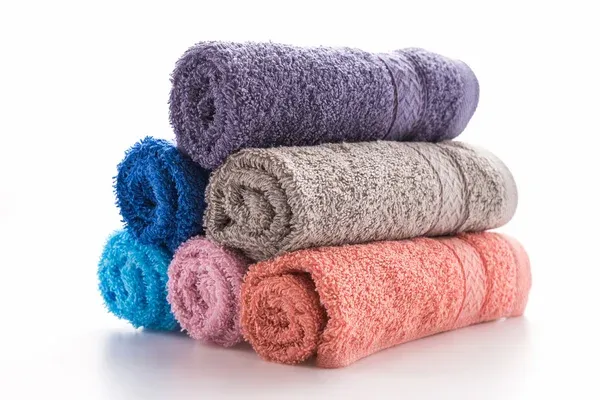
The supplies needed for deep cleaning towels are simple;
- Laundry detergent: This removes body oils, dirt, and everyday residue. Use the amount recommended for the load size, water hardness, and machine type.
- White vinegar: It may help loosen some mineral residue and reduce persistent odors during the rinse stage.
- Baking soda: It can help neutralize smells and improve washing conditions, particularly when the water contains minerals.
- Oxygen bleach: This is useful for whitening suitable white or colorfast towels and removing organic stains.
- A washing machine or large tub: The towels need enough water and room to move.
- Clean drying space: Use a dryer, outdoor line, or well-ventilated indoor rack that allows complete drying.
Do not mix vinegar with chlorine bleach. This combination can release dangerous gases. Check care labels before using hot water, bleach, oxygen bleach, or any soaking solution.
What Detergent Works Best For Towels?
The best detergent for towels is usually a reliable powder or liquid formula used in the correct amount. Powder works well for heavy soil and hard water, while liquid dissolves easily and manages oily marks effectively.
Using extra detergent does not make towels cleaner. Too much product often remains inside the fibers after rinsing. This lingering residue can trap unpleasant odors, create a stiff texture, and significantly reduce the natural absorbency of your bath linens.
Choose a low-foaming detergent for high-efficiency machines when required. Fragrance-free options are often better for sensitive skin. Suitability relies on cleaning performance, correct dosing, and compatibility with your specific fabric.
What Supplies Help Keep Towels Fresh Between Deep Cleans?
Use this towel freshness checklist:
- Hang each towel fully open after use.
- Allow air to circulate the entire towel.
- Wash bath towels after several uses.
- Wash sooner when towels stay damp or smell musty.
- Avoid liquid fabric softener and dryer sheets.
- Never leave wet towels in a pile.
- Remove washed towels from the machine promptly.
- Keep bathroom windows or ventilation fans working.
- Clean the washing machine regularly.
- Store only completely dry towels.
In humid homes, drying habits are essential. Towels require sufficient time, ventilation, or dryer space before they are folded. Hanging towels in folded layers can slow evaporation. Refer to our towel care guide or washing article for further advice on keeping your bath linens feeling soft and highly absorbent today.
How Do You Deep Clean Towels In A Washing Machine?
Follow these steps for how to deep clean towels in a washing machine load:
- Separate towels by color: Keep white towels away from dark or heavily dyed items.
- Check the care labels: Select warm or hot water only when the fabric permits it.
- Load the washer loosely: Towels need room to move, rinse, and release residue.
- Add a measured amount of detergent: Use less than you would use for a heavily packed load.
- Add one suitable booster: Use vinegar during a rinse step or baking soda during a separate wash step.
- Select a full wash cycle: Avoid an overly short cycle for towels with persistent residue.
- Run an extra rinse: This helps remove detergent, minerals, and cleaning products.
- Dry the towels completely: Move them to the dryer or drying line immediately.
To deep clean towels in washing machine loads successfully, avoid overloading the drum. Old musty towels absorb water and become heavy, so smaller loads allow better rinsing. For front-load washers, place detergent in the designated compartment. Add vinegar to the fabric softener section if the manufacturer permits, or place baking soda inside the drum before loading.
For top-load washers, place detergent in the dispenser or water. Add vinegar during the rinse cycle. Use appropriate water levels so towels circulate effectively. This method suits readers learning how to deep clean bath towels needing an immediate household solution.
Customize bathroom towels that stay useful beyond the promotion
Create branded bathroom towels that customers can use repeatedly at home, at the gym, or while traveling. Choose your preferred size, material, design, and customization options to produce an absorbent promotional item with lasting practical value.
How Can You Make Old Towels Smell Fresh Again?
Old towels do not always need to be discarded. A reset wash can remove the residue causing sour smells, stiffness, and poor absorbency.
- Wash the towels separately from ordinary clothing.
- Use warm or hot water when permitted.
- Measure the detergent carefully.
- Skip fabric softener.
- Add an extra rinse.
- Dry the towels completely and promptly.
- Repeat the process once when heavy residue remains.
Only check if your towel smells fresh after it has dried completely. A sour odor lingering after drying indicates that trapped residue remains inside the fabric. If a towel seems normal while dry but develops a musty scent once wet, it likely contains buildup or suffers from poor ventilation between uses.
A rough texture and poor absorbency often indicate mineral, detergent, or softener residue. Deep clean bath towels before choosing to replace them while the fibers are still intact. Replacement is sensible when towels have permanent odors, torn edges, thinning fabric, or consistently poor absorbency despite repeated cleaning efforts.
How Do Hotels Get Their Towels So Clean And Fresh?
Hotels maintain crisp linens through consistent laundry systems that manage detergent quantities, water temperatures, load sizes, rinsing, and drying schedules. While home users should avoid mimicking industrial chemical formulas, they can adopt these core habits. Avoiding washer overload, ensuring thorough rinsing, and drying towels immediately helps achieve hotel results.
- Avoid overloading the washer.
- Use enough water for proper rinsing.
- Measure detergent correctly.
- Skip fabric softener.
- Dry towels immediately.
- Replace towels that are badly worn.
These habits help create the crisp and fresh feeling associated with hotel towels without exposing household fabrics or machines to unsuitable products.
Which Should You Use First When Deep Cleaning Towels?
Vinegar and baking soda should normally be used in separate steps. Combining them in the same water causes an acid and alkaline reaction. Much of their useful cleaning action may be reduced as they neutralize each other. For deep-cleaning towels with baking soda, add the baking soda during a wash cycle when the machine instructions permit it. Use vinegar later during a separate rinse or wash.
| Product | Best use |
|---|---|
| White vinegar | Helps with mineral residue, rinse buildup, and persistent odor. |
| Baking soda | Helps neutralise smell and soften wash water |
Oxygen bleach may be more effective than either product for whitening suitable towels and lifting some organic stains. Always confirm that the care label permits it.
Where Do You Add White Vinegar When Deep Cleaning Towels?
White vinegar is typically placed in the fabric softener compartment for the rinse cycle. Some top-load machines allow manual addition during the rinse, while others permit diluted vinegar directly in the drum. Always verify specific placement instructions in your individual washer manual first.
Manufacturers sometimes warn that frequent vinegar exposure can damage dispensers, hoses, or rubber components. Furthermore, never combine vinegar with chlorine bleach.
When learning how to deep-clean towels with vinegar, remember that occasional, correctly placed use is safer than adding large, concentrated amounts to every single load.
Looking for an affordable way to order personalized towels?
Order custom bathroom towels for your business, event, facility, or promotional project through a convenient online customization service. Create useful branded towels that support your visual identity while giving customers or guests a practical product they can use regularly.
Get started with custom towels hereHow Do You Deep Soak Towels To Remove Heavy Buildup?
Laundry stripping is a strong deep-clean laundry soak for towels with serious detergent, softener, oil, or mineral buildup. It is not necessary every week.
- Fill a clean bathtub or large container with hot water when the towel labels allow it.
- Dissolve the chosen stripping ingredients fully before adding towels.
- Submerge the towels and leave enough water for movement.
- Stir the towels occasionally so the solution reaches the fabric evenly.
- Drain the water after the recommended soaking period.
- Rinse the towels thoroughly.
- Wash them normally with little or no detergent.
- Run an extra rinse and dry them completely.
This method explains how to deep-clean towels in bathtub conditions when a machine soak is unavailable. It is primarily suitable for durable cotton towels. It may be too harsh for delicate fibers, unstable dyes, luxury items, or special finishes. If you lack adequate soaking space, consider visiting a local laundromat that provides professional deep cleaning services for bulky loads.
What Does Laundry Stripping Actually Remove From Towels?
Laundry stripping effectively removes detergent residue, fabric softener, body oils, minerals, and trapped grime from fibers. A deep clean laundry soak is stronger than an ordinary wash, so reserve it for serious buildup. Frequent use may fade colors and weaken fibers. Use this method to deep clean towels only when safer washing techniques have failed to resolve persistent issues, ensuring the fabric remains soft and absorbent.
How Do You Rinse And Dry Towels After Stripping?
Rinsing is essential after a deep-clean laundry soak because remaining solution makes towels stiff or uncomfortable. Place towels in the washing machine for a normal cycle with little detergent, followed by an extra rinse to remove residue. Dry the towels immediately using a dryer or well-ventilated area. Increase airflow and shake each towel before drying to ensure moisture evaporates completely. This helps you deep clean towels effectively, leaving them soft, absorbent, and fully dry.
How Do You Get White Towels Super White Again?
White towels often look brighter after detergent, softener, oil, and mineral buildup have been removed. Use the safest method allowed by the care label.
| Whitening method | Best use |
|---|---|
| Oxygen bleach | Dingy white towels and suitable organic stains |
| Hot water | Durable towels when the care label permits it |
| Correct detergent dosing | General cleaning without leaving residue |
| Vinegar rinse | Mineral buildup and dull residue |
| Sunlight drying | Natural brightening when practical |
Avoid frequent or excessive chlorine bleach. Incorrect use can weaken fibers and may contribute to yellowing or uneven color. Grey towels may improve greatly after buildup removal, although older fibers may not return to a brand new appearance.
Frequently Asked Questions About How To Deep Clean Towels
How Often Should You Deep Clean Towels?
Most people only need to deep clean towels when they notice persistent odor, stiffness, or reduced absorbency. A few times a year suffices. Frequency depends on humidity, water hardness, detergent habits, ventilation, and drying speed. Towels washed and dried properly rarely need intensive treatment, and laundry stripping is less common.
How Do You Deep Clean Towels That Still Smell After Washing?
To learn how to deep clean your towels after unsuccessful washes, reduce load size, use warm or hot water, measure detergent correctly, and select a full cycle. Use baking soda during a wash or vinegar during a rinse, but do not combine them. Run an extra rinse and dry completely. For how to deep clean towels with vinegar, use it during the rinse stage. For deep-cleaning towels with baking soda, add it during a wash. Persistent odors suggest severe buildup.