Are Balloons Recyclable: And What Should You Do With Them?
After a party, many people ask if balloons are recyclable and how they should be thrown away. The answer depends on the balloon type, local rules, and whether the balloons can be reused before disposal. In this guide, we will be looking at which balloons are recyclable and which are biodegradable.

Key Takeaways
- Most balloons should not go in regular household recycling bins.
- Latex balloons are usually not accepted in curbside recycling.
- Foil or Mylar balloons may be reused if they are clean and still hold air.
- Whether balloons can be recycled depends on local programs and specialist recycling options.
- Whether balloons biodegrade depends on the material, conditions, and time.
Are Balloons Recyclable?
Many people wonder if balloons are recyclable in regular household bins. The answer is usually no. Most balloons are not accepted in standard curbside recycling programs. This is because they consist of latex, foil, ribbon, string, valves, and various mixed materials that frequently create significant problems for modern sorting systems and specialized recycling equipment.
Standard recycling systems are designed to process uniform materials like clean paper, cardboard, metal cans, glass bottles, and specific types of accepted plastics. Balloons are fundamentally different from these items. Latex balloons are stretchy and soft, while foil balloons often utilize layered plastic and metallic film. Because of these complex compositions, facilities cannot effectively clean or process them.
Since rules vary by location, you should check your local waste authority for guidance. When people ask, "Can balloons be recycled?" The answer for regular balloons is no. Always separate parts and dispose of materials responsibly to keep waste streams clean and help minimize your environmental impact.
Can You Recycle Latex Balloons In A Regular Recycling Bin?

Latex balloons typically cannot be placed in a standard household recycling bin. Although latex is derived from natural rubber, it does not mean it is accepted for recycling. A natural material is not the same as a recyclable material. The common assumption that biodegradable materials are equivalent to accepted recyclables is confusing.
Recycling systems depend on whether a facility can effectively sort, clean, and process the material. Used latex balloons are often too small, too flexible, or contaminated for these systems. They frequently carry residue like saliva, dirt, food, or confetti. Because of this, when people ask if balloons can be recycled, the answer for latex in a normal bin is no. Unless a specialist program accepts them, you should securely place latex balloons in the trash.
Always remove all ribbons, clips, and weights before disposal. This ensures that only appropriate waste is processed. Removing these extra attachments helps keep your trash stream cleaner and prevents issues with the local waste management equipment.
Can Mylar Balloons Be Recycled With Plastic Bags?
Mylar balloons should not be recycled alongside plastic bags because they consist of layered plastic and metallic film that standard processing cannot handle. Placing these items in bins contaminates batches and leads to the rejection of otherwise valid and valuable plastic film. Please avoid using store drop-off bins unless they are explicitly clear about whether they take Mylar balloons.
To recycle balloons made from foil or Mylar, always verify municipal guidance first, since local rules vary significantly. Do not assume they are recyclable if your area does not list them.
To recycle balloons made from foil or Mylar, always verify municipal guidance first, since local rules vary significantly. Do not assume they are recyclable if your area does not list them. When in doubt, dispose of them in the trash. To recycle balloons effectively, research local specialist instructions.
Where Can I Recycle Foil Balloons Near Me?
Local recycling rules vary, so check your city waste website. If your site does not mention them, do not assume they belong in recycling. To recycle balloons made from foil or Mylar, always verify municipal or specialist instructions first. Try the following steps:
- Check your city or council waste page.
- Search your local recycling center's rules.
- Review store drop-off rules before using plastic film bins.
- Ask party supply shops if they know of reuse or recycling options.
- Look for specialist mail-in programs that clearly accept foil balloons.
- Use a local recycling finder if your area has one.
Some specialist programs accept hard-to-recycle party materials, but availability varies by location. Always verify current instructions before sending items. If your website provides a local recycling finder or party waste disposal guide, include an internal link to assist readers with the next step.
Make your celebration memorable with custom balloons
Work with us to create high-quality custom balloons featuring your logo, message, or event design. Choose the right quantity for your celebration and plan responsible collection, reuse, and disposal after the event.
What Is The Best Way To Dispose Of Party Balloons?
The best way to dispose of party balloons is to deflate them, separate the parts, reuse clean foil balloons where possible, and throw away damaged or non-recyclable pieces securely. Use this simple cleanup process:
- Gather all balloons before they blow away.
- Pop or deflate each balloon carefully.
- Remove ribbons, strings, clips, valves, and weights.
- Separate clean foil balloons that can be reused.
- Flatten reusable foil balloons and store them safely.
- Place damaged latex and foil balloons in the correct waste stream.
- Check local rules if you are unsure about a material.
- Collect small balloon fragments immediately.
Post-party cleanup should be simple and realistic. Gather all materials immediately, pop balloons inside bags, and remove attachments. Reusable foil balloons can be saved, but damaged items must be discarded responsibly. Avoid leaving balloons outdoors or releasing them, and remember that balloons are not recyclable in most standard bins.
How Should You Deflate Balloons Before Throwing Them Away?
Deflate balloons slowly and collect every piece as soon as possible.
Popping latex balloons inside a bag keeps pieces contained for cleanup. To deflate foil balloons, insert a straw gently into the valve to release air. Always hold helium-filled balloons firmly while deflating to prevent them from floating away during disposal. Use the checklist below for safety:
- Keep scissors away from small children.
- Hold the balloon before cutting or deflating.
- Deflate slowly to stop pieces from scattering.
- Never inhale helium.
- Do not let balloons float away.
- Remove ribbons and weights.
- Collect every balloon piece immediately.
- Keep balloon waste away from pets and young children.
This approach works well for parents, event planners, teachers, and party hosts who need a calm and quick cleanup method.
Need custom balloons for your next party or promotional event?
Bring your ideas to life with personalized latex balloons designed for birthdays, weddings, business promotions, and other special occasions.
Explore custom latex balloons hereDo Balloons Biodegrade After They Are Thrown Away?
Many people wonder if balloons biodegrade after disposal, but the answer depends on the material and the environment. While latex comes from natural rubber, this does not guarantee a harmless outcome if it becomes litter. Real-world conditions rarely provide an environment for rapid decomposition. Consequently, a latex balloon may persist in nature for significant periods. During this time, it can block waterways, create litter, or endanger wildlife. Assuming that natural origins make materials inherently safe is a misconception, as they can cause harm if left to break down in open environments.
Foil balloons differ as they contain plastic and metallic layers. They do not break down like natural materials and can persist for long periods, causing damage. Wildlife groups emphasize prevention. The responsible action is to control balloons, dispose of them securely, and avoid outdoor releases. By treating items as waste, you protect the landscape. Responsible handling is the best way to ensure celebrations do not impact the ecosystem.
Are Latex Balloons Biodegradable or Compostable?
Latex balloons are often marketed as biodegradable, yet they remain unsuitable for backyard composting in most real-world situations. Biodegradable and compostable are distinct concepts, as composting requires specific conditions that a standard pile rarely provides. Relying on natural breakdown outdoors is not a viable strategy.
Furthermore, balloons frequently contain materials like ribbons, valves, paint, glitter, or plastic clips. These attachments render the item less environmentally friendly and unsuitable for composting. The presence of these synthetic components complicates disposal and makes natural degradation difficult.
So, when readers ask if balloons are biodegradable, the better answer is that they are balanced. Some latex might break down, but you should not rely on natural breakdown outdoors. Dispose of latex balloons securely instead of leaving them outside.
Why Should You Never Release Balloons Outside?
Never release balloons outside because they can become litter, harm wildlife, affect waterways, and create public safety problems.
The main risks are:
- Choking. Animals may mistake balloon pieces for food.
- Entanglement. Ribbons and strings can trap birds, livestock, and marine life.
- Pollution. Balloons can land in parks, farms, rivers, drains, and beaches.
- Long-distance travel. A released balloon can travel far from the event.
- Powerline hazards. Foil balloons can create electrical risks if they touch power lines.
Balloon releases are often used for emotional events, memorials, ceremonies, or celebrations. The intention is usually meaningful. Still, once released, balloons are no longer controlled. Choosing another tribute or decoration can protect the environment while keeping the moment respectful.
If your website has eco-friendly celebration ideas or balloon release alternatives, add an internal link here.
What Happens If Helium Balloons Are Released Into The Air?
Helium balloons eventually fall to earth as litter, regardless of their altitude. This creates environmental hazards when they land in parks, beaches, or fields. Wildlife often mistakes fragments for food, leading to choking or ingestion. Furthermore, ribbons and strings frequently entangle animals, causing injury to birds and marine life.
Foil balloons present additional risks as they are conductive and can cause electrical hazards if they contact power lines. This is why utility companies advise against releases. Every released object eventually returns to the landscape. Controlling your decorations and disposing of them properly remains the safest practice.
Customize reusable foil balloons with bespoke designs
Add logos, names, artwork, or messages to custom foil balloons available in different shapes and sizes. Their reusable design makes them a practical option when carefully deflated and stored after an event.
Can You Donate Or Repurpose Used Balloons?
Some balloons can be repurposed, though it depends on the material and condition. Clean foil or Mylar balloons are ideal for reuse if the valve remains intact. You can flatten these to store for future decorations.
Used latex balloons are typically poor candidates for donation because they weaken or become unsanitary. If you cannot reuse them, recycle balloons by checking local waste rules, as balloons are not recyclable in standard bins. Practical reuse options include the following:
- Saving foil balloons for future party decor.
- Using foil balloons in craft projects.
- Cutting clean foil material for gift wrapping accents.
- Reusing balloon weights.
- Reusing ribbons if they are clean and untangled.
- Offering clean reusable decorations to a local group.
- Check a local donation, reuse, or party supply program.
Before throwing usable balloons away, readers can check whether local schools, community groups, donation centers, or party supply programs accept clean decorations.
How Can You Reuse Mylar Balloons Safely?
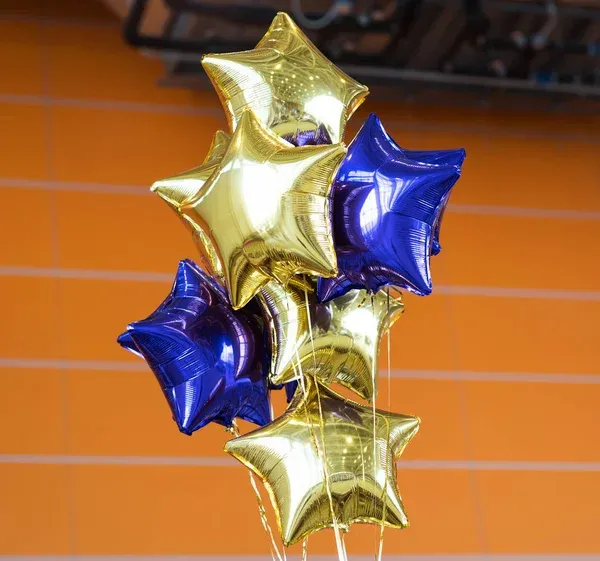
To reuse Mylar balloons, gently deflate them by inserting a straw into the valve to press out air. Smooth the flat balloon carefully and store it in a dry, cool place away from sharp objects.
Damaged, torn, or wrinkled balloons may not reseal properly. If the balloon leaks, smells, or has tears, dispose of it responsibly rather than attempting reuse. Always test balloons before your next event to ensure they hold air effectively. Use this checklist:
- Deflate gently through the valve.
- Do not cut the balloon if you want to reuse it.
- Flatten it slowly.
- Keep it dry.
- Store it away from heat.
- Avoid sharp objects.
- Test it before the next event.
- Reuse only clean balloons.
This helps reduce waste without requiring complicated recycling steps.
Looking for an affordable custom balloon solution?
Order custom printed balloons through a convenient online service with several product styles, customization choices, quantity-based pricing, and digital proofs to review before production.
View custom balloon options hereWhat Are The Best Eco-Friendly Alternatives To Balloons?
The best eco-friendly alternatives to balloons are reusable, easy to collect, and suitable for the type of event. They can still look bright, festive, and personal when planned well.
| Balloon alternative | Best use |
|---|---|
| Paper decorations | Indoor birthdays, showers, and school events |
| Fabric banners | Repeated celebrations and branded events |
| Bunting | Outdoor parties, garden events, and fairs |
| Reusable signs | Corporate events, birthdays, and graduations |
| Flowers | Weddings, memorials, and formal events |
| Streamers | Low-cost indoor party decorations |
| LED decor | Evening events and photo areas |
| Fabric backdrops | Photo booths, stages, and dessert tables |
| Chalkboards | Menus, welcome signs, and party messages |
| Paper lanterns | Indoor visual displays and themed parties |
Some readers worry that eco-friendly options may look boring. They do not have to. A mix of fabric banners, paper decorations, flowers, lights, and reusable signs can feel just as festive as balloons. Reusable decorations also save money over time when they are stored and used again.
If your website has reusable party decor or alternative decoration collections, link to the relevant product or category page here.
How Can You Plan A Balloon Party With Less Waste?
Generally, whether balloons are recyclable in regular household bins is a question with a negative answer. Most latex and foil types are not accepted in curbside programs because they are difficult for facilities to sort. If you still wish to recycle used balloons, check with your local waste authority or search for a specialist recycling program. Ask vendors practical questions before booking;
- What materials are the balloons made from?
- Do you offer reusable decorations?
- Do you clean up after the event?
- How do you dispose of balloon waste?
- Can foil balloons be deflated and reused?
- Do you avoid outdoor releases?
Generally, whether balloons are recyclable in regular household bins is a question with a negative answer. Most latex and foil types are not accepted in curbside programs because they are difficult for facilities to sort. If you still wish to recycle used balloons, check with your local waste authority or search for a specialist recycling program.
Frequently Asked Questions Are Balloons Recyclable?
Are Balloons Recyclable?
Generally, balloons are not recyclable in regular household bins. Most latex and foil types are not accepted in curbside programs, as they are difficult for facilities to sort. If you still wish to recycle balloons, check your local waste authority or a specialist program.
Can Latex Balloons Be Recycled?
Latex balloons generally cannot be placed in regular household recycling bins. Although derived from natural rubber, local systems rarely accept them. Whether balloons can be recycled depends on the specific material and local programs. Therefore, you should securely discard used latex balloons after removing all ribbons, clips, and other attachments.