How Permanent Magnets Are Made: From Raw Materials To Finished Products
Permanent magnets may look simple, but they are not simple to make. Miss one step in the process and the magnet may be weak, brittle, or the wrong shape. This guide explains how permanent magnets are made, why materials matter, and how raw elements become metal that sticks.


Key Takeaways
- Permanent magnets are usually engineered from magnetic alloys, powders, or bonded mixtures, not simply found ready-made.
- The main production stages include alloy making, crushing, pressing, sintering or bonding, coating, magnetizing magnets, and quality testing.
- Material choice controls strength, heat resistance, corrosion behavior, manufacturing method, and final use.
- We supply high-quality custom magnets in various materials and styles for a range of aesthetic and functional benefits at great prices.
How Are Permanent Magnets Made?
Permanent magnets are made by turning selected magnetic materials into a stable shape, then magnetizing them so they hold a field. The journey starts with raw material selection - engineers choose elements or compounds based on strength, heat range, cost, and environment.
Once materials are selected, they may be:
- Melted into an alloy
- Crushed into powder
- Pressed into a mold
- Heated through sintering
- Coated for protection
- Magnetized
There are different variations of this path for ferrite, neodymium, samarium cobalt, alnico, and bonded magnets. Most industrial magnets are not simply dug up and used - they are engineered so their size, pull force, and direction match a planned purpose.

What Steps Are Used To Make A Permanent Magnet?
The steps used to make a permanent magnet usually follow a clear order. First, the raw materials are checked and measured. Next, they are mixed, melted, or processed into a magnetic compound.
From here, the process goes like this:
- For many strong magnets, the material is crushed into fine powder.
- That powder is pressed into a die to form the magnet shape.
- Heat treatment or sintering then bonds the particles into a hard body.
- After cooling, the magnet may be ground to exact size, coated, and inspected.
- Magnetization usually comes near the end.
Some types skip or change steps, but each stage affects strength, shape, durability, and how well the magnet performs. This is relevant whether the end product is a custom ceramic magnet or a flexible car magnet.
| Stage | What Happens | Why It Matters |
|---|---|---|
| Material selection | Engineers choose ferrite, NdFeB, SmCo, alnico, or bonded material | Controls strength, cost, heat resistance, and corrosion risk |
| Alloying or compounding | Materials are melted, mixed, or prepared | Sets the chemical basis for magnetic performance |
| Milling | Material is reduced into powder | Improves pressing, density, and alignment |
| Pressing/alignment | Powder is compacted, sometimes in a magnetic field | Gives the magnet its shape and preferred direction |
| Sintering/bonding | Particles are fused or bound into a solid | Creates mechanical strength |
| Machining/coating | Magnet is finished and protected | Improves fit, durability, and corrosion resistance |
| Magnetization/testing | Field is applied and performance is checked | Confirms pole pattern, pull force, and usability |
How Do Permanent Magnets Get Their Magnetic Field?
A permanent magnet gets its working magnetic field during magnetization. Before that step, the material may have magnetic potential, but the tiny internal regions, called domains, are not fully lined up.
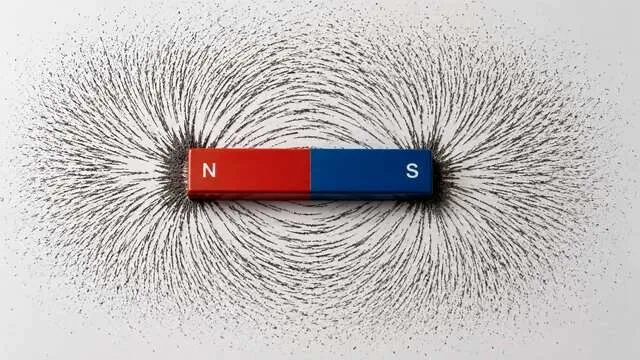
A strong external magnetic field forces those domains to point in a chosen direction. Once enough domains stay aligned, the magnet has a north pole and south pole. The material must be able to hold its magnetic particle alignment.
You cannot magnetize ordinary plastic or aluminum into a permanent magnet, no matter how strong the outside field is. In manufacturing, magnetization usually happens after shaping, coating, and final inspection, because the finished part must match the required pole pattern.
What Equipment Is Used To Magnetize Permanent Magnets?
Industrial magnetizing uses equipment far stronger than a household magnet. Factories often use magnetizing coils, capacitor discharge systems, pulse magnetizers, and custom fixtures. The magnet is placed inside a fixture, then hit with a brief, powerful magnetic field.
The fixture controls the pole direction and pattern:
- A simple bar magnet may need a basic axial field.
- Ring magnets, arc magnets, and multipole magnets need more specialized tooling because the field must form in a precise pattern.
Equipment choice depends on size, shape, material, and final use. This is why magnetizing magnets is not a casual step - if the pole pattern is wrong, the part may be useless. Correct processing is essential for everything from bag clips with magnets to powerful industrial magnets.
Why Is Magnetic Orientation Important When Making Magnets?
Magnetic orientation decides where the magnet’s north and south poles sit and how the magnet performs. It relates to grain alignment, polarization, and magnetic fields. Common orientations include axial, diametrical, radial, and multipole patterns.
- An axial magnet is magnetized through its thickness.
- A diametrical magnet is magnetized across its diameter.
- Multipole designs have several poles arranged around a surface. This matters in motors, sensors, couplings, speakers, and magnetic assemblies.
A magnet with the wrong orientation may still be strong, but not strong in the direction the product needs - we have seen this confuse buyers. The same material and size can behave very differently when the direction of magnetization changes.
Looking to display a custom design on a magnet?
Work with us to create custom rectangle magnets with any visual design you want and enjoy a vibrant and durable piece.
What Are The Most Common Permanent Magnet Materials?
The main types of permanent magnets are neodymium, samarium cobalt, alnico, ferrite, and bonded magnets. There are different strengths to each:
- Neodymium is very strong for its size, but it needs protection from corrosion and heat.
- Samarium cobalt handles heat better and suits demanding industrial settings.
- Alnico is known for temperature stability, though it can be easier to demagnetize than rare earth magnets.
- Ferrite, also called ceramic magnet material, is affordable and common in speakers, tools, and everyday products.
- Bonded magnets mix magnetic powder with plastic, resin, or rubber. They are not usually the strongest option, but they are useful for complex shapes and flexible designs.
Work with us to create custom metal magnets in different shapes and sizes and you can add a bespoke design in any format you want. We offer great prices and generous bulk discounts alongside high-quality manufacturing.
What Elements Are Used To Make Permanent Magnets?
Permanent magnets are made from combinations of elements, not one universal ingredient. If someone asks what element is used to make permanent magnets, iron is a common foundation, but rare earth elements are vital for high strength.
- Neodymium magnets use neodymium, iron, and boron.
- Samarium cobalt magnets use samarium and cobalt, often with added elements for performance.
- Alnico magnets are made from aluminum, nickel, cobalt, and iron.
- Ferrite magnets often use iron oxide with strontium or barium compounds.
The exact recipe depends on the magnet type. A small change in chemistry can affect strength, heat tolerance, corrosion risk, and manufacturing behavior. This may even affect what objects magnets stick to.
Why Does The Magnet Material Matter In Manufacturing?
Magnet material matters because it controls almost everything that happens next. A neodymium magnet needs different handling from a ferrite magnet. A bonded magnet needs a different process from a sintered one.
Engineers choose materials based on pull strength, working temperature, corrosion resistance, cost, weight, and shape. High performance applications often need tighter chemistry control because small changes can affect final output.
Cheap magnets and premium magnets are made differently because they are solving different problems. Some magnets stick to stainless steel, while others will not. A simple fridge magnet does not need the same strength or testing as a motor magnet, so material choice is more than just a buying detail.
How Are Raw Elements Turned Into Magnetic Alloys?
Raw elements are turned into magnetic alloys by measuring and melting them in controlled ratios. The mix must be accurate because the final magnetic behavior depends on chemistry.
For rare earth magnets, the metals are often melted together under controlled conditions to reduce contamination and oxidation. Once melted, the alloy cools and solidifies into a form that can be:
- Crushed
- Milled
- Cast
- Processed further
Cooling is crucial because it affects the internal structure of the material. The microstructure is essential - if that structure is wrong, the magnet may not reach the expected strength. This stage sets the foundation for pressing, sintering, machining, and final magnetization.
How Are Permanent Magnets Made From Powder?
Many high performance permanent magnets are made from powder. This process is called powder metallurgy. First, the alloy is crushed and milled into fine particles. The powder must be controlled carefully because particle size affects alignment and strength.
Oxygen exposure also makes a difference, especially for neodymium powder, which can react easily. The powder is then pressed into a mold. For anisotropic magnets, an external magnetic field may be applied during pressing so the particles line up in the best direction.
After pressing, the compacted shape is sintered at high temperature. This method is widely used for strong neodymium magnets and many ferrite magnets.
Why Is Magnet Material Crushed Before Pressing?
Magnet material is crushed before pressing so it can be packed into a mold evenly. Large alloy chunks cannot form a precise, dense magnet body. Milling turns the material into powder with more consistent particle size.
This helps the particles align, press, and bond more predictably. Powder quality has a direct effect on final magnetic strength. Performance can be lowered by things like:
- Contamination
- Moisture
- Oxidation
Handling is especially important with rare earth powders because they can be reactive. Good manufacturers control the air, tools, and storage around the powder. It may seem like a rough step, but crushing and milling are actually about precision - essential for everything from die struck metal stickers to magnetic bearings.
How Are Magnet Particles Aligned Before The Magnet Is Hardened?
Before the magnet is hardened, powder can be pressed inside a mold while a strong alignment field is applied. This field nudges the particles so their magnetic direction points the intended way.
Magnets made with this alignment are called anisotropic, and they are usually stronger in the chosen direction. Isotropic magnets are not aligned this way, so they can be magnetized in different directions later, but they are usually weaker.
Pressing intensity also makes a difference:
- Too little pressure can leave the magnet less dense.
- Too much or uneven pressure can create cracks or machining problems.
The goal is a compact shape with the right internal direction. Particle alignment is key to permanent magnet fabrication.
How Do Sintering And Bonding Make Magnets Stronger?
Sintering and bonding turn loose or pressed magnetic material into a usable solid. Sintering heats compacted powder to a high temperature without fully melting it. The particles fuse together, creating a dense, hard magnet body.
This is how many strong neodymium and ferrite magnets are made. Bonding works differently - magnetic powder is mixed with resin, plastic, or rubber, then molded or extruded. Bonded magnets are usually weaker than sintered magnets, but they can be made into useful shapes more easily.
After sintering, parts may shrink or distort, so grinding and finishing may be needed. Strength comes from both material and structure - important if you are exploring how to make a magnet stronger.
Create a bespoke magnet in any shape
With our custom shaped magnets, you can get a truly bespoke piece with strong magnetic properties and diverse customization options.
Learn moreWhy Do Permanent Magnets Need Protective Coatings?
Many permanent magnets need protective coatings because the bare material can chip, corrode, or wear down. Neodymium magnets especially need coatings because they can rust when exposed to moisture.
Common options include:
- Nickel
- Zinc
- Epoxy
- Phosphate
- Plastic
- Rubber.
The right choice depends on use. Nickel works well for many indoor magnets, while epoxy can help in damp settings. Rubber protects surfaces and improves grip. Ultimately, coatings are there to protect against corrosion.
Coatings also make handling safer because raw magnet edges can be brittle. If a coating is damaged, the magnet should be inspected. Once moisture reaches vulnerable material, the surface can break down faster than people expect.
Interested in elegant bespoke magnets?
Use our service to create custom glass magnets in any shape and size to get a personalized look for any purpose.
How Are Permanent Magnets Tested Before Use?
Permanent magnets are tested before use because small errors can cause big problems later. Factories check dimensions, coating quality, surface defects, cracks, chips, pull force, and magnetic consistency.
More advanced testing may measure things like:
- Flux
- Field pattern
- Temperature behavior
- Performance inside an assembly
This is crucial in motors, sensors, holding systems, medical devices, and industrial equipment, where a weak or misoriented magnet can cause failure. Visual checks alone are not enough - a magnet can look fine but have the wrong pole direction or lower-than-required strength.
Proper quality control protects the buyer and the final product. We would rather catch a problem before installation than after a system fails. Checks may be tested less extensively for things like custom circle magnets where the performance is not as critical.
Frequently Asked Questions About How Are Permanent Magnets Made
How Are Permanent Magnets Made?
Permanent magnets are made by processing magnetic materials into a shape, hardening or bonding them, coating them if needed, then magnetizing them with a strong external field.
What Materials Are Used To Make Permanent Magnets?
Common materials include neodymium-iron-boron, samarium cobalt, alnico, ferrite, and bonded magnetic powders. Each material suits different strength, heat, cost, and corrosion needs.