How To Measure Wrist For Bracelet: And Choose The Right Fit
Getting the right bracelet size starts with an accurate wrist measurement. Whether you have a measuring tape or just a piece of string, this guide explains how to measure your wrist. Choose a comfortable fit and select the correct bracelet length for different styles.

Key Takeaways
- Measure around the wrist where the bracelet will normally sit, without squeezing the skin.
- Add a fit allowance after measuring, rather than leaving extra space under the tape.
- Snug, comfortable, and loose bracelet fits require different amounts of additional length.
- Bangles, cuffs, chains, and charm bracelets may need different sizing methods.
- Always check the manufacturer's sizing chart before ordering, especially for personalized bracelets.
Table of contents
-
How To Measure Wrist For Bracelet
-
How Tight Should The Tape Be When You Measure Your Wrist?
-
How Much Bigger Should A Bracelet Be Than Your Wrist?
-
What Bracelet Size Do You Need For Your Wrist Measurement?
-
Does Bracelet Style Change The Size You Need?
-
What Bracelet Sizes Are Standard For Men And Women?
-
How Can You Tell If Your Bracelet Is Too Big Or Too Small?
How To Measure Wrist For Bracelet
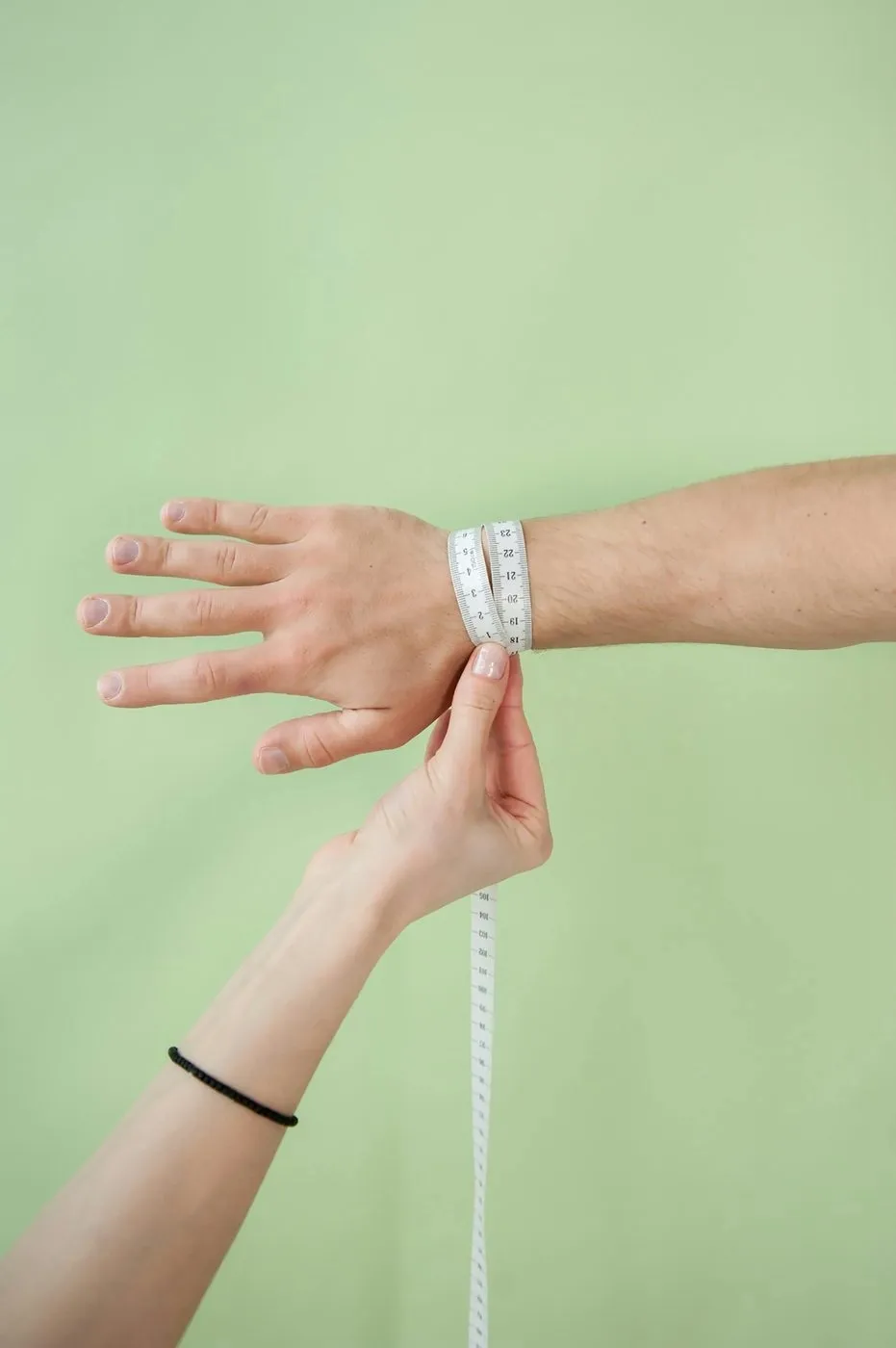
To measure a wrist for a bracelet, wrap a flexible measuring tape around the part of your wrist where the bracelet will normally rest. Keep the tape flat and snug against your skin without squeezing. Record the circumference then add an appropriate allowance based on your preferred fit and bracelet style. A full breakdown of how to measure is as follows:
- Position the tape around your wrist near the wrist bone.
- Keep it flat against your skin without pulling tightly.
- Read the measurement where the tape meets its starting point.
- Record the number in inches or centimeters.
- Add extra length according to the fit you want.
The entire process usually takes less than a minute. Accurate tape placement matters more than pulling it extremely tight. We recommend recording your actual wrist circumference before considering bracelet length. This makes it easier to compare different designs, especially when choosing custom accessories or gifts.
How Do You Measure Your Wrist Correctly With A Measuring Tape?
When learning how to measure your wrist for a bracelet, start with a flexible sewing tape rather than a rigid construction tape. Place it around the wrist bone, or wherever you expect the bracelet to rest. Make sure the tape lies flat without twisting. For an accurate result, follow these tips:
- Keep your hand relaxed while measuring.
- Avoid pulling the tape hard enough to leave an indentation.
- Read the measurement without inserting a finger underneath.
- Repeat the measurement two or three times. If your results differ, take the average.
You can record the results in inches or centimeters. 1 inch equals 2.54 cm. Keep the exact measurement, including fractions or decimals. Rounding too easily can create unnecessary sizing errors for expensive or personalized jewelry. For expensive or personalized jewelry measuring more than once is particularly useful because resizing may be difficult or unavailable.
How Can You Measure Your Wrist Without A Measuring Tape?
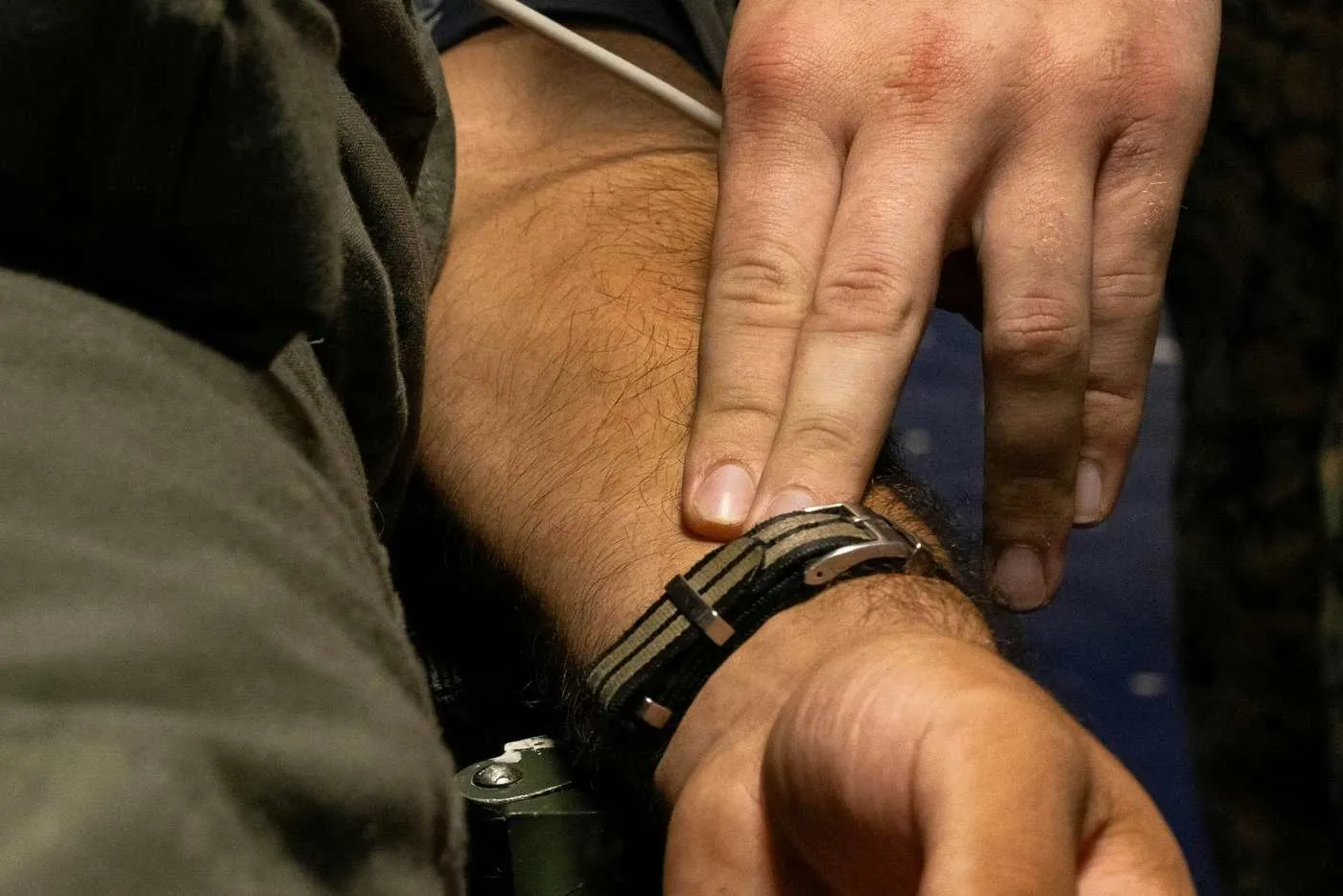
You can determine your wrist size for bracelet purchases without specialized measuring equipment. Use a piece of string, ribbon, or a narrow strip of paper alongside an ordinary ruler, and follow these steps;
- Wrap the material around your wrist where the bracelet will sit.
- Keep it snug without stretching or compressing your skin.
- Mark the point where the material meets or overlaps.
- Remove it and place it flat against a ruler.
- Measure from the starting end to your mark.
Avoid elastic strings or stretchy cords because stretching changes the measured length. A narrow paper strip works particularly well because it maintains its length. However, avoid folding or tearing it while marking. If your measurement falls between ruler markings, record the closest accurate reading rather than automatically adding extra length. You can then calculate the bracelet size using your preferred fit allowance.
Make a strong impression with custom wristbands
Work with us to create high-quality custom wristbands featuring your unique branding. Choose from different sizes, colors, and materials to raise awareness, promote your business, and deliver professional-looking accessories your customers will love.
How Tight Should The Tape Be When You Measure Your Wrist?
When measuring wrists for bracelet sizing, the tape should touch your skin all the way around without pinching or leaving visible gaps. The objective is to establish your actual wrist circumference, not the final bracelet length. For example, suppose your wrist measures 6.5 inches when the tape is snug. If you deliberately loosen the tape and record 7 inches, you have already introduced an additional 0.5 inch. Adding another 0.5 inch for comfort would produce a 7.5-inch bracelet, potentially making it looser than intended. Instead, measure accurately first and then allow for allowance afterward. A reliable measurement should meet three conditions:
- The tape remains in contact with your skin.
- You can move your hand naturally without discomfort.
- The tape does not visibly indent or compress your wrist.
If the measurement changes significantly between attempts, reposition the tape and try again. Wrist circumference may also vary slightly with temperature, activity, and swelling. Measuring when your wrist feels comfortable and at its usual size provides a more useful starting point. For anyone wondering how to measure wrist size for bracelet purchases, separating the measurement from the comfort allowance is one of the most important steps.
How Much Bigger Should A Bracelet Be Than Your Wrist?
A finished bracelet generally needs additional room beyond your wrist circumference. The appropriate allowance depends on whether you prefer a close, regular, or loose fit.
The following measurements provide practical starting points for many flexible bracelet designs.
| Desired fit | Suggested allowance |
|---|---|
| Snug fit | Add 0.25 to 0.5 inches |
| Regular fit | Add 0.5 to 0.75 inches |
| Loose fit | Add 0.75 to 1 inch |
These allowances are approximate rather than universal sizing standards. A snug bracelet stays relatively close to the wrist, while a loose bracelet moves more freely toward the hand. For everyday wear, a regular fit often provides a useful balance between comfort and movement.
If you are choosing between two sizes, consider whether you prefer your bracelet to remain in place or slide slightly. Thicker designs, large beads, and prominent charms can reduce usable interior space.
Manufacturer instructions should take priority because construction, clasp placement, and measurement methods can influence the finished fit.
The Pandora bracelet size guide provides additional guidance for choosing sizes across different bracelet designs. At ImprintNow, we encourage customers ordering personalized accessories to consider comfort, intended use, and product specifications before finalizing their designs.
Need custom wristbands for your next promotional giveaway or other project?
We can bring your designs to life with custom printed wristbands for personal expression, branding, events, and promotional campaigns. Explore different sizing options, materials, and finishes to create comfortable accessories that reflect your message.
Explore options for custom wristbands hereWhat Bracelet Size Do You Need For Your Wrist Measurement?

To determine your bracelet size, add your preferred fit allowance to your measured wrist circumference.
For example, a 6 inch wrist with a 0.5 inch allowance suggests a bracelet length of approximately 6.5 inches. This calculation helps distinguish your actual wrist measurement from the finished bracelet length. A bracelet labeled 7 inches is not necessarily intended for someone whose wrist measures exactly 7 inches.
Use the following process when choosing a size.
- Measure your wrist circumference accurately.
- Decide whether you prefer a snug, regular, or loose fit.
- Add the corresponding allowance.
- Compare the result with the manufacturer's sizing chart.
- Check whether the product has adjustable sizing.
Different brands may measure bracelet length differently. Some include the clasp, while others provide interior circumference or fixed diameter measurements. The Tiffany bracelet sizing guide illustrates how wrist measurements correspond to a retailer's sizing categories. For personalized promotional accessories, explore our custom wristbands and review the available size options before ordering.
What Bracelet Size Fits A Wrist Measuring 6.5 Inches?
For a 6.5 inch wrist, a bracelet measuring approximately 6.75 to 7 inches provides a relatively close fit. A length between 7 and 7.25 inches offers more movement, while 7.25 to 7.5 inches produces a looser result. These measurements are general estimates rather than fixed sizing rules.
If you prefer your bracelet to remain close to your wrist, choose the shorter suitable option. If you enjoy movement, consider the longer one. For designs with bulky beads or charms, additional room may be necessary. Always compare your calculation with the manufacturer's sizing recommendations before purchasing.
What Bracelet Size Fits A Wrist Measuring 7 Inches?
A 7 inch wrist generally requires a bracelet longer than 7 inches for comfortable movement. For a close fit, consider approximately 7.25 to 7.5 inches. A regular fit may require 7.5 to 7.75 inches, while a loose fit may approach 8 inches. The correct choice depends on bracelet construction. For example, a delicate chain measuring 7.5 inches may feel more spacious than a thick beaded bracelet with the same stated length. Check the interior space and clasp arrangement whenever those measurements are available.
If your calculated size falls between two options, consider whether security or freedom of movement matters more.
Customize wristbands with bespoke or branded designs and make an impression
We supply high-quality custom cloth wristbands featuring your unique designs, logos, and messages. Choose from various colors, printing options, and adjustable styles to create attractive, comfortable accessories that meet your branding and functional needs.
Does Bracelet Style Change The Size You Need?
Yes. Bracelet style affects sizing because different designs fit and move around the wrist differently. Flexible chains generally require wrist circumference plus a comfort allowance. Rigid bangles must accommodate the hand, while open cuffs depend on wrist dimensions and the size of their opening. This explains why different jewelry guides sometimes recommend different measuring methods.
The most suitable method depends on how the bracelet is worn, fastened, and removed. For example, a clasped chain opens completely, while a continuous rigid bangle must pass over the hand. When comparing accessories, you can also explore our custom silicone wristbands to see different customizable wearable designs. We offer several custom wristband styles with different available sizes, helping customers compare options for promotional campaigns, events, and branded giveaways.
How Should You Measure For A Bangle Bracelet?
A rigid bangle without an opening must slide over your hand, so wrist circumference alone may not determine the correct size.
To measure for this style, bring your thumb toward your little finger as though you were putting on a bangle. Wrap a flexible measuring tape around the widest part of your compressed hand, usually across the knuckles. Record the circumference without squeezing your fingers together unnaturally. If you do not have tape, use nonstretch string and measure the marked length with a ruler.
Compare this measurement with the manufacturer's bangle circumference or inside diameter chart. A bangle that comfortably surrounds your wrist may still be too small to pass over your hand. Hinged bangles are different because they open for wearing. For those designs, follow the manufacturer's wrist sizing instructions instead.
How Should You Measure For A Cuff Bracelet?
Cuff bracelets usually have an opening that allows them to fit around the wrist without passing over the entire hand. Start by measuring the circumference where you intend to wear the cuff. Next, compare that measurement with the maker's recommended cuff size, internal dimensions, and opening width.
The exact position matters because wrist circumference and shape can change slightly farther up the forearm. Avoid assuming that every open cuff can be bent repeatedly to accommodate different sizes. Some metals and rigid materials can weaken, deform, or break when excessively adjusted. A cuff should sit securely without digging into the skin or requiring force to put on. If the maker provides an opening measurement, check that dimension before ordering.
How Should You Measure For A Chain Or Charm Bracelet?
For chain and charm bracelets, start with wrist circumference and add enough length for your preferred comfort level. Flexible chains usually move more easily than rigid designs, but thickness can affect how spacious they feel. A thin chain may rest comfortably with a modest allowance, while a thicker design may require additional length. Charm bracelets deserve particular attention because multiple charms can occupy interior space. For example, a bracelet carrying numerous large charms may feel tighter than the same bracelet without charms.
The Pandora bracelet sizing recommendations distinguish between bracelet types and explain how charm quantities influence size selection. Consider how frequently you want the bracelet to move toward your hand. If excessive sliding bothers you, choose a closer fit within the manufacturer's recommended range. Adjustable chains can provide additional flexibility when you are uncertain between sizes.
What Bracelet Sizes Are Standard For Men And Women?
Standard bracelet sizes offer a useful starting point, especially when buying gifts. However, individual wrist measurements are more reliable than gender categories.Common retail conventions often place women's bracelet lengths around 6.5 to 7.5 inches and men's around 7.5 to 9 inches.
These ranges describe typical product offerings, not rules about anyone's wrist dimensions.
| Bracelet category | Common bracelet lengths |
|---|---|
| Women's smaller sizes | 6 to 6.5 inches |
| Women's regular sizes | 7 to 7.5 inches |
| Men's smaller sizes | 7 to 7.5 inches |
| Men's regular sizes | 8 to 8.5 inches |
| Men's longer sizes | 9 inches |
These are approximate shopping references, not universal standards. Retailers use different sizing conventions. For a brand-specific comparison, consult the Tiffany wrist measurement chart, which categorizes wrist circumferences rather than assuming a size based on gender. When choosing wrist sizes for bracelets, prioritize the recipient's actual measurement whenever possible.
If the bracelet is a surprise gift, consider measuring an existing bracelet that fits comfortably. Remember to check whether its listed length includes the clasp. For adjustable promotional accessories, explore our custom cloth wristbands for designs that include adjustable options. We provide customizable cloth wristbands in several styles, allowing customers to select suitable accessories for branded events, promotional campaigns, and group activities.
Looking for an affordable solution for custom wristbands?
With our online service, you can create affordable custom wristbands for events, giveaways, and promotional campaigns. We offer flexible quantities, customization options, and competitive bulk pricing to help you get quality wristbands that suit your budget.
Get started with custom wristbands hereHow Can You Tell If Your Bracelet Is Too Big Or Too Small?
A properly fitted bracelet should feel secure without restricting natural wrist movement.
An oversized bracelet may slide repeatedly toward your hand, rotate excessively, or create concern that it could slip off. An undersized bracelet may pinch your skin, leave persistent pressure marks, or become difficult to fasten.
Check your bracelet using these simple steps.
- Fasten the bracelet normally without forcing the clasp.
- Move your wrist through everyday motions.
- Check whether the bracelet slides farther than you prefer.
- Look for uncomfortable pressure or pinching.
- Confirm that you can remove it without difficulty.
Some movement is normal, especially with flexible chain bracelets. However, discomfort, persistent indentation, or restricted movement suggests that a larger size may be appropriate. For a bracelet that moves excessively, a shorter length or adjustable fastening may provide a better fit. Remember that heavier charms and thicker components can change how a bracelet feels during everyday activities. Before purchasing a personalized design, check the available measurements and any applicable resizing or return restrictions.
Frequently Asked Questions About How To Measure Wrist For Bracelet
How Do You Measure Your Wrist For A Bracelet Correctly?
To determine how to measure your wrist size for a bracelet, wrap a flexible measuring tape around the wrist where the bracelet will sit. Keep it snug without squeezing, record the circumference, and add the appropriate fit allowance. If you lack a tape, use string and a ruler instead.
Should I Measure My Wrist Above Or Below The Wrist Bone?
Measure at the location where you intend to wear the bracelet, usually around or just above the wrist bone toward your forearm. Placement depends on your preferred style. For a bracelet worn farther up your arm, measure that specific position rather than relying on a different wrist measurement.